Chengdu Like a Local: Hotpot, Teahouses and Getting Around
Chengdu is less a checklist city than a pace of life: a covered-bowl tea in a park, a hotpot that runs for three hours, a rainy afternoon in a free museum, and an early morning with the pandas before the crowds arrive. This practical guide covers how to order Sichuan food without setting your mouth on fire, which neighborhoods to eat in, how the two airports and the metro actually work, what to book ahead, the best rainy-day backups, and the small scams that target first-timers. It is written for independent travelers who want the city's rhythm rather than a list of sights. Details are current as of November 2026.
The short version
- Order a divided yuanyang pot on your first hotpot night; 'micro-spicy' still means spicy in most kitchens
- Eat in Yulin, Jianshe Road or Quixinglou rather than the tourist lanes, where the same dishes cost two to three times more
- Two airports split the city: Shuangliu (CTU) is 20 minutes by Metro Line 10, Tianfu (TFU) is 40–75 minutes by Line 18 depending on your destination
- Book the panda base up to 14 days ahead, take the first morning slot, and go to the nursery buildings first
- Rain is common: keep a free museum and a teahouse as your backup plan instead of a paid tour
Chengdu is a city that rewards slowing down. The pandas are the reason many people come, but the reason they stay is the rhythm: tea poured all afternoon in a park, a hotpot that turns dinner into an event, streets that stay busy late, and a flat, green, metro-connected center that makes everything easy. This guide is about doing the city the way locals do — where to eat, how to order, how to move, and what to skip. Details are current as of November 2026.
Eat First: A Practical Sichuan Primer
Sichuan food is not one note. The famous numbing heat comes from Sichuan pepper, and the chili heat is layered on top; together they are málà. A good kitchen balances both with sweetness, vinegar and fermentation. You do not need to eat the hottest thing on the menu to eat well.
Hotpot. This is Chengdu’s social engine. Order a yuanyang (divided) pot on your first night: one side mild, one side spicy. The spicy side is beef tallow or rapeseed oil loaded with chilies; the mild side is usually a bone or tomato broth. Dip cooked pieces in a small bowl of sesame oil, garlic and coriander — the oil cools the heat. Expect ¥80–180 per person, more if you order premium cuts. Do not wear a white shirt.
Chuanchuan. Skewers of meat, vegetables and offal cooked in a shared pot, priced per skewer. It is cheaper than hotpot, faster, and a good solo meal: ¥40–100 per person. Take a basket, fill it, and let the kitchen count the skewers.
The classics. Mapo tofu (soft tofu, minced beef, numbing sauce), dandan noodles (sesame, chili, minced pork), Long Chao Shou wontons in red oil, sweet water noodles, and rabbit head for the curious. A bowl of noodles or wontons costs roughly ¥8–25; a sit-down plate of mapo tofu ¥20–50.
Teahouses. Chengdu’s teahouses are not a tourist show; they are where people spend the afternoon. Heming Teahouse in People’s Park is the famous one, with bamboo chairs, endless refills and ear cleaning on the side. A covered-bowl tea costs a few tens of yuan and buys you a table for hours. Go mid-morning, order tea, and do nothing for a while. It is the most Chengdu thing you can do.
Ordering and paying. Many casual restaurants use QR-code ordering: scan the table code, order on your phone, pay with Alipay or WeChat Pay. Hotspots use Meituan or Dianping queue tickets — take a number in the app before you leave the hotel, then walk over when it is close. Vouchers bought in Dianping often cut 20–30 percent off the bill. If the menu has no English, order by pointing at photos and say bú yào là (no chili) or wēi là (mild) — and expect even “mild” to have a kick.
Where to Eat and Wander
Yulin is the food-first neighborhood south of the river: dense with small restaurants, bars and coffee shops, and less polished than the center. Jianshe Road and Quixinglou are the late-night and snack streets locals recommend. Taikoo Li and Chunxi Road are central, convenient and more expensive; good for a first night, not for the best value.
Kuanzhai Alley is a restored Qing-style lane district, free and pleasant in the late afternoon; Jinli next to Wuhou Shrine is prettier at night but packed and priced for tourists. If you want one old-street experience, pick Kuanzhai and eat elsewhere.
People’s Park is the city’s living room: teahouses, mahjong, dancing, and the marriage market. Combine it with Kuanzhai Alley in one afternoon. Wangjiang Pavilion’s bamboo gardens are quieter and make a good morning walk.
Pandas: Do It Early, Do It Right
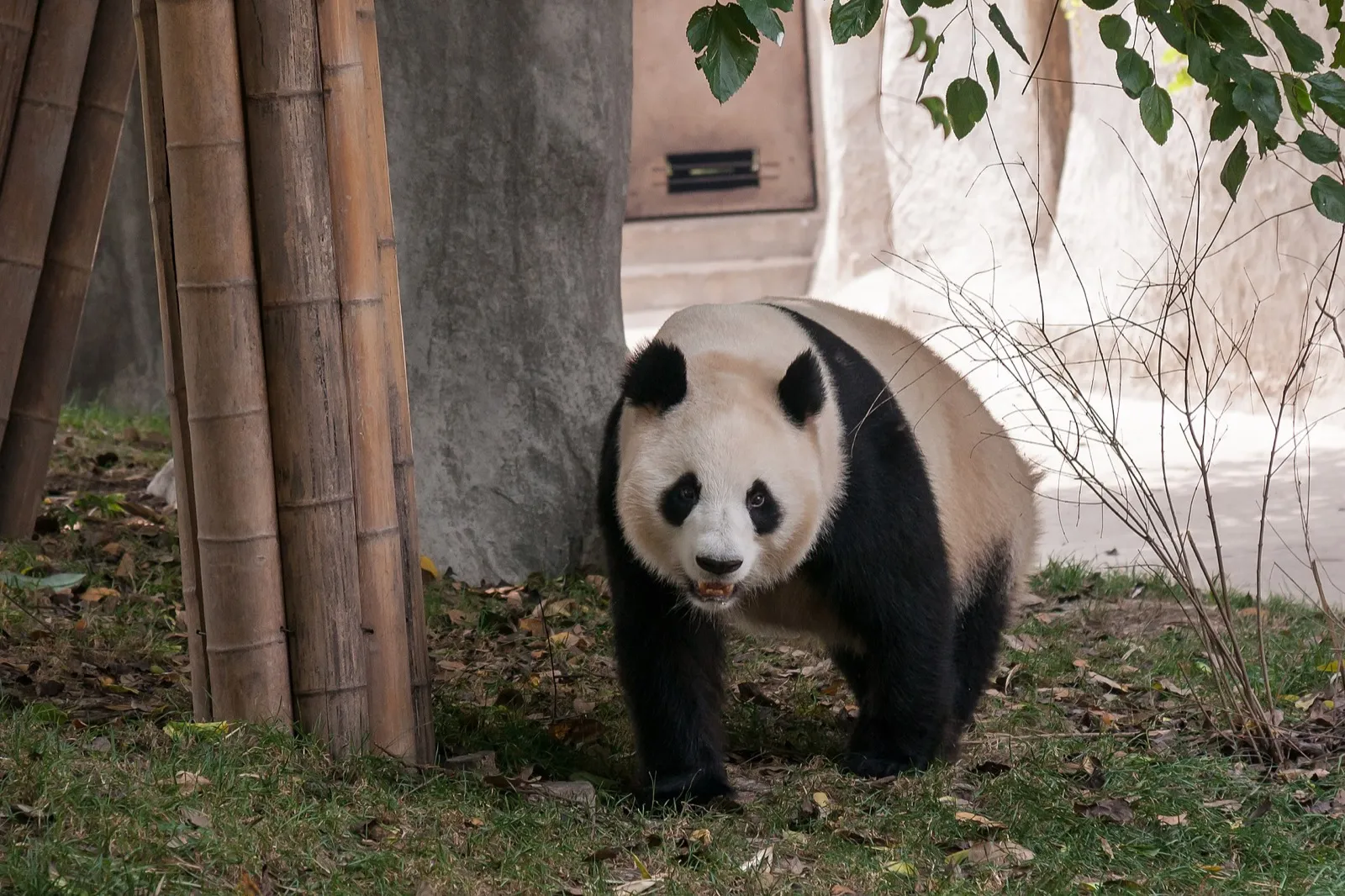
The Chengdu Research Base of Giant Panda Breeding is the reason many itineraries start here. Tickets are ¥55, released up to 14 days ahead through the base’s official WeChat mini-program (search its Chinese name) or Trip.com, with a passport-linked booking. The first morning entry is the one to take: pandas eat and move early, then sleep through the middle of the day. Add the ¥30 sightseeing shuttle to reach the nursery buildings and the quieter western section.
Take Metro Line 3 to Panda Avenue, then the connecting shuttle or a short taxi. Bring the passport used for the booking. Book ahead in holidays and weekends; same-day tickets may be gone.
Two Airports, One Metro
Chengdu has two airports, and choosing the right one saves an hour.
- Shuangliu (CTU) is close to the center: Metro Line 10 takes about 20 minutes.
- Tianfu (TFU) is southeast and handles most international flights: Metro Line 18 reaches Chengdu South Railway Station in roughly 40 minutes for ¥10, and Tianfu Square in about 75 minutes with a transfer, around ¥11.
Check which airport your airline uses before you book a hotel. A hotel near Chunxi Road works for both, but the transfer time differs by an hour.
The metro itself is cheap, bilingual and covers the city. Fares start at ¥2, and most cross-city rides land between ¥2 and ¥9; gates and most buses accept Alipay and WeChat Pay QR codes. Didi is everywhere and inexpensive, and shared bikes are a pleasure because the city is flat.
Rainy Days and Slow Afternoons
Chengdu is gray and damp for much of the year, so build in a wet-day plan rather than fighting it. The Sichuan Museum and the Jinsha Site Museum are free with a reservation (both normally close Mondays). The Jinsha Site Museum covers the ancient Shu kingdom and its gold sun-bird emblem. For an afternoon show, Sichuan opera’s face-changing is the spectacle; book a reputable venue through a platform or your hotel rather than a street tout, and confirm whether tea and snacks are included.
The classic day trips are Leshan (the 71-meter Giant Buddha, about an hour by high-speed rail, admission around ¥80, with a boat option around ¥70) and Mount Emei (about an hour further; admission around ¥160 in peak season, with cable cars extra). Dujiangyan and Mount Qingcheng are the other pair, reachable by high-speed rail from Xipu; Dujiangyan’s ancient irrigation works are the more distinctive half. Check current cable-car and trail closures before an Emei day, especially in winter.
Common Mistakes
- Ordering the hottest pot to prove something. Start with yuanyang; you can always add chili oil.
- Eating on Jinli or Kuanzhai and judging the city by it. The same dishes cost a fraction in Yulin or Jianshe Road.
- Arriving at the pandas at 10 a.m. They are asleep by then. Take the first slot.
- Booking the wrong airport. CTU and TFU are an hour apart; confirm the code before you book the hotel.
- Falling for a “¥28 Sichuan opera” with a mandatory ¥40 tea fee. Book a known venue and confirm what is included.
- Using Google Maps. It is unreliable in mainland China; use Amap or Apple Maps with Chinese names saved.
- Treating “mild” as mild. Ask for wēi là and keep a cold drink; if you need none, say bú yào là.
- Skipping the teahouse because it looks idle. That is the point; order tea and stay.
Sources & verification (10)
- https://www.panda.org.cn/cn/service/ticket
- https://www.travelchinaguide.com/cityguides/sichuan/chengdu/subway.htm
- https://www.sctfia.com/
- https://www.travelchinaguide.com/attraction/sichuan/chengdu/dujiangyan.htm
- https://www.travelchinaguide.com/attraction/sichuan/leshan/buddha_statue.htm
- https://www.travelchinaguide.com/attraction/sichuan/leshan/mt_emei.htm
- https://www.travelchinaguide.com/cityguides/sichuan/chengdu/
- https://mychina.guide/questions/what-different-types-hotpot-chengdu-where-locals-eat
- https://www.chinavisitguide.com/blog/hidden-food-streets-chengdu
- https://www.hkszlife.com/en/article/app-dianping-guide