Tibet Travel Guide: Permits, Altitude and the Routes That Work in 2026
Tibet is the one part of China where the paperwork shapes the trip more than the map. Every foreign visitor needs a Tibet Travel Permit arranged through a licensed agency, travels with a licensed guide, and flies or rides in with the permit already checked. This guide covers the permit chain, the winter pricing window that runs to mid-March 2027, how to choose between the train and the flight, a realistic acclimatization plan, the routes that are currently open, what an agency trip costs, and the on-the-ground rules that catch first-timers. Details are current as of November 2026 — confirm permit conditions with an operator before you pay.
The short version
- You cannot apply for a Tibet Travel Permit yourself: a licensed Tibetan agency must arrange it, and you travel with a licensed guide
- Foreign visitors must show the permit to board the flight or train into Tibet; allow two to three weeks for the agency to assemble the paperwork
- Tibet's winter promotion runs 15 October 2026 to 15 March 2027: most A-level scenic areas waive admission, but temples still charge and the Potala Palace still needs a timed booking
- Lhasa sits at 3,650 meters — give yourself two or three nights before adding altitude, and treat headaches seriously
- The Shigatse border-area permits needed for Everest Base Camp were suspended on 28 August 2026 and had not been confirmed as restored by mid-November; plan Lhasa and Nyingchi instead
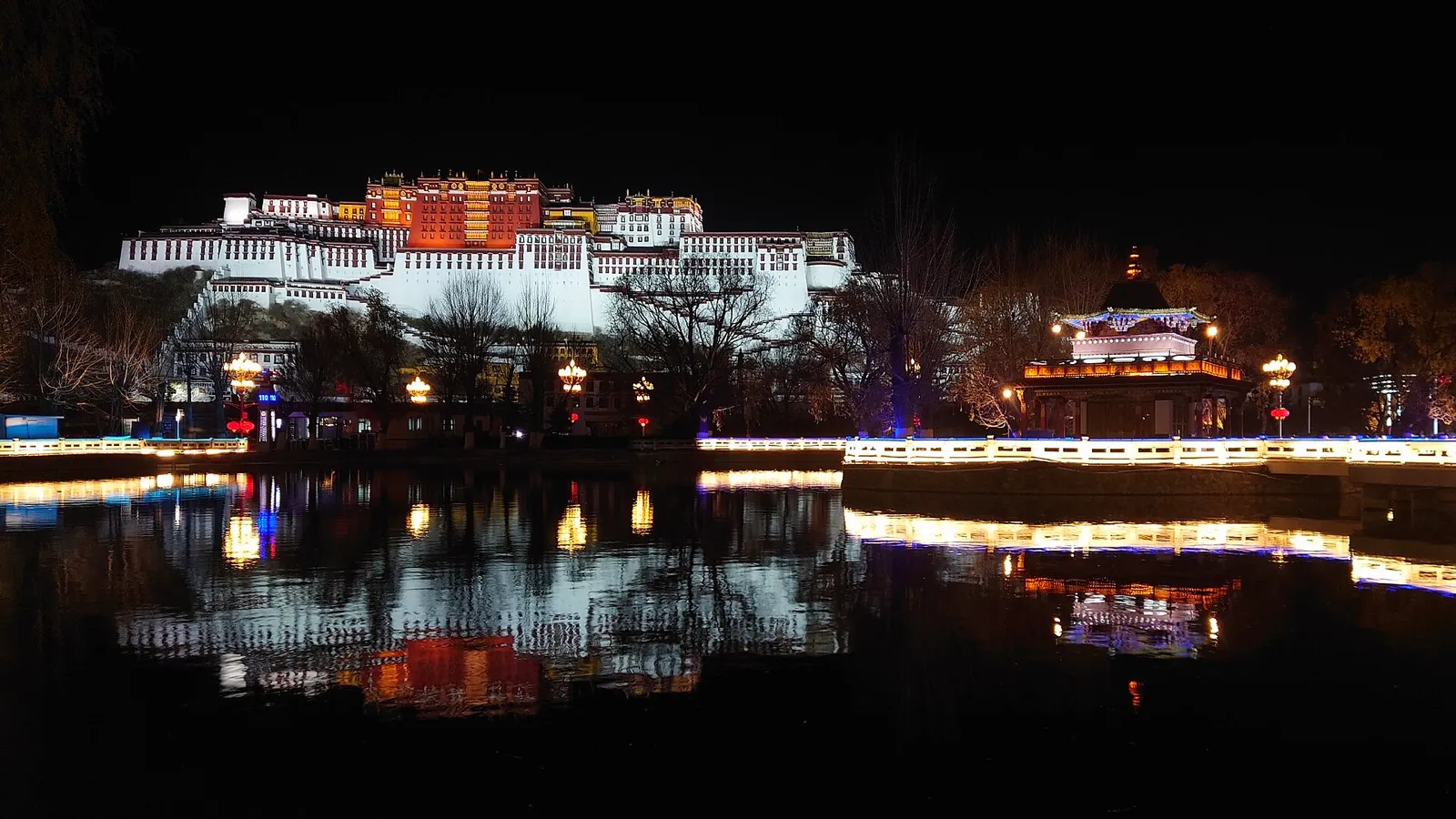
Tibet is not a destination you can improvise. The scenery is the easy part; the hard part is a permit chain that starts weeks before you fly, a licensed guide who travels with you, and an altitude that punishes a rushed first day. Get those three right and the plateau opens up: the Potala Palace above Lhasa, pilgrims circling the Jokhang at dawn, turquoise lakes below snow passes, and forests in Nyingchi that feel like a different country. This guide covers the current rules, the winter pricing window, and the routes that actually work right now. Details are current as of November 2026.
The Permit Is the Trip
Every foreign visitor needs a Tibet Travel Permit (TTP). You cannot apply for it yourself: a licensed Tibetan travel agency arranges it against your passport, China visa or visa-free entry, and a booked itinerary. The permit is tied to that itinerary, and your agency will also assign a licensed guide and vehicle. Private groups are fine — a couple or a family with their own guide and driver is normal — but unguided independent travel is not.
The permit is checked when you board the flight or train into Tibet, not only when you arrive. Agencies typically quote 8–10 working days to process it and ask for your documents two to three weeks ahead; in peak season, add buffer. Send the passport photo page, your China entry document, and the itinerary, and confirm in writing which permits your route needs. For anything beyond Lhasa and the main open corridors, the agency may need an Alien’s Travel Permit or a frontier pass as well. Do not assume one permit covers every stop.
Do this before paying a deposit: ask the agency for a written list of the permits included, which counties they cover, and what happens if a permit is refused. Our Tibet permit guide covers the document chain in more detail.
When to Go: Winter Is the Current Deal
The classic seasons are May–June and September–October: dry air, clear light, and manageable temperatures. July and August bring the monsoon, cloudier mountain views, and the heaviest domestic demand around the Shoton Festival, which fell on 12–16 August in 2026. Winter is cold, sunny, and quiet — and this year it comes with a pricing window worth planning around.
From 15 October 2026 to 15 March 2027, Tibet’s winter tourism promotion waives admission at most A-level scenic areas, with temple sites excluded. That includes the Potala Palace, Namtso, Yamdrok Lake, Basum Tso and the Everest nature reserve — but “free” does not mean walk-in. The Potala still requires a real-name booking through its official WeChat mini-program, releases no same-day tickets, and recommends booking about ten days ahead. Off-season hours are roughly 9:30–15:20, with last entry at 15:20, and it closes on Mondays except public holidays. Temples such as the Jokhang still charge, and transport is discounted but not free.
Book the Potala before you book the flight. If your dates are fixed, reserve the palace slot first, then build the city days around it.
Getting There: Train or Fly
Fly if time matters. Lhasa Gonggar Airport is about 60 kilometers from the city, roughly an hour by shuttle or taxi; the airport bus costs around ¥30. Direct flights run from Chengdu (about 2.5 hours), Chongqing, Xi’an and Beijing. Flying delivers the altitude shock at full strength, so keep arrival day empty.
Take the train if the journey is the point. The Qinghai–Tibet Railway from Xining takes about 20–22.5 hours, with oxygen-enriched carriages over the highest sections. Hard sleeper runs roughly ¥495–520; soft sleeper around ¥780–810. Your permit is checked at the station, and your agency usually handles the booking. The trade-off is real: the train acclimatizes you gradually and shows you the plateau, but it also costs a full day and a night.
Either way, your agency will meet you and handle the permit checks. Keep your passport and permit accessible; the guide may carry the original permit, but you should have a photo of it.
Acclimatize Before You Climb
Lhasa sits at 3,650 meters. Shigatse is around 3,800, Yamdrok Lake about 4,440, Namtso above 4,700, and the Everest tourist camp around 5,200. Nyingchi is the friendly exception at roughly 3,000 meters.
Plan two to three nights in Lhasa before adding altitude. Day one is arrival and rest: no sightseeing, no alcohol, no long walks, plenty of water. Day two is a gentle city day — the Jokhang and Barkhor circuit, with the Potala saved for day three. Only then consider a high pass or a lake.
Ask your doctor about acetazolamide (Diamox) before you travel, and know the warning signs: a headache that will not shift, vomiting, confusion, or breathlessness at rest. The rule is simple — descend and get medical help rather than pushing on. Guides see altitude sickness constantly and will take it seriously if you tell them early.
Routes That Work Right Now
Lhasa, three to four days. The Potala Palace, Jokhang Temple, Barkhor circuit, Sera Monastery’s monk debates, and Drepung. This is the base every itinerary needs.
Yamdrok Lake day trip. About two hours each way over the Kamba La pass at roughly 4,900 meters. The lake is the postcard, and the drive is the point. Do it after two full days in Lhasa.
Lhasa and Nyingchi, seven to eight days. Drive east over the Mira Pass (about 5,013 meters) to Nyingchi, stopping at Basum Tso. Nyingchi’s lower altitude, forests and Lulang valley are a different Tibet, and the route does not need the Shigatse border permits. Nyingchi Mainling Airport has flights back to Chengdu, so you can end there instead of backtracking.
Shigatse and Everest, currently on hold. The National Immigration Administration suspended issuance of electronic border-area permits for Shigatse from 28 August 2026, after a major mudslide cut the Gyirong port, and no reopening had been announced as of 16 November 2026. Some operators report partial access, others do not — do not build a trip around Everest until your agency confirms in writing that the permits are being issued. If you want high mountains without that risk, Yamdrok and the Nyingchi passes deliver.
Namtso, season permitting. The lake is a long day or an overnight at altitude, and winter access depends on road conditions. Ask the agency on the day.
What It Costs
Agency quotes vary with group size and comfort. As a planning range, small-group tours run about US$100–150 per person per day, while private trips run US$150–350. An eight-day Lhasa-and-Everest-style package typically lands around US$900–1,600 per person, before international flights; a Lhasa–Nyingchi route sits in a similar band.
On top of the package: the Potala Palace is free under the winter promotion but normally costs ¥200 in high season and ¥100 in low season; the Jokhang is around ¥85; Basum Tso’s shuttle is about ¥35 even when admission is waived. Train berths are roughly ¥500–800, and a Chengdu–Lhasa flight about ¥1,000–1,800. The permit itself carries no government fee — what you pay for is the guided package around it.
On the Ground: Rules and Reality
Carry your passport and permit everywhere. Checkpoints appear on roads, at hotels and at some sights, and the guide handles the paperwork but you provide the documents.
Know the photography limits. No photographs of military and police facilities, checkpoints, or funeral and sky-burial sites. Inside monasteries, ask before photographing monks or worshippers. Do not discuss politics with guides as a way to test them; it puts them in an impossible position.
Connectivity. The internet is filtered, Google services and WhatsApp do not work without a VPN or an international roaming eSIM arranged before arrival. Download maps, translation and payment apps before you fly; Alipay and WeChat Pay accept foreign cards in Lhasa, but carry small cash for toilets and rural stops.
Comfort drops outside Lhasa. Hotels are simple, hot water and power can be intermittent, and altitude makes everything slower. Pack layers, sunscreen and lip balm, and do not expect Western-style plumbing at high-altitude stops.
Common Mistakes
- Booking flights before confirming permits. A flight is worthless if the agency cannot issue the permit for your dates. Confirm the permit timeline first.
- Treating Everest as guaranteed. The Shigatse border permits remain suspended without a confirmed reopening date; a route that depends on them is a gamble.
- Scheduling a full sightseeing day on arrival. The altitude headache hits on day one, not day three. Keep it empty.
- Assuming “free admission” means no booking. The Potala still requires a real-name reservation, often about ten days ahead, and sells no same-day tickets.
- Skipping the guide’s advice on altitude. Guides are not being cautious for effect; they have seen what a bad night at 4,700 meters looks like.
- Packing for the postcard. Lhasa is sunny and cold, passes are windy, and nights drop below freezing for much of the year. Layers beat a single heavy coat.
Sources & verification (10)
- https://www.nia.gov.cn/n741440/n741542/c1797217/content.html
- https://www.lasa.gov.cn/lasa/tsls/202610/6c78f239b1d14f7bb8d38969f04045c6.shtml
- http://m.tibet.cn/cn/in/xzxw/202610/t20261019_8061945.html
- https://www.tibettravel.org/tibet-travel-permit/tibet-permits.html
- https://www.travelchinaguide.com/china-trains/xining-lhasa.htm
- https://www.travelchinaguide.com/cityguides/tibet/lhasa/airport.htm
- https://www.tibettour.com/useful-travel-tips/1734.html
- https://eng.tibet.cn/en/culture/202608/t20260812_8031209.html
- https://www.tibettravel.org/tibet-travel-advice/high-altitude-sickness-faqs.html
- https://www.thelandofsnows.com/tibet-travel-regulations