Beijing vs Shanghai: Which Should a First-Timer Pick?
Beijing holds China's imperial set pieces — the Forbidden City, the Great Wall, and the temple-and-hutong core — while Shanghai offers the country's easiest landing, best city walking, and strongest food-and-neighborhood scene. This comparison weighs them by traveler type, days available, season, and budget, then explains how to combine both by high-speed rail. The short version: Beijing rewards planners and history lovers, Shanghai rewards first-timers and short trips, and with six or seven days you should do both rather than choose. It also flags the reservation traps that catch first-time visitors and the day trips that make each city a better base.
The verdict
Pick Beijing for imperial history, the Great Wall, and a trip built around monuments; pick Shanghai for an easier first landing, better neighborhood wandering, and stronger day-trip options. With six or more days, do both.
Pick Beijing if
History-first travelers with four or more days who will book the Forbidden City and Great Wall properly.
Pick Shanghai if
First-timers, short-stay visitors, and food-and-neighborhood travelers who want the gentlest introduction to China.
The short version
- Beijing needs 3–4 days; Shanghai needs 3. A five-day trip fits one, not both.
- The Forbidden City sells no same-day tickets and is closed Mondays — book seven days ahead at 20:00 Beijing time.
- Beijing is cheaper day to day (US$60–100); Shanghai runs US$90–140 for a similar mid-range trip.
- Both are linked by a 4.5-hour high-speed train, so a 6–7 day trip can comfortably cover both.
Beijing and Shanghai are the two names that sit at the top of most first China itineraries, and travelers with five days often ask which one to cut. They are not interchangeable. Beijing is the imperial archive: vast, spread out, reservation-heavy, and unmatched for the country’s big historical set pieces. Shanghai is the treaty-port trading floor: compact, polished, and the gentlest place in China to learn the metro, the payment apps, and the rhythm of a Chinese city. One rewards planning; the other rewards wandering. The right choice depends less on which city is “better” than on your days, season, budget, and whether you came for monuments or neighborhoods.
The Short Answer
With three days, pick Shanghai unless the Great Wall is non-negotiable. It is easier to navigate, its headline sight is free, and Suzhou and Hangzhou are close enough for day trips. With four or more days, Beijing earns its keep: the Forbidden City, Temple of Heaven, Summer Palace, hutongs, and a full day at Mutianyu fill a week without padding.
Season matters more than most guides admit. Beijing is at its best in September and October, when the air is clear and the heat has broken. Shanghai is at its best from late October into November; June is the plum-rain slog, and July to September carries typhoon risk. On budget, Beijing is the cheaper city by roughly US$30 a day at the same comfort level.
Head to Head
| Dimension | Beijing | Shanghai |
|---|---|---|
| Best for | Imperial history, the Great Wall, monumental sightseeing | Easy first landing, skyline, food, neighborhood walking |
| Time needed | 3–4 days (4 if you add the Wall) | 3 days |
| Budget | US$60–100 per person per day (mid-range) | US$90–140 per person per day (mid-range) |
| Crowds | Timed tickets sell out; the Forbidden City is the bottleneck | The Bund is packed at dusk and on holidays; free sights absorb crowds |
| Weather risk | Hot, humid summers; cold, dry winters; spring dust | Plum rain in June; typhoons July–September; damp cold winters |
| Day trips | Mutianyu Great Wall (about 90 minutes), Ming Tombs | Suzhou (25 minutes by rail), Hangzhou (45–60 minutes), Zhujiajiao (metro) |
| Food | Peking duck, lamb hotpot, jianbing, hearty northern cooking | Xiaolongbao, shengjianbao, red-braised pork, exceptional coffee |
| Ease for first-timers | Medium — reservations and long distances | Very easy — English signage, huge metro, compact core |
Who Should Pick Beijing
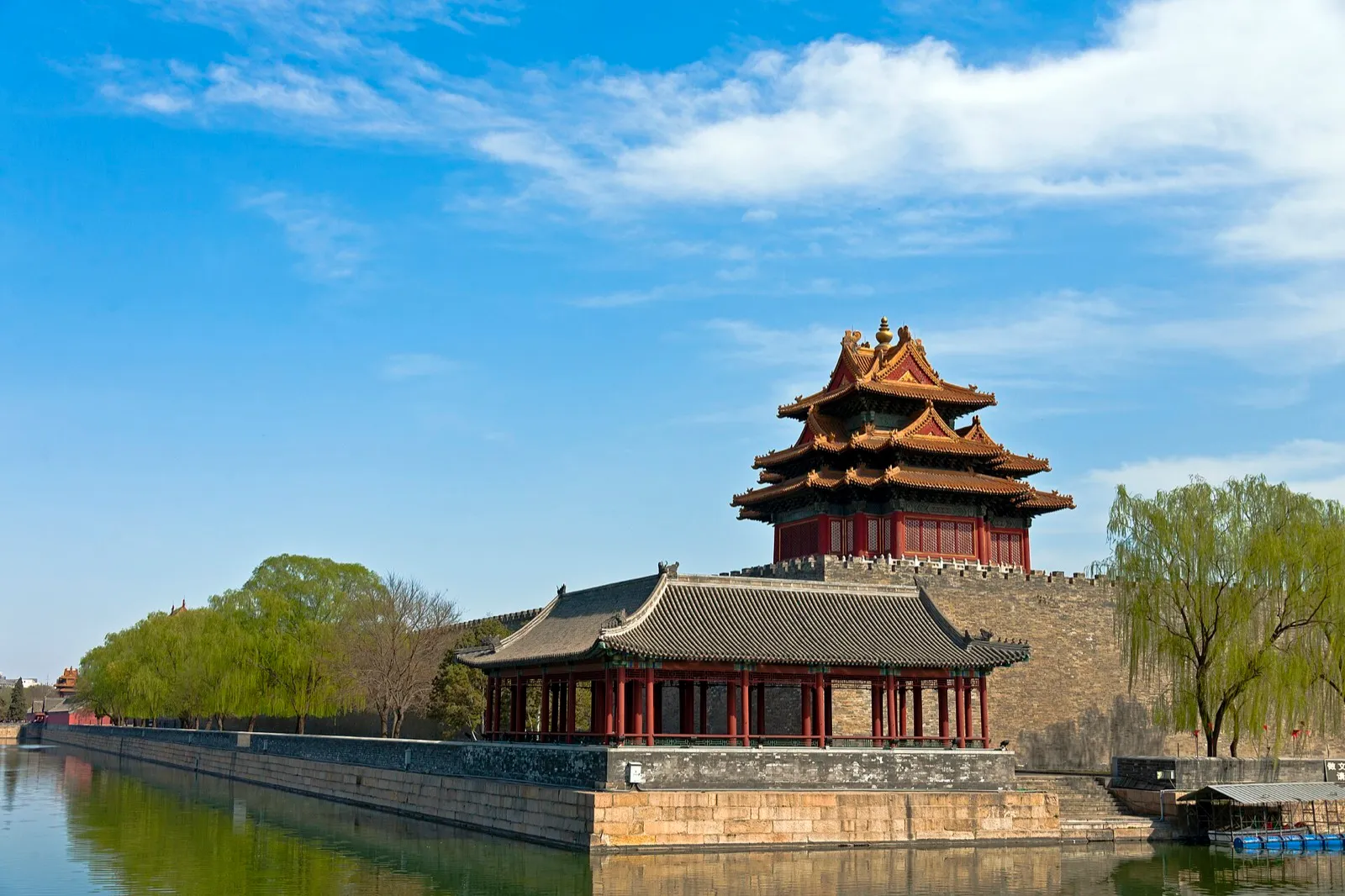
Choose Beijing if the trip is about China’s long history and you are willing to plan. The Forbidden City alone justifies the flight: 720,000 square meters of Ming and Qing palace halls, gates, and courtyards, entered through the Meridian Gate and walked south to north along the central axis. Tickets cost ¥60 in peak season (April 1–October 31) and ¥40 off-season (November 1–March 31), as of October 2026, and go on sale seven days ahead at 20:00 Beijing time; there are no same-day tickets, and the museum closes Mondays except public holidays. Set an alarm, book with your passport, and treat it as the fixed point around which the rest of the itinerary moves.
Beijing also wins for the Great Wall. Mutianyu, about 90 minutes from the center, has restored watchtowers, forested ridges, and a fraction of Badaling’s crowds. Budget around 40 yuan for entry, 15 for the internal shuttle, and about 100 for the cable car one way as of October 2026; arrive by 9 a.m. on a weekday if you want quiet. Add the Temple of Heaven at dawn, the Summer Palace’s lake and Long Corridor, and an afternoon in the Shichahai hutongs, and four days barely feels generous.
Finally, pick Beijing if your budget is tighter. Food, hotels, and transport all cost less than in Shanghai, and the city’s park culture — tai chi, opera singers, card games — is free.
Who Should Pick Shanghai
Choose Shanghai if this is your first week in China and you would rather ease in than be tested. The metro is the longest network in the world, signed in English, and costs roughly 3–9 yuan a ride. The Bund is free and open around the clock; the Pudong skyline lights up around 7 p.m. in summer and 6 p.m. in winter, and goes dark around 10. Yu Garden charges only 30–40 yuan, and the former French Concession requires no ticket at all — just comfortable shoes and an afternoon.
Shanghai also wins on a short trip. With two or three days, you can see the Bund, cross to Pudong, eat well in the French Concession, and still take a half-day run to Zhujiajiao on Metro Line 17. Suzhou is 25 minutes away by high-speed rail and Hangzhou 45–60 minutes, which makes Shanghai the best base in China for day-tripping. If you are tacking a China stop onto a business trip or a long layover, this is the city that respects your clock.
The food is another argument. Shanghai’s local cuisine is sweet, braised, and soy-forward, and the city’s cafe culture is the deepest in the country. Beijing has great food too, but Shanghai is easier to eat well in without research.
How to Combine Them
Yes, do both if you have six or seven days. The high-speed rail line between Beijing South and Shanghai takes about 4.5 hours on the fastest trains (4 hours 18 minutes at best), with second class commonly around 500–700 yuan as of October 2026. Flying takes about two hours in the air but adds airport transfers at both ends, so the train is usually the calmer choice and drops you downtown.
The minimum sensible split is three nights in each, plus a fourth in Beijing if you want a full Great Wall day. That is six or seven days door to door. A common and effective order is Shanghai first, Beijing second: Shanghai teaches you the apps and the metro with low stakes, and Beijing then delivers the payoff. The reverse works too, ending in Shanghai’s easier restaurants and airport.
Do not attempt a day trip between them. The travel day eats half a day, and both cities punish rushed sightseeing. If you have only five days, choose one city and add a day trip; if you have eight or more, insert Suzhou or Hangzhou after Shanghai rather than adding a third big-city transfer.
Common Mistakes
- Trying to see both in four or five days. You will spend a day in transit and shortchange the Forbidden City or the Bund.
- Showing up at the Forbidden City without a booking. There are no same-day tickets. Book exactly seven days ahead at 20:00 Beijing time, and avoid Mondays.
- Underestimating Beijing’s distances. Staying outside the Second Ring Road adds an hour a day. Pay for location near a metro station.
- Doing the Bund only at midday. The view is a different experience at dusk, when both banks switch on their lights.
- Treating Shanghai as “not the real China.” The former French Concession, the canal lanes, and the breakfast stalls are as local as anything in Beijing — you just have to leave the waterfront.
- Traveling during Golden Week (October 1–7) or the Spring Festival. Prices spike, trains sell out, and the headline sights hit capacity.
- Packing for a generic “Asia” trip. Beijing in late autumn is cold at night; Shanghai’s winters are damp and colder than the numbers suggest.
Both cities are worth a trip. The mistake is asking which one is better instead of asking what kind of week you want.
Sources & verification (11)
- https://www.dpm.org.cn/Visit.html
- https://www.dpm.org.cn/Home.html
- https://www.travelchinaguide.com/china-trains/beijing-shanghai-highspeed.htm
- https://www.travelchinaguide.com/china_great_wall/scene/beijing/mutianyu.htm
- https://www.travelchinaguide.com/attraction/shanghai/shanghai-tower.htm
- https://us.trip.com/guide/attraction/shanghai-tower-tickets.html
- https://www.travelchinaguide.com/attraction/shanghai/yuyuan.htm
- https://www.travelchinaguide.com/attraction/shanghai/the-bund.htm
- https://www.travelchinaguide.com/china-trains/shanghai-suzhou.htm
- https://www.travelchinaguide.com/china-trains/shanghai-hangzhou.htm
- https://english.beijing.gov.cn/travellinginbeijing/parks/202603/t20260320_4562532.html