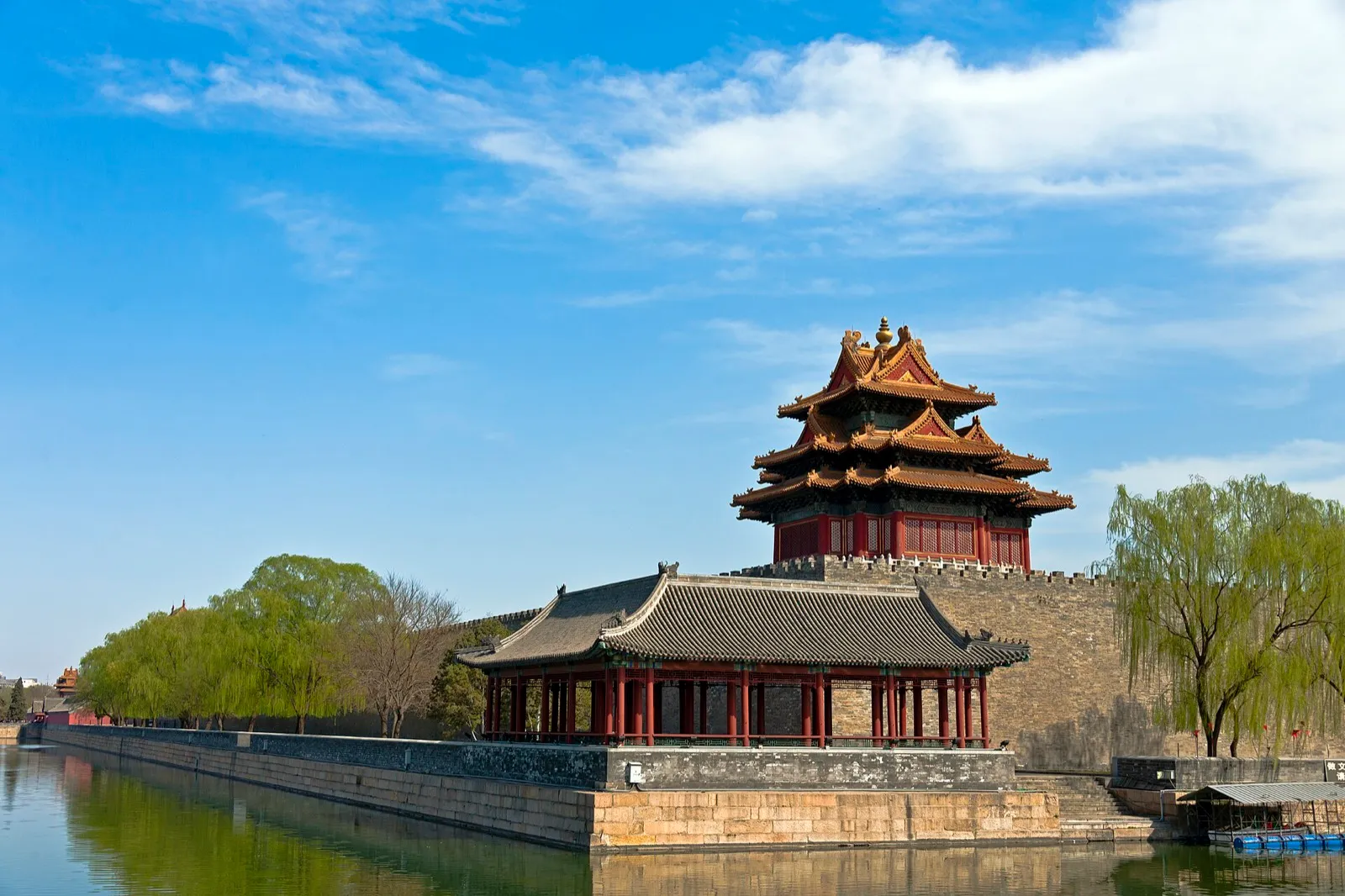
Beijing is China's political and cultural capital, a city where eight centuries of dynastic history sit inside a fast, modern metropolis. The core experiences are unique on earth: the Forbidden City, the Great Wall at Mutianyu, the Temple of Heaven, and the hutong alleys of the old city. Beijing rewards travelers who plan ahead — its headline sights all require real-name reservations made days in advance — but the payoff is enormous. It also has serious food, from Peking duck to lamb hotpot, and it is the natural first stop on a classic Beijing, Xi'an, and Shanghai route. Best for first-time visitors to China, history lovers, and anyone who wants to understand the country's past and present in one city.
Top sights at a glance
No. 1
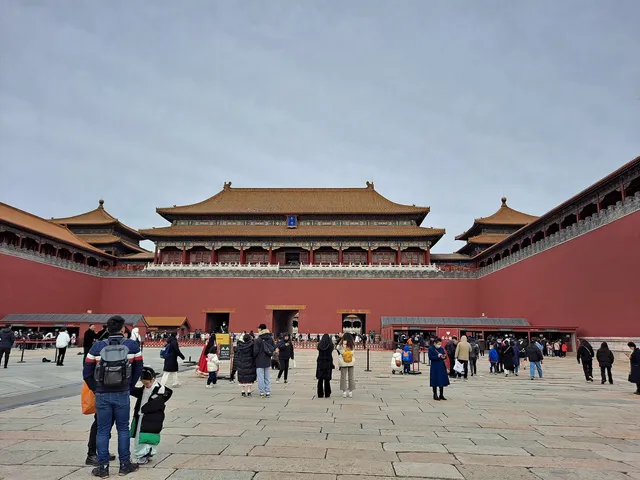
The Forbidden City
The world's largest palace complex and China's imperial home for nearly 500 years, with thousands of rooms of halls, courtyards, and gardens behind ten-meter walls. It holds the densest concentration of Ming and Qing treasures anywhere. No trip to China is complete without it — but tickets are capped and sell out, so this is the sight you book first. Enter at the Meridian Gate and walk the central axis from south to north.
Good to know · Book via the Palace Museum's official WeChat mini-program or website with your passport number; tickets are released 7 days ahead at 20:00 Beijing time and often vanish within hours. Closed Mondays (except national holidays). Bring the same passport you booked with, and pay with Alipay or WeChat Pay.
No. 2
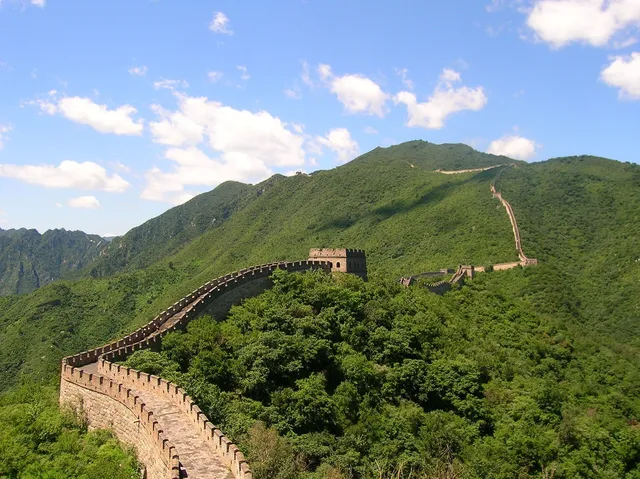
Great Wall at Mutianyu
The best all-round section of the Great Wall for a first visit: fully restored watchtowers riding a forested ridge, far fewer crowds than Badaling, and a cable car to skip the stiffest climb. The descent by toboggan is the most fun you will have in China. Mutianyu sits roughly 90 minutes from central Beijing, making it an easy half-day or full-day trip.
Good to know · Entrance is around 40 yuan, plus 15 yuan for the internal shuttle and about 100 yuan for the cable car or toboggan, as of September 2026. Book ahead online, go early on a weekday, and use a direct shuttle bus from the city to skip driving.
No. 3
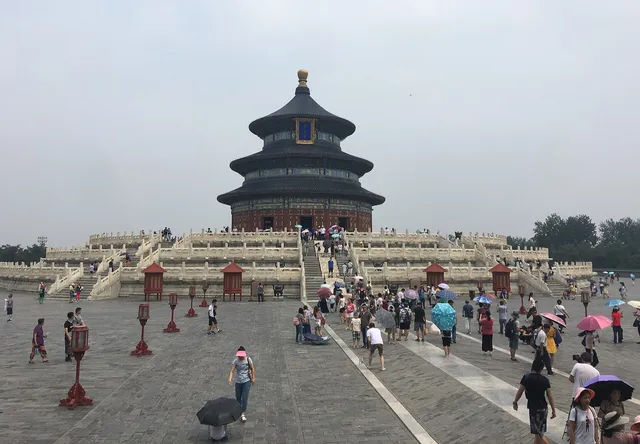
Temple of Heaven
Ming and Qing emperors came here to pray for good harvests, and the Hall of Prayer for Good Harvests remains China's most recognizable building after the Forbidden City. The real magic, though, is the cypress park around it, where Beijingers do tai chi, dance, and play chess every morning. Arrive at opening time and you get the monument and the daily life in one visit.
Good to know · Buy the combo ticket — 34 yuan in peak season, 28 off-season — since the park-only ticket does not cover the halls, as of September 2026. Inner buildings close Mondays. Take Line 5 to Tiantan Dongmen and enter the east gate.
No. 4
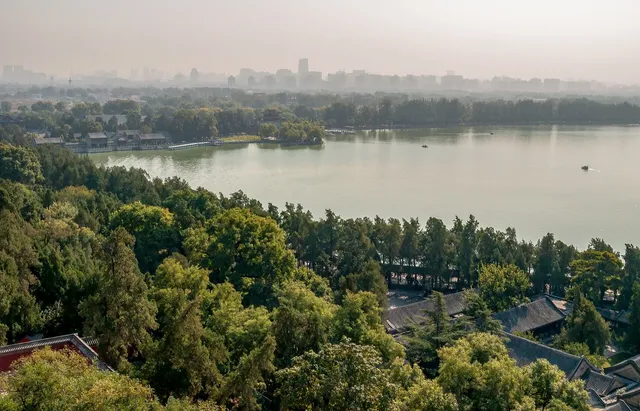
Summer Palace
The imperial lakeside retreat and China's finest classical garden: Kunming Lake, the 728-meter Long Corridor, Longevity Hill, and a marble boat famously built with navy funds, and the Seventeen-Arch Bridge at its far shore. In summer the lake is dotted with paddle boats; in deep winter it freezes solid and locals walk across it. The grounds cover nearly three square kilometers, so budget half a day.
Good to know · The combined ticket — 60 yuan peak season, 50 off-season — covers the main inner sights and is worth it, as of September 2026. Take Line 4 to Beigongmen, start at the north entrance, and cross the lake by boat if it is running.
No. 5
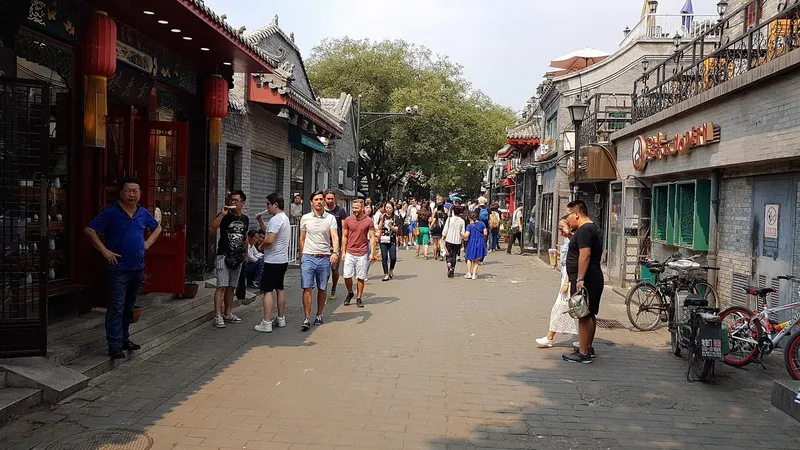
Hutongs of Beijing
Old Beijing survives in its hutongs — gray-walled alleyways of courtyard homes around the Drum Tower, the Shichahai lakes, and Guozijian. This is the city at human scale: courtyard cafes, hole-in-the-wall noodle shops, card-playing grandmothers, and bicycles. Walking them costs nothing and ranks among the best experiences in China, especially in the early morning or at dusk, when the tourist streets go quiet and the neighborhood resumes its own rhythm.
Good to know · The hutongs are free to wander around the clock. Base yourself near Nanluoguxiang or Wudaoying, walk toward the Drum Tower and the lakes, and duck into quiet side lanes away from the main drag. Prince Gong's Mansion, a restored princely compound nearby, costs about 40 yuan.
Beijing does not ease you in. You step off the high-speed train or out of the airport, and within a day you can be standing in front of the Forbidden City or on a rampart built to hold back Mongol armies. This is a capital of serious scale — ring roads nine lanes wide, a palace the size of a small town — but also of small pleasures: a jianbing crepe from a street cart, dawn tai chi in a temple park, a cold beer in a hutong courtyard. If it is your first time in China, start here. The sights are the country’s most famous, the tourism infrastructure is the most polished, and the city will teach you the one lesson every visitor needs early: in China, the best things are booked days in advance.
A Bit of History
Beijing has been China’s capital, on and off, for eight centuries. The city took its modern shape under Kublai Khan, who made it the capital of the Mongol Yuan dynasty in the thirteenth century and laid out the block grid that the center still follows. After the Ming drove out the Mongols they briefly moved the court south, then reconsidered: in 1406 the Yongle Emperor launched construction of a new imperial palace, and by 1420 the Forbidden City stood complete, raised by conscripted labor measured in the hundreds of thousands. Beijing — literally “northern capital” — has anchored Chinese state power for most of the six centuries since.
The Ming built most of what you will visit: the palace itself, the altars of the Temple of Heaven, and the Great Wall rebuilt in the stone-and-brick form hikers know today, after early defeats on the steppe frontier. The Qing, the Manchu dynasty that took the city in 1644, expanded the imperial parks — the Summer Palace chief among them — and filled the palace halls with the clocks, jades, and ceramics you can still see. The dynasty collapsed in 1912; the last emperor was pushed out a few years later, and the Forbidden City opened to the public as the Palace Museum in 1925.
The twentieth century hit Beijing hard. The capital moved to Nanjing in the interwar years, Japanese occupation followed, and after 1949 the new People’s Republic tore down the great city walls — a couple of gates and corner towers survive beside traffic roundabouts. What survived, remarkably, is the imperial core, and since the 1990s the city has wrapped it in subway lines, ring roads, and glass office districts. What you see today is a deliberate palimpsest: imperial Beijing at the center, monumental socialist architecture along the east–west axis, and a hyper-modern metropolis radiating outward in concentric rings.
Keep that layering in mind as you sightsee, because the city explains itself in strata — Yuan street grid, Ming walls and altars, Qing gardens, faded Republican-era grandeur, and a twenty-first-century skyline racing upward. Few places on earth pack this much consequential history into a walkable center.
Culture & Daily Life
Daily life in Beijing runs on apps, and so does tourism. Museum tickets, subway rides, shared bikes, restaurant queues, even fruit stalls: everything happens inside WeChat or Alipay. Set both up before you leave home — our payments guide at /guides/payments/ walks through it — and assume cash is nearly useless. The upside is that once your accounts work, Beijing is easy: you scan a QR code for the metro, book a DiDi in seconds, and reserve sights from your hotel bed.
Do not skip the parks. Beijing’s park culture is one of its great free shows: at dawn, retirees gather for tai chi, ribbon dancing, giant calligraphy brushes wetted on the paving stones, and choral groups with amplified speakers. The Temple of Heaven park is the classic place to watch, but every neighborhood has one. Go once at 7 a.m. and you will understand the city better than any museum can teach.
Inside the Second Ring Road, the hutongs keep a village rhythm that surprises people who picture Beijing as pure concrete. Gray walls lean over narrow lanes; origami-bright laundry hangs from courtyard roofs; cats sleep on scooters. Many courtyard homes have become cafes, bakeries, and small guesthouses, so you can spend a day drifting between lanes with no agenda at all.
A few etiquette notes. Queuing is now generally orderly — join it. Tipping is not expected anywhere. Bargaining is for markets, not shops, and a smile goes further than theatrics. And carry your passport every single day: every ticketed sight in this city is tied to real-name registration, and the passport in your hand must match the one you booked with.
Nature & Day Trips
Beijing is greener and hillier than most visitors expect. The Western Hills begin less than an hour from the center, and Fragrant Hills Park turns red-leaved and mobbed in late October. Closer in, you can rent a paddle boat on Kunming Lake at the Summer Palace or run the wetlands loop in Olympic Forest Park, which is free and rarely crowded.
The essential day trip, of course, is the Great Wall — Mutianyu, covered below, or the wilder Jinshanling to Gubeikou ridge hike for walkers who want crumbling towers and no cable cars; it is about two hours away and best arranged with a driver. The Ming Tombs valley north of the city pairs easily with a Badaling run if you insist on that section. For something different, the stone village of Chuandixia, in hills to the west, preserves Ming-era courtyard houses in a setting that feels a century removed from the capital. Honestly, though, most itineraries do not need more than Mutianyu plus a park afternoon — Beijing’s urban sights deserve the time.
Food & Drink
Start with the duck, because Beijing did. Peking duck is a whole-bird ceremony: lacquered skin carved tableside, folded into thin pancakes with scallions, cucumber, and sweet bean sauce. At a good mid-range restaurant expect 200 to 300 yuan for a whole duck and book ahead — the best courtyard spots fill up. Skip the famous old chains on pure tourist traffic and ask your hotel or a hutong host where they actually go.
Beyond duck, the city eats hearty northern food. Zhajiangmian — thick noodles under fried soybean paste and shredded cucumber — is the local lunch for a few dollars. Jianbing, the eggy crepe griddled on street carts at breakfast, costs about 10 to 15 yuan and is the best cheap eat in China. In winter, nothing beats copper-pot hotpot: paper-thin mutton swished in boiling broth, then dunked in sesame paste. Lamb skewers, dumplings, and glazed hawthorn skewers (tanghulu) round out the street-food list.
For neighborhoods, Guijie — Ghost Street, east of the hutongs — is a lantern-lit mile of restaurants running late into the night. The hutongs around Nanluoguxiang and Wudaoying hold the city’s best casual courtyard dining. Wangfujing’s tourist snack street is skippable; the famously exotic stall items are for cameras, not appetites. A solid sit-down meal runs 50 to 100 yuan per person without alcohol, and beer from a corner shop costs pocket change.
Top Sights
The Forbidden City
The Palace Museum — everyone just says Forbidden City — is the largest palace complex on earth and a UNESCO World Heritage site: some 720,000 square meters of halls, gates, and gardens behind ten-meter walls, home to 24 emperors of the Ming and Qing. Give it at least three hours, more if you add the side galleries; the Treasure Gallery and the Clock Exhibition each cost an extra 10 yuan and are worth both.
Here is the part that catches people out: you cannot just show up. The Palace Museum caps daily visitors (30,000 under its real-name policy) and sells no same-day tickets. Bookings open 7 days ahead at 8 p.m. Beijing time through the official mini-program or website, using your passport number; popular days vanish within hours, so book the moment your dates are fixed. It closes every Monday except public holidays. Enter at the Meridian Gate at the south, walk the central axis, then escape into the quieter eastern quarters before exiting north — and climb the hill in Jingshan Park across the street for the classic panorama over the golden roofs, for an entrance fee of 10 yuan (as of September 2026).
Great Wall at Mutianyu
Choose your section first, because this is the single biggest planning decision for the Great Wall. Badaling is the closest to a high-speed rail link and the most famous, which is exactly the problem: on any decent day it is a human traffic jam, and the wall reads more like a promenade than a wonder. Mutianyu, about 90 minutes northeast of the city, is our clear recommendation for a first visit: the same fully restored stone and brickwork, watchtowers every few hundred meters, green mountains in every direction, and a fraction of the crowds — especially if you arrive by 9 a.m. on a weekday.
Logistics: there is no metro, so take a direct shuttle bus from central Beijing, the public bus 916 from Dongzhimen to Huairou followed by a short taxi, or a DiDi or private driver (about 1.5 hours each way). Budget roughly 40 yuan for entry, 15 yuan for the internal shuttle, and about 100 yuan for the cable car up (140 round trip) or the chairlift, as of September 2026 — then take the toboggan down, because riding a metal sled off the Great Wall is exactly as good as it sounds. Walk east from the cable car for the steepest, quietest towers. If you are a serious hiker with a full day, the ruined-ridge walk at Jinshanling beats everything for atmosphere; book it with a driver or small-group transfer.
Temple of Heaven
Finished in 1420, the same era as the Forbidden City, this was where the emperors came each winter to ritually pray for the harvest — the one job they could not delegate. The Hall of Prayer for Good Harvests, a triple-gabled cylinder of timber raised without a single nail, is the building on every China poster for good reason. The complex also includes the Echo Wall and the Circular Mound Altar, and all of them sit inside a 267-hectare cypress park.
Buy the combo ticket — 34 yuan in peak season, 28 off-season, versus 15 for park-only — because the park alone gets you greenery, not the buildings, and note that the inner halls close on Mondays, as of September 2026. Come early: the halls open around 8 a.m., and the hours before that belong to the park’s daily crowd of dancers, musicians, and card players. Two to three hours here is plenty, and the metro drops you at the east gate.
Summer Palace
When the Qing court wanted out of the Forbidden City’s walls, it came here, northwest of town: a vast imperial garden built around Kunming Lake and Longevity Hill, where the 728-meter Long Corridor — every beam painted with scenes from Chinese legend — runs along the shore to the Marble Boat, a stone lakeside pavilion paid for, scandalously, with navy funds. In summer you can rent paddle boats; in winter the lake freezes into a gray mirror.
The park gate costs 30 yuan in peak season, but the combined ticket at 60 yuan (50 off-season) covers the inner sights that actually justify the trip, as of September 2026. Take metro Line 4 to Beigongmen, enter at the north gate near Suzhou Street, cross to the lake, and work your way along the corridor toward the East Gate. Arrive before the tour buses at mid-morning, and budget a half day — this is the largest royal garden in China, and rushing it defeats the purpose of a pleasure palace.
Hutongs of Beijing
The hutongs are the neighborhoods between the monuments, and they are a top sight in their own right. These narrow lanes of courtyard houses (siheyuan) date to the Yuan dynasty street grid; the surviving districts around the Drum and Bell Towers, the Shichahai lakes, and the former imperial college at Guozijian are where old Beijing still breathes. Nanluoguxiang is the famous, heavily commercialized spine — fun once, but step one street sideways and the crowds thin out fast. Wudaoying and Guozijian Jia are quieter, lined with cafes and small shops, and the lakes at Shichahai turn into a lantern-lit bar strip after dark.
Walking is free and is the whole point. Start at the Drum Tower, climb it for the view over gray rooftops, wander south through the lanes, and finish with a drink by Houhai lake. Add Prince Gong’s Mansion, a restored princely compound near the lakes, for about 40 yuan — booked ahead like everything else in this city, as of September 2026. Rickshaw tours exist if your feet give out, but the hutongs reward slowness, not commentary.
Getting There & Around
Beijing has two airports. Capital (PEK) sits northeast of the city and is closer to the traditional sights; Daxing (PKX), about 50 kilometers south, is newer, mostly served by domestic and growing international routes, and connected by the Daxing Airport Express train. From either, expect 45 to 90 minutes into the center by rail plus metro, or DiDi.
By rail, Beijing South station handles the high-speed line to Shanghai (around 4.5 hours); Beijing West dispatches the G trains to Xi’an, 4.5 to 6 hours away with second class from around 515 yuan as of September 2026. Book on the official 12306 app or website up to about 15 days out using your passport; e-tickets mean you board with the passport itself.
In town, the subway is the answer: one of the world’s largest networks, cheap (roughly 3 to 9 yuan by distance), signed in English, and running until around 11 p.m. It is packed at rush hour but still faster than taxis, which crawl in traffic despite modest fares through DiDi. Shared bikes solve the last mile, especially inside the hutong districts.
Where to Stay
Three areas cover most travelers. The Dongcheng hutong belt around Yonghegong (Lama Temple), Nanluoguxiang, and Wudaoying is the character pick: boutique courtyard guesthouses, cafe-lined lanes, and bike access to the Drum Tower and lakes — best for atmosphere-seekers and repeat visitors.
Qianmen and Wangfujing, just south and east of the Forbidden City, are the practical first-timer choice: you can walk to Tiananmen Square and the palace, and the metro connects everywhere else. It is busier and more hotel-district generic, but location is location.
Sanlitun in Chaoyang, northeast of the center, is where the bars, embassies, and shopping malls cluster — the pick if nightlife matters most, and an easy metro or DiDi ride from the old city. Whatever you choose, staying inside or near the Second Ring Road will save you hours; Beijing’s distances punish bad location decisions more than any other Chinese city.
Sources & verification (9)
- https://www.dpm.org.cn/
- https://chinista.com/
- https://us.trip.com/guide/attraction/how-to-book-china-attraction-tickets.html
- https://greatwallofchinabeijing.tours/
- https://us.trip.com/travel-guide/attraction/beijing/temple-of-heaven-75599
- https://english.beijing.gov.cn/travellinginbeijing/parks/202603/t20260320_4562532.html
- https://www.summerpalace.net.cn/
- https://www.beijingtourism.org/
- https://www.chinaxiantour.com/