Beyond Beijing in 12 Days: Datong, Chengde, Tianjin, and Dalian
Beijing's imperial core, then the capitals the emperors kept around it: Datong's 1,500-year-old Yungang Buddhas and cliff-hung Hanging Temple, the Qing summer mountain at Chengde with its transplanted Tibetan temples, Tianjin's concession-era European streets and comedy teahouses, and a sea-breeze finish in Dalian — squares, boardwalks, and the country's best northern seafood. Every stop sits on a high-speed line from Beijing; the only long ride is the last one, Tianjin to Dalian. Booking rules spelled out: the Forbidden City's 7-day release first, Yungang's advance reservation second, and the Hanging Temple's daily climb cap third.
Route: Beijing Datong Chengde Tianjin Dalian
Beijing earns its place at the front of every first itinerary — but the capital’s deeper story is the constellation around it, and almost nobody goes. Within a short-radius burst of high-speed rail sit a Northern Wei cave city, the Qing emperors’ mountain summer capital, a port of European concessions turned comedy capital, and China’s most pleasant northern seafront. This route does Beijing properly — three days for the palace, the Wall, and the hutong evenings — then radiates outward in one direction, never backtracking twice, and finishes with salt air in Dalian. It is a China trip with no domestic flights in it until the one home, and its days alternate between world-class sights and the kind of easy market-and-square evenings that keep two-week trips humane. City guides for Beijing, Datong, Chengde, Tianjin, and Dalian go deeper on every stop.
Day 1: Arrive in Beijing
Land, install your infrastructure (essential apps guide), and take the afternoon on foot: Qianmen’s restored streets, the hutong lanes behind them, dinner as the only firm appointment — Peking duck if you booked the famous name, a neighborhood grill if you didn’t. Jet lag is a scheduling problem; solve it with daylight and an early night.
Practical tip: Tonight, confirm the trip’s keystone booking: Forbidden City tickets release 7 days ahead at 20:00 Beijing time on the official site and vanish within hours in season — set an alarm for the release if your palace day is inside that window. If Day 2 would be a Monday, swap it now: the palace closes Mondays.
Day 2: Tiananmen Square and the Forbidden City
The imperial axis, end to end: reserve the square (free, mandatory), pass through the gate, and give the Forbidden City three unhurried hours along its central axis before exiting north into Jingshan Park — climb the hill, watch the golden roofs repeat to the horizon, and call it the best ticket in China.
Practical tip: Tickets cost ¥60 in peak season, are real-name with your passport, and have no same-day sales; pay with Alipay or WeChat in the official mini-program (payments guide). The ¥2 Jingshan entry is cashless and worth it at sunset, not noon.
Day 3: The Great Wall at Mutianyu
Give the Wall a full day, and give it to Mutianyu: restored watchtowers on a forested ridge, a cable car up, a toboggan down, and a fraction of Badaling’s crowds. Walk east toward Tower 20 for the quiet stretches, eat the village lunch, and be back in the city by late afternoon — hutong evening optional, legs willing.
Practical tip: The stack: ¥40 entrance, ¥15 compulsory shuttle, ¥140 round-trip cable car (or roughly ¥100 one-way up plus the toboggan down). The Dongzhimen tourist shuttle (~¥80 round trip, 1.5 hours each way) beats piecing together buses; book a day or two ahead on the official site and start early — the coaches land by 11.
Day 4: Temple of Heaven, Then the Rail to Datong
A gentle capital farewell: early at the Temple of Heaven (buy the ¥34 peak-season combo ticket — park-only doesn’t reach the Hall of Prayer), tai chi in the cypress park, then a hutong lunch. Afternoon: the high-speed train west to Datong (fastest about 1 hour 40 minutes from Qinghe; second class roughly ¥140-150), arriving in time for the rebuilt Ming city wall at dusk — free to walk, lit like a film set.
Practical tip: Datong’s wall is best in the last hour of light: enter by the south gate, walk twenty minutes in either direction, and come down for the old-city dinner streets. Book the train for around 15:00 so the wall hour survives.
Day 5: The Yungang Grottoes
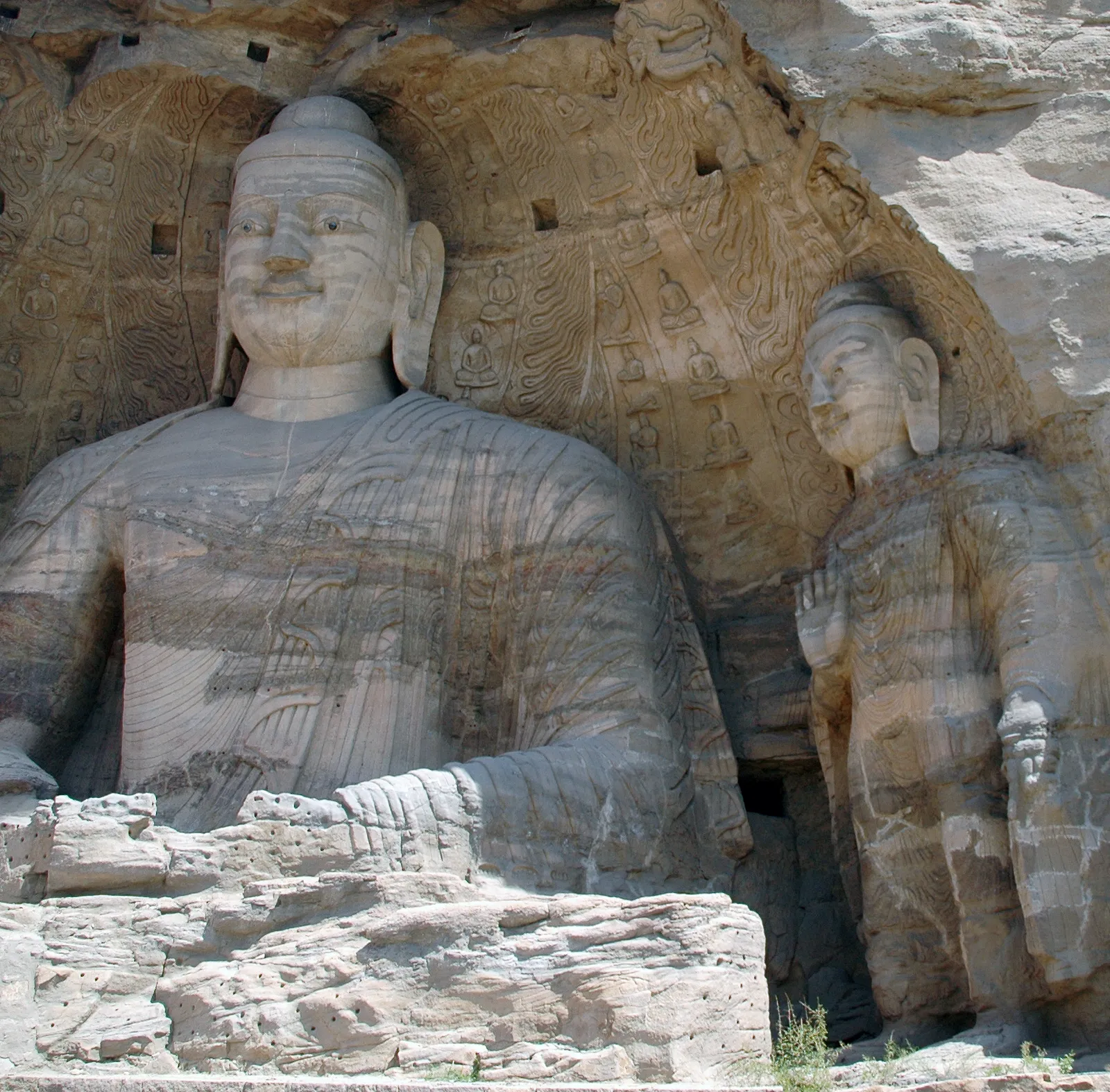
The reason Datong is on the map: 51,000 Buddhas carved into a sandstone cliff 1,500 years ago, when this was the capital of the Northern Wei. Cave 20’s giant open-air Buddha sets the tone; the central caves hold the painted, gold-leafed later wonders. Four hours covers the full gorge, museum included — go slow in Cave 5 and 6, the Sistine Chapel moment of Chinese Buddhism.
Practical tip: Tickets run ¥120 peak season (¥100 off-season) with no gate sales — reserve ahead on the official Yungang mini-program or Trip.com with your passport. Buses and the tourist line cover the 16 kilometers west; a Didi is cheap and halves the time. Mornings are cooler and emptier.
Day 6: The Hanging Temple and the Wooden Pagoda
A day of impossible architecture: first the Hanging Temple, a monastery pinned to a cliff face on crossbeams for 1,400 years — view it from the gorge floor, then (tickets willing) climb the walkways that hang in the air; then Yingxian’s wooden pagoda, 67 meters of interlocking timber raised in 1056 without a single nail, leaning gently like a patient elder.
Practical tip: The Hanging Temple charges about ¥15 to enter the gorge and around ¥100 to climb, with climbing tickets capped daily (about 3,200, only 80 people on the structure at once) — arrive at opening or book ahead via Trip.com in season. The pagoda costs ¥50; its interior upper floors are closed to protect the structure. Distances are real (65-80 kilometers), so a hired car for the day combining both is the clean solution — from about ¥400-500 split among four.
Day 7: The Rails to Chengde
Travel morning: high-speed back through Beijing (about two hours), then the connecting line northeast to Chengde South (under an hour, second class ¥106) — two trains, one afternoon, and the Qing emperors’ summer mountain by evening. Walk the Mountain Resort’s outer wall path at dusk, or save it: tomorrow starts early.
Practical tip: Book both legs on 12306 as soon as tickets open — the Beijing transfer is the day’s friction. Chengde South sits 20-30 minutes by taxi from the resort district; hotels cluster walkably around the sights, so sleep close and skip tomorrow’s transit entirely.
Day 8: The Mountain Resort and the Little Potala
A full imperial day. Morning in the Mountain Resort — the world’s largest imperial garden, lakes and lotus pavilions below hunting-forest hills (¥130 peak season, buy at the gate with Alipay). Afternoon climbs to Putuo Zongcheng, the “Little Potala” the Qianlong emperor built for Tibetan guests — its red terraces stack up the hillside like a manifesto of empire.
Practical tip: Putuo Zongcheng’s ¥80 peak-season ticket is bundled with the Xumi Fushou Temple next door; wear real shoes, the stairways are steep. Swap rule: if a second Wall day appeals more, the wild watchtowers of Jinshanling sit 97 kilometers away (about ¥65 entry plus shuttle; hire car 1.5-2 hours) — trade Puning Temple for it without regret.
Day 9: Puning Temple, Then the Rail to Tianjin
Morning at Puning Temple, home to a 27-meter wooden Guanyin — the tallest of its kind — and a working monastery’s morning chant if the timing lands. By early afternoon you’re rolling back through Beijing and on to Tianjin (the whole hop takes about two hours; Chengde has no direct line south). Evening: the Hai River promenade, where the Eye wheel turns over the bridges.
Practical tip: Puning runs ¥80 peak season bundled with the adjacent Puyou Temple. The Tianjin Eye (¥70) has historically closed Mondays for maintenance — if tonight is a Monday, ride the river boat instead and wheel another night. Riversides are free and best after the lights come on.
Day 10: Concessions, Porcelain, and Crosstalk
Tianjin’s afternoon at European pace: Wudadao, the “Five Great Avenues” quarter of 2,000-odd villas in every style the early 1900s exported — walk it, or take the horse carriage (about ¥80) if the drizzle wins. Then the Porcelain House, a French villa surfaced in millions of antique shards (¥50), and Ancient Culture Street’s craft alleys. Evening is the local religion: crosstalk comedy in a teahouse, tea poured, subtitles optional.
Practical tip: Wudadao is free and best in late-afternoon light; Metro Line 1 to Xiaobailou drops you at its edge. Teahouse shows run nightly in the old town — same-day tickets at the door or on local mini-programs, no need to plan far ahead. Pack tonight: tomorrow is the trip’s longest ride.
Day 11: The Rail to the Sea, Dalian by Night
Morning train east: Tianjin West to Dalian North on a direct high-speed service (4 hours 45 minutes to 5 hours, from about ¥360), the line swinging up through Liaoning and down to the Liaodong coast. Arrive mid-afternoon: Zhongshan Square’s ring of colonial banks, the 1909 vintage tram still clanging through (¥1-2), then Xinghai Square — one of the world’s largest city plazas — for sunset over the Yellow Sea.
Practical tip: Only about four or five direct trains run the route daily; book the morning departure and eat lunch onboard. Dalian North connects to downtown by metro; hotels near the square or the Binhai coast put tomorrow’s walk at the door.
Day 12: The Binhai Boardwalk and Departure
The gentle finale: Dalian’s cliff-hugging Binhai Road boardwalk — the stretch between Fujiazhuang and Laohutan is the postcard walk, sea on one side, pine on the other. Graft a late-morning onto Laohutan’s ocean park (about ¥198 in season) or skip beaches entirely for Jinshitan’s wave-cut geology park (Metro Line 3, about an hour out; entry around ¥60). Then the airport: Metro Line 2 runs direct to the terminal, and the seafood lunch on the way out is not optional.
Practical tip: The coastal tourist bus (~¥10 from near the railway station, roughly 8:00-16:00 in season) links the Binhai sights if you’d rather ride than walk. Allow 45 minutes airport-side for the metro; international departures from Dalian run most afternoons — check yours and work the boardwalk backward from it.
Practical Notes
Intercity transport
| Leg | Mode | Time | Second-class fare (approx.) |
|---|---|---|---|
| Beijing (Qinghe) → Datong South | G/D train | 1.5-2.5 hours | from about ¥140 |
| Datong South → Yingxian West | D train | about 19 minutes | about ¥25 |
| Datong → Beijing → Chengde South | G train × 2 | about 3.5 hours total | ¥141 + ¥106 |
| Chengde → Beijing → Tianjin | G/C train × 2 | about 2-2.5 hours total | ¥106 + ¥54.5 |
| Tianjin West → Dalian North | G train | 4.5-5 hours | from about ¥360 |
One long ride and four short ones, all on 12306 (train guide), booked 15 days out. The Tianjin-Dalian seats go first around holidays. Fares as of September 2026, floating pricing.
Budget estimate (per person, excluding international flights)
- Backpacker: US$800-1,000 — hostels and chains, street food and noodle shops, metro and second-class rail (~US$65-85/day)
- Mid-range: US$1,350-1,800 — 3-4-star hotels, restaurant meals, all tickets including the Hanging Temple climb and a hired car day in Shanxi (~US$110-150/day)
- Comfort: US$2,500-3,500 — design hotels, private drivers at every stop, business-class seats and the Dalian seafood tasting menus
Beijing prices the trip up; Datong and Chengde pay it back — ticketed sights beyond the capital rarely top ¥130. See our budget guide for the daily math.
Booking calendar (the part that makes or breaks it)
- 7 days ahead, 20:00 Beijing time: Forbidden City release — the trip’s keystone (closed Mondays)
- 15 days out: all trains; Tianjin-Dalian first
- 1-3 days ahead: Yungang via its official mini-program (no gate sales); Hanging Temple climbing tickets in season; Mutianyu shuttle booking
- Rolling: Temple of Heaven, Datong wall, Chengde’s gardens and temples, Wudadao (all walk-up friendly); Tianjin Eye avoids Mondays
- Best months: May-June and September-October (best-time-to-visit guide). Home setup: 12306, Alipay, Didi, Amap, a translate app (essential apps guide)
Sources & verification (10)
- https://bookingticket.dpm.org.cn
- https://www.travelchinaguide.com/china-trains/beijing-datong.htm
- https://www.chinahighlights.com/datong/attraction/yungang-grottoes.htm
- https://m.ty.bendibao.com/tour/45906.shtm
- https://www.travelchinaguide.com/attraction/hebei/chengde/bishu.htm
- https://www.travelchinaguide.com/attraction/hebei/chengde/eight_temple.htm
- https://www.travelchinaguide.com/china_great_wall/scene/beijing/jinshanling.htm
- https://m.ctrip.com/html5/trains/beijing-tianjin-g/
- https://www.travelchinaguide.com/attraction/tianjin/eye.htm
- https://www.travelchinaguide.com/cityguides/liaoning/dalian/airport.htm