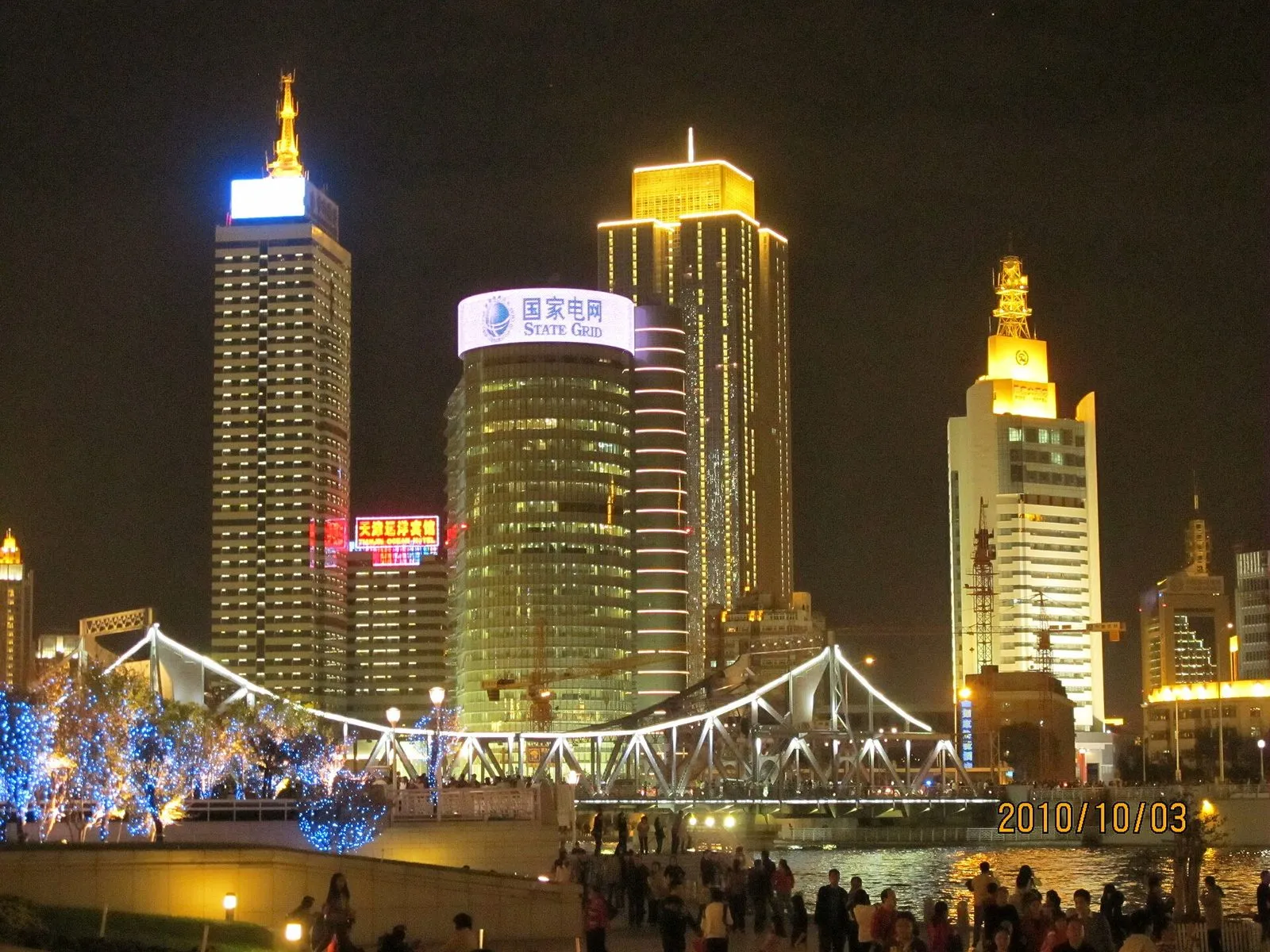
Tianjin is the big city Beijingers escape to: a treaty port where foreign powers ran their own self-governing concessions from the 1860s onward, leaving European streetscapes no other Chinese city can match. The core experiences are architectural and atmospheric — some two thousand villas along the Five Great Avenues, a Ferris wheel built on a bridge over the Hai River, cathedrals and courtyards in the old quarters — paired with a genuinely funny local culture: this is the home of xiangsheng crosstalk comedy, best heard in a teahouse over sunflower seeds. The food is hearty and cheap, from jianbing crepes at dawn to fried dough twists by the mile, and prices run below Beijing's. Bullet trains cover the distance from Beijing South in about half an hour, so most visitors come for a day and wish they had planned two. Best for repeat visitors, architecture lovers, and eaters.
Top sights at a glance
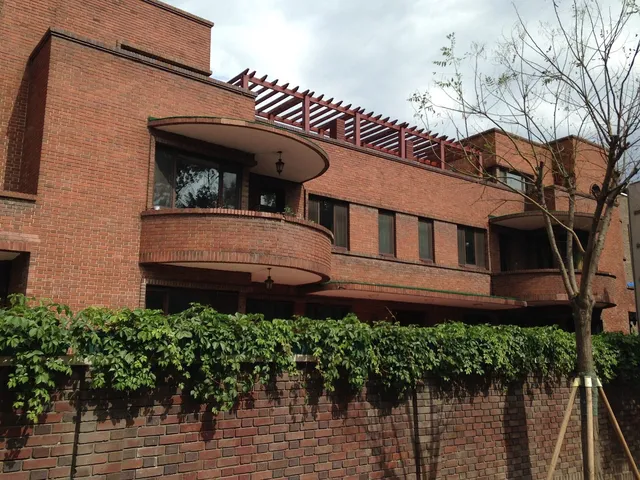
No. 1
Five Great Avenues
Tianjin's signature district: more than 2,000 Western-style villas built in the 1920s and 1930s, when bankers, generals, and retired politicians filled the former British concession with mansions in British, Italian, French, Spanish, and other styles. Locals call it an expo of world architecture. The avenues are quiet, leafy, and best explored slowly on foot or by horse carriage, with hidden courtyards and story-plaque doorsteps at every turn.
Good to know · The quarter is free to wander at any hour; a horse-carriage tour costs around 80 yuan as of September 2026. Take Metro Line 1 to Xiaobailou or Line 3 to Yingkoudao and walk in. Late afternoon light is best, and the cafes make an easy lunch stop.
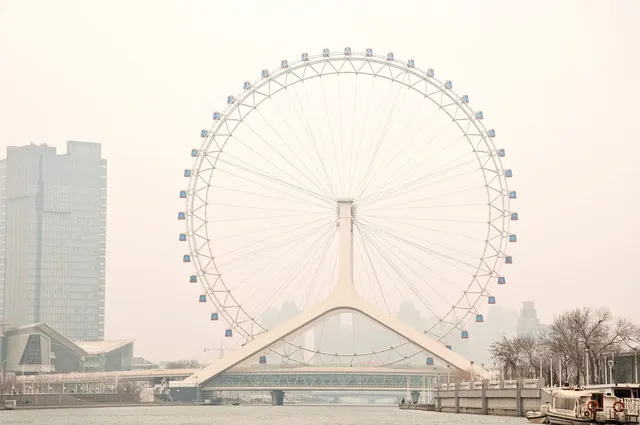
No. 2
Tianjin Eye & the Hai River
A 120-meter Ferris wheel built directly on the Yongle Bridge over the Hai River — by most accounts the only Ferris wheel in the world mounted on a bridge. Its 48 capsules each hold eight people and take about half an hour to complete a lap, with views reaching 40 kilometers on clear nights. Ride after dark, when both riverbanks light up, then walk the bridge for the free version of the same skyline.
Good to know · Tickets cost 70 yuan for adults as of September 2026; the wheel runs roughly 9:30 a.m. to 9:30 p.m. but has historically closed Mondays for maintenance, so check ahead. Holiday evenings sell out by early evening — book on Trip.com or Meituan and arrive early. Pay with Alipay or WeChat Pay.
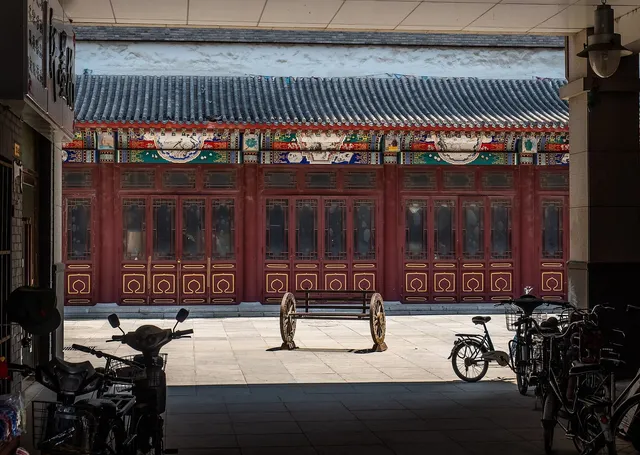
No. 3
Ancient Culture Street
A 687-meter pedestrian street of Qing-style shopfronts along the Hai River's west bank, rebuilt in the 1980s on the site of the city's oldest market quarter. Craft shops sell Clay Figure Zhang painted sculptures and Yangliuqing woodblock prints, Tianjin's two signature folk arts, while the 1326 Tianhou Palace at its center honors Mazu, goddess of the sea — proof that this river port has served sailors for seven centuries.
Good to know · The street itself is free and lively all day; the Tianhou Palace folk-museum inside charges a small fee. Go in the morning before tour groups, and budget an hour unless you graze. It sits a short taxi or metro ride from Tianjin station, easy to pair with the riverfront.
No. 4
The Porcelain House
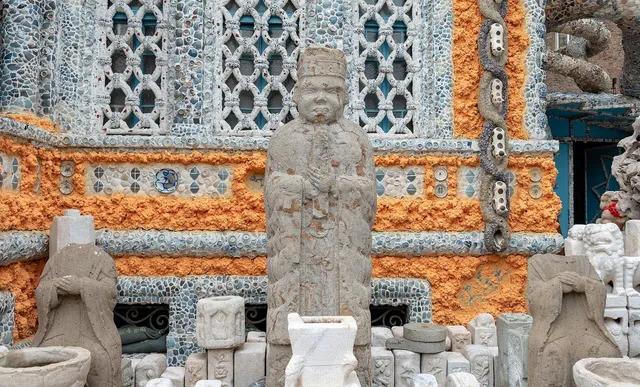
A 1920s French-style villa on Chifeng Road that collector Zhang Lianzhi bought in 2002 and sheathed, inside and out, in antique porcelain — by the museum's own count, hundreds of millions of fragments plus some 4,000 ancient vases, crystal, and carved stone. Glazed dragons coil across the roof; cracked bowls tile the walls. It is eccentric, unapologetically excessive, and utterly unlike anything else in China.
Good to know · Admission is 50 yuan as of September 2026, open roughly 9 a.m. to 6 p.m. Take Metro Line 3 to Heping Road and walk a few minutes southwest; photography is half the fun, so bring the wide lens. Thirty minutes is enough, and central park and the Italian-style quarter pair well nearby.
No. 5
St Joseph Cathedral (Xikai)
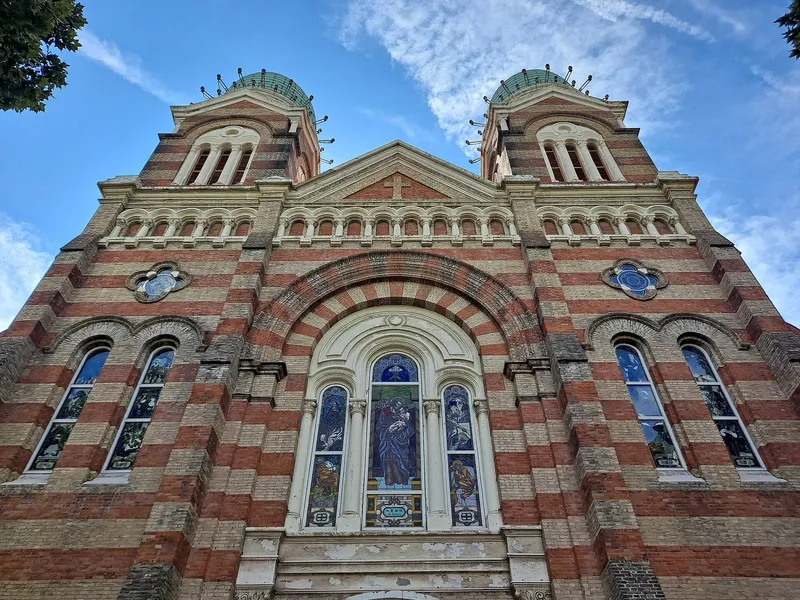
Tianjin's largest Catholic church, completed in 1916 in the former French concession and still nicknamed the French Church. Three copper domes top a red-and-white striped facade; inside, a cross-shaped nave seats some 1,500 worshippers beneath stained glass. It anchors the shopping end of Binjiang Avenue, and unlike most Chinese cathedrals it still holds a full schedule of masses — including one in English.
Good to know · Entry is free; hours run roughly 5 a.m. to 4:30 p.m. Monday through Saturday and 5 a.m. to 8 p.m. Sunday as of September 2026, with the English mass at 11:30 a.m. Sundays. Dress modestly and stay quiet during services. Metro Lines 1 or 3 to Yingkoudao, then a short walk south.
Tianjin is the trip Beijingers actually take, and after one visit you will understand why. The port city sits 120 kilometers southeast of the capital, but the two could not feel less alike: where Beijing is monumental and self-serious, Tianjin is a belle-epolio set piece with a stand-up comic’s soul. Foreign powers carved it into concessions in the late nineteenth century, and each quarter they left behind — British villas, Italian piazzas, French cathedrals — now bakes in the sun along a river built for evening strolls. High-speed trains put it thirty minutes from Beijing South, close enough for dinner. Come for the architecture, stay for the teahouse comedy and the fried dough, and enjoy a big Chinese city where nobody is trying too hard.
A Bit of History
Tianjin owes its existence to water and its character to ships. The name means “the Heavenly Ford,” and for centuries this was the grain port where canal barges from the south transferred rice for the capital. That role put it on the wrong end of gunboat diplomacy: after the Second Opium War, the treaties of 1860 opened Tianjin as a treaty port, and over the following decades eight foreign powers — Britain, the United States, France, Germany, Japan, Russia, Italy, and Belgium — established self-governing concessions here, each laying out streets to its own taste.
The result was a city unlike any other in China. Nine prefectures’ worth of foreign architecture went up between the 1860s and the 1930s: bank palaces along the river, mansions in the British concession that became today’s Five Great Avenues, an entire Italian quarter that remains the largest of its kind outside Italy, churches, clubs, and racecourses. Chinese elites moved in too — warlords, bankers, and the last emperor himself kept residences here, close to the capital but outside its politics. Tianjin became modern China’s laboratory: its first modern police force, postal system, and university all trace to this era, and its film studios, newspapers, and dance halls made it the north’s designated playground. Visiting today, you trace that legacy street by street — a British club here, an Italian plaza there — each quarter a self-contained fragment of somebody else’s homeland.
The twentieth century was harder. Japanese occupation, civil war, and the end of the concessions in the 1940s shut the playground down; industry replaced glamour, and the 1976 earthquake damaged much of the old fabric. What saved the concessions was neglect, then appreciation — the villas were too solid to tear down and too strange to look like anything but heritage. Since the 2000s the city has restored them street by street, opened the riverside to walkers, and strung the whole ensemble together with bridges and lights. The 2008 bullet train to Beijing turned the commute into half an hour, and today Tianjin reads less like an industrial city with a past than a museum of the treaty-port era that happens to pour excellent tea.
Culture & Daily Life
Every Chinese city claims a personality; Tianjin’s is the funny one. This is the undisputed home of xiangsheng — crosstalk comedy, the rapid-fire two-man banter that functions as China’s stand-up tradition — and locals treat it the way Liverpudlians treat the Beatles. Teahouse shows run several times daily, audiences shout bian hao (encore) at the good bits, and some of the form’s greatest names, Ma Sanli among them, honed their craft on these stages. Even if you speak no Chinese, book one show: the rhythm, the heckling, the seeds-and-tea ritual carry most of the pleasure, and it is the single most local thing you can do in town.
The same straight-talking warmth shows up at street level. Tianjiners have a reputation in China for contentment — good wages or bad, the joke goes, nobody in Tianjin is too worried — and the daily schedule proves it. Mornings belong to the jianbing stall, where crepes are folded around crispy fritters with an efficiency perfected over decades. Evenings belong to the river: the Hai He promenade fills with strollers, fishermen, and wedding photographers working the illuminated bridges. The concession quarters double as backlots for Republican-era TV dramas, and you will regularly round a European corner and walk into a film crew.
Architecturally, Tianjin is a walking city of surprises — a Gothic bell tower one block, a Chinese opera stage the next, and the tallest structures usually ferris wheels and TV towers rather than office slabs. The pace is unhurried in a way Beijing forgot decades ago: queues are shorter, taxis cheaper, and vendors more likely to chat. Two practical notes shape daily life. First, breakfast is the best meal — join the guozi lines before 9 a.m. Second, most small shops are cashless-first, so have Alipay or WeChat Pay set up before you arrive; virtually every ticket window in this guide takes them.
Nature & Day Trips
Tianjin’s great outdoor space is engineered rather than wild, and it is excellent. The Hai River loops through downtown in a lazy S, and the city has spent two decades turning its banks into the main event: illuminated bridges, boardwalks, plazas beneath Jinwan Plaza’s mirrored towers, and evening cruise boats that drift past all of it. Treat the riverside as your evening entertainment — an after-dinner walk from Tianjin station toward the Tianjin Eye takes in the best of it, and boat tickets are sold at the riverside piers in season.
For actual hills and greenery, head to Jizhou district at Tianjin’s mountainous northern tip, about two hours away. Two sights anchor the area: the Huangyaguan section of the Great Wall, a dramatically restored ridge line that hosts an annual marathon each May, and Panshan, a pine-forested scenic mountain dotted with temples. Neither sees anything like Beijing’s Great Wall crowds, which is precisely the appeal — on a weekday you can have a watchtower to yourself. Closer to downtown, the Water Park’s lotus lakes offer a green half-day when you are done with architecture, though most visitors will find the river more rewarding. Honestly, day trips are not why you come to Tianjin; the city itself is the attraction, and one or two unhurried days along the concessions beat a sprint to the hills.
Food & Drink
Tianjin eats seriously and cheaply, and its snack canon has three headliners. Goubuli is the steamed bun brand every taxi driver will name — a century-plus-old shop whose pork buns were once fit for emperors and are now, honestly, better as a story than as lunch; try them once and keep expectations adjusted. Guifaxiang fries its mahua — braided dough twists the size of your forearm, studded with nuts and sesame — into an indestructible souvenir sold by the boxful. Erduoyan fries glutinous rice cakes in sweet bean filling until golden. All three are worth tasting; none requires a detour.
The everyday food is the real reason to be hungry here. Breakfast is the municipal religion: jianbing guozi, the thin mung-bean crepe wrapped around a crisp fritter with chili and fermented sauce, was perfected on Tianjin corners, and locals queue for the good stalls before 9 a.m. Around it sit the supporting cast — soy milk, tofu pudding, fried rings of baoer quan, and steaming bowls of guobacai soup with black-black soba-like sheets. Lunch and dinner run to northern standards: dumplings, braised lamb, halal beef dishes around the Great Mosque quarter, and river fish, all at prices a notch below Beijing.
Where to graze matters. Nanshi Food Street gathers the famous names under one roof and is convenient but tourist-calibrated — go once, then eat where the lines are locals. The lanes near Ancient Culture Street mix craft shops with snack stands, and the riverside east of the station sprouts a night market in warm months. Two habits serve you well: carry small cashless payments (Alipay or WeChat Pay work at every stall), and do not fill up before the teahouse — shows come with seeds and tea, but the serious snacking happens before curtain. Prices stay honest almost everywhere, and the portions are northern-generous.
Top Sights
Five Great Avenues
Start here, because Wudadao is Tianjin’s thesis statement: proof that the treaty-port era left something worth keeping. In the 1920s and 1930s, this corner of the former British concession became the address of choice for bankers, generals, and retired politicians, who commissioned some 2,000 villas — by one count roughly ninety British, forty-odd Italian, plus French, German, and Spanish houses — in styles from Tudor to Mediterranean. Today the six avenues (Machang, Munan, Dali, Changde, Chongqing, and Chengdu) form the best-preserved villa district in China: leafy, low-rise, and quiet enough that plaques on the gateposts are worth actually reading. Walk it without a plan — the pleasure is the sequence of doorways, turrets, and garden walls — or take the horse carriage if legs are short. Cars are few, cafes appear when you need one, and every block turns up a story: one house hid an emperor, another a warlord’s seven wives. Go in the late afternoon when the light rakes the facades, stay for the street lamps, and combine with dinner in the Xiaobailou quarter next door.
Tianjin Eye, the Hai River
The ride everyone takes and deservedly so: a 120-meter Ferris wheel with its legs planted on the Yongle Bridge itself, making it by most accounts the only wheel in the world built on a bridge. Forty-eight glass capsules each carry eight passengers through a lap of about half an hour; from the top, the view runs forty kilometers on a clear night, over the river’s illuminated S-curve and the city beyond. The wheel opened in 2009, and it is at its best after dark, when the bridge becomes part of the light show — a rotating viewpoint, in effect. Tickets cost 70 yuan for adults as of September 2026 (children under 1.2 meters ride for 35), the hours run roughly 9:30 a.m. to 9:30 p.m., and Monday closures for maintenance are common, so check before you build an evening around it. Book ahead on Trip.com or Meituan for holiday weekends, when capsules sell out by early evening. Then do the free version: walk the river promenade beneath the wheel, where the reflections are nearly as good as the ride.
Ancient Culture Street
Tianjin’s oldest commercial quarter, formalized into a visitor street in 1986 but trading on seven centuries of river-port commerce. The 687-meter lane of painted, gray-brick shopfronts runs along the Hai River’s west bank, anchored by the Tianhou Palace of 1326 — one of the three great Mazu temples, built by and for the sailors who once moved the empire’s grain through this ford. The palace now houses a folk-custom museum, and the shops flanking it sell the city’s two signature crafts: Clay Figure Zhang’s painted sculptures and Yangliuqing woodblock New Year prints, both still made by hand and both with workshops you can watch. It is free to wander, the crowds build by late morning, and the honest advice is to come early, buy the craft you actually like, and graze the snack stalls — tea soup, fried cakes — without ceremony. Pair it with the river promenade two blocks east: the street, the temple, and the water make one compact, satisfying loop from Tianjin station.
The Porcelain House
No photograph prepares you. On Chifeng Road in the middle of downtown stands a 1920s French-style villa that collector Zhang Lianzhi bought in 2002 and proceeded to encase, wall by wall, in antique porcelain — by the museum’s own count, hundreds of millions of fragments, some 4,000 ancient vases embedded like bricks, crystal and carved stone worked into the friezes, and a glazed dragon nearly 800 meters long coiling across the roof. Opened in 2007, it has been listed among the world’s most unusual museums by international media, and it is gloriously divisive: part artwork, part obsessive-compulsive episode, entirely unrepeatable. Admission is 50 yuan as of September 2026, and the hours run roughly 9 a.m. to 6 p.m. Take Metro Line 3 to Heping Road station and walk a few minutes southwest. Thirty to forty minutes suffices — the exterior and the front halls are the show — and the setting works well as a midpoint between the Italian-style quarter and the shopping streets.
St Joseph Cathedral (Xikai)
The most European thing in a city full of European things. Completed in 1916 for the French concession and nicknamed the French Church, St Joseph’s raises three copper-green domes over a red-and-white striped Romanesque facade, with twin towers above forty meters and a cross-shaped nave that seats some 1,500. It is Tianjin’s largest Catholic church — by some counts the largest in northern China — and, crucially, a living one: masses run daily, and the Sunday 11:30 service is in English, a rarity in China that draws the city’s expats and students. Visitors are welcome outside service times (roughly 5 a.m. to 4:30 p.m. Monday–Saturday, to 8 p.m. Sunday, as of September 2026); entry is free, dress modestly, and keep voices low if a mass is underway. The cathedral anchors the south end of Binjiang Avenue’s shopping stretch — combine it with an hour of people-watching there, or with Five Great Avenues via the Yingkoudao metro stop they share.
Getting There & Around
The Beijing connection is the whole point. Intercity C trains link Beijing South with Tianjin station in about thirty minutes at the fastest, with well over a hundred departures a day from early morning until late evening — effectively a train every ten to twenty minutes — and second-class seats run roughly 55 yuan as of September 2026. Book via the official 12306 app or Trip.com up to about 15 days out and board with your passport; e-tickets mean no paper ticket. Tianjin station sits right on the river in the center of everything, and a handful of services continue toward the Binhai coast. Driving the 130-plus kilometers takes two to three hours in traffic — the train wins.
The metro is modern and bilingual, and Lines 1 and 3 between them touch every sight in this guide (Xiaobailou and Yingkoudao for the avenues and cathedral, Heping Road for the Porcelain House); fares are cheap by distance, and gates accept Alipay and WeChat Pay QR codes. Taxis via DiDi are plentiful and noticeably cheaper than Beijing’s. Tianjin Binhai International Airport handles domestic and limited international routes southeast of downtown. Mostly, though, you will walk: the concession quarters are compact, flat, and made for wandering, which is precisely their charm.
Where to Stay
Three bases cover it. The riverside district near Tianjin station and Jinwan Plaza is the default: five minutes from the intercity platform, above the illuminated waterfront, and within strolling distance of the Ancient Culture Street — best for first-timers and one-night visitors who want maximum skyline for minimum logistics. The Xiaobailou and Five Great Avenues quarter suits slow travelers: leafy concession streets, cafes in old villas, morning runs along quiet avenues, with Metro Line 1 at hand. Around Binjiang Avenue and Yingkoudao you trade atmosphere for shopping convenience and hotels of every tier. Prices run clearly below Beijing for comparable rooms, and weekday availability is generally easy. Book ahead for the early-October Golden Week, when regional travelers flood in and the riverfront hotels fill first; winter weekends, by contrast, are quiet and cheap. Wherever you stay, pick a place near a metro station or the river — Tianjin rewards the traveler who can walk home after dark.
Sources & verification (11)
- https://www.travelchinaguide.com/attraction/tianjin/eye.htm
- https://www.travelchinaguide.com/attraction/tianjin/five-great-avenues.htm
- https://www.travelchinaguide.com/attraction/tianjin/ancient-cultural-street.htm
- https://www.travelchinaguide.com/attraction/tianjin/porcelain-house.htm
- https://www.travelchinaguide.com/attraction/tianjin/st-joseph-cathedral.htm
- https://www.travelchinaguide.com/attraction/tianjin/haihe-river.htm
- https://www.travelchinaguide.com/attraction/tianjin/
- https://www.travelchinaguide.com/china-trains/tianjin-station.htm
- https://www.travelchinaguide.com/cityguides/tianjin/
- https://www.chinahighlights.com/tianjin/
- https://www.trip.com/trains/china/route/beijing-to-tianjin/