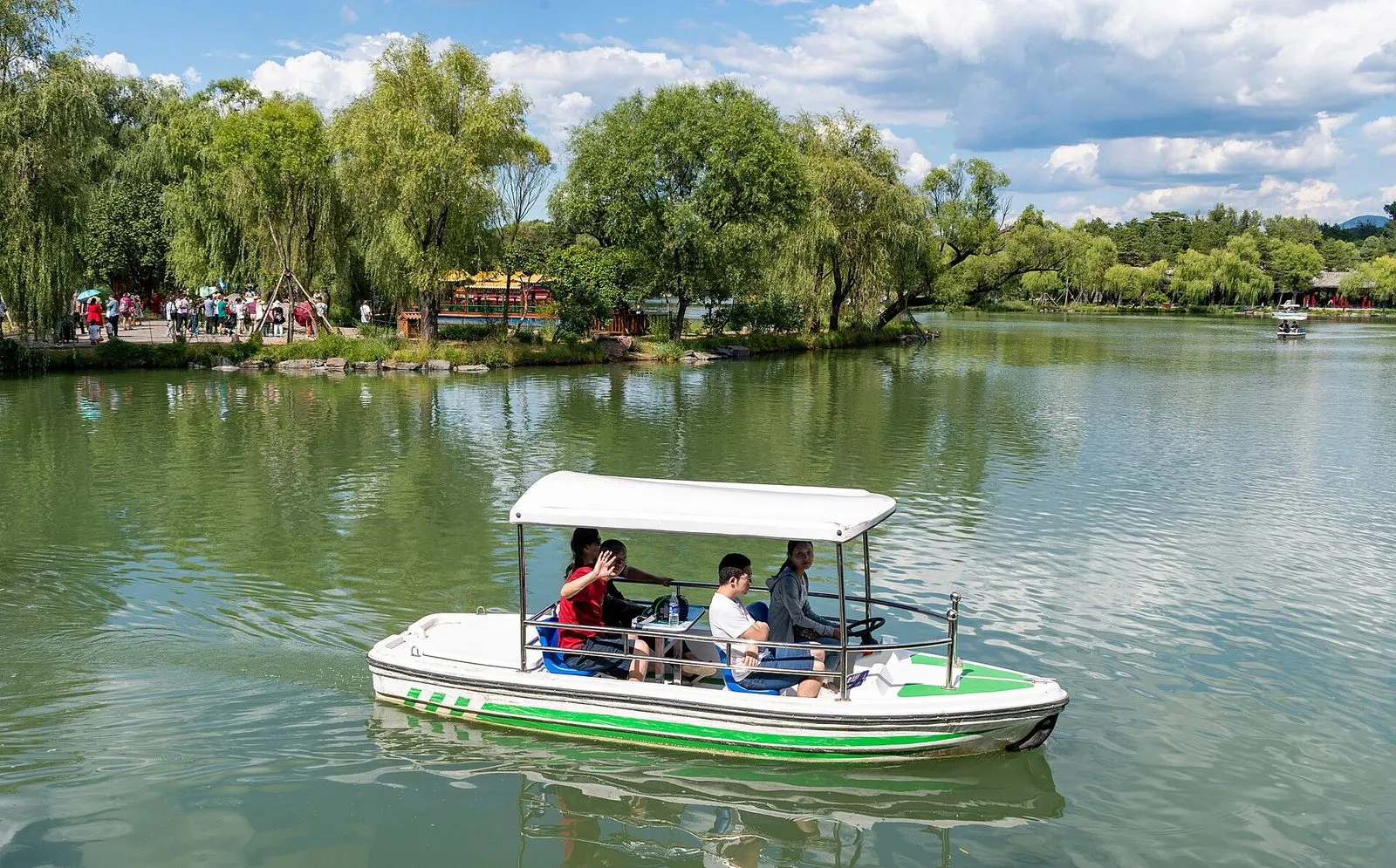
Chengde, in the mountains two hours northeast of Beijing, was the summer capital of the Qing dynasty: where emperors fled Beijing's heat to run the empire from a walled mountain garden and a ring of Tibetan-style temples built to flatter and manage their Mongol and Tibetan allies. The ensemble is now a UNESCO World Heritage site. The core experiences are singular — drifting past the lotus lakes of the Mountain Resort, the largest classical garden in China; climbing the Great Red Terrace of the Putuo Zongcheng Temple, a working replica of the Potala Palace; standing beneath a 27-meter gilded wooden Guanyin at the still-active Puning Temple. Add Jinshanling, one of the finest sections of Great Wall anywhere, an hour away, and a pleasant, low-cost hill town to recover in, and you have the ideal two-day escape from Beijing: cooler, quieter, and stranger than anything inside the capital's ring roads. Best for history lovers, hikers, and Beijing-based travelers with a spare weekend.
Top sights at a glance
No. 1
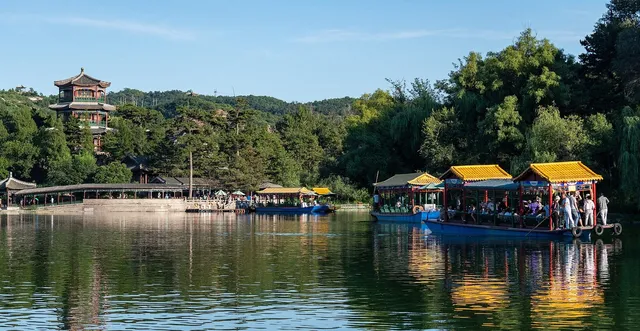
The Mountain Resort
Begun by the Kangxi Emperor in 1703 and built out over nearly ninety years, this walled compound is the largest classical garden in China — some 5.64 million square meters where the Qing court decamped each summer. Palaces in cool pine-scented courtyards give onto eight lakes, grassland, and wooded mountains; two-thirds of China's landscapes are said to be reprised in miniature. UNESCO-listed since 1994, it swallows a half-day happily.
Good to know · Tickets cost 130 yuan in peak season (April 1–October 31) and 90 yuan off-season as of September 2026; hours run 7 a.m. to 6 p.m. at the summer peak. Buy at the gate with Alipay or WeChat Pay, or via Trip.com in high season, and enter at opening to beat tour groups. Electric carts cost 40 yuan to save the mountain climb.
No. 2
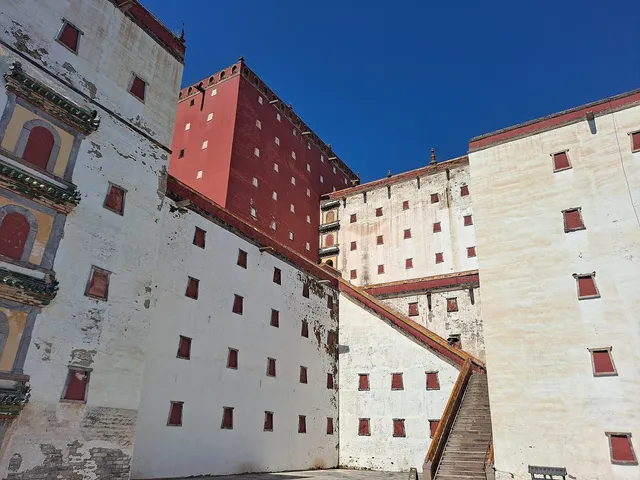
Putuo Zongcheng Temple
The Little Potala: raised in 1767 for the Qianlong Emperor's sixtieth birthday and his mother's eightieth, deliberately modeled on Lhasa's Potala Palace to honor visiting Mongol and Tibetan nobility. Across 220,000 square meters, white-limewashed walls step up a hillside to the Great Red Terrace, whose 43-meter mass and copper-gold roofs crown the whole valley. It is the largest of Chengde's outer temples, and the climb delivers Lhasa views at a fraction of the permit hassle.
Good to know · Entry runs 80 yuan peak season (April–October) and 60 yuan off-season as of September 2026, usually bundled with the Xumi Fushou Temple next door. Arrive early morning for cool air and thin crowds; the stairways are steep, so wear real shoes. City bus 6 links the temple cluster with the Mountain Resort gate.
No. 3
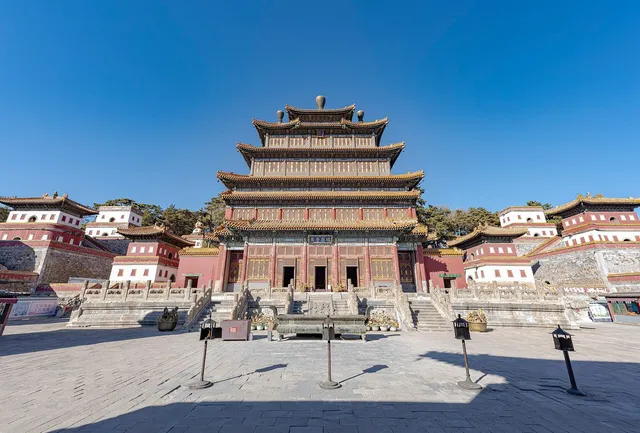
Puning Temple
Built in 1755 to mark a Qing victory on the steppe, Puning remains a working monastery — monks, incense, and pilgrims from the Mongolian grasslands included. Its treasure stands at the top: a thousand-armed, thousand-eyed Guanyin carved from five kinds of wood, about 22 meters of gilded figure atop a tall lotus pedestal — altogether rising 27 meters and ranked among the largest wooden Buddhist statues ever made. The Han-style front halls and Tibetan-style rear build into a single symbolic landscape.
Good to know · Admission is 80 yuan in peak season and 60 yuan off-season as of September 2026 (bundled with the nearby Puyou Temple). Budget ninety minutes and climb to the great hall first, then drop into the side chapels; monks' chanting hours make late morning atmospheric. It sits a short taxi or bus 6 ride northeast of the resort.
No. 4
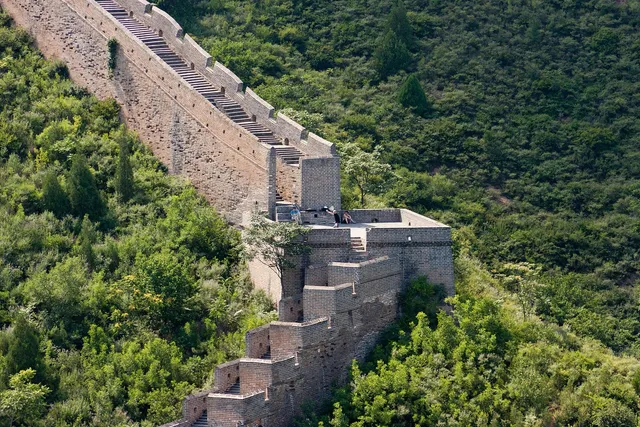
Jinshanling Great Wall
The connoisseur's Great Wall: 10.5 kilometers of Ming-dynasty ramparts strung with 67 watchtowers across the borders of Hebei's Luanping county, rebuilt in the 1570s under general Qi Jiguang. Its brickwork is original, its towers cleverly varied, and its ridgelines busy with hawks rather than crowds — the classic Mutianyu experience with the romance dialed all the way up. It sits on the road corridor between Beijing and Chengde, an easy anchor for either end.
Good to know · Entry costs 65 yuan peak season (April–October) and 55 yuan off-season as of September 2026; the cable car is 40 yuan one-way, 60 round-trip. Middle-gate hours run about 4 a.m. to 6:30 p.m. in season for sunrise hikers. Most visitors come by hired car or tour transfer — roughly 90 minutes from Chengde — and walk the restored eastern stretch.
No. 5
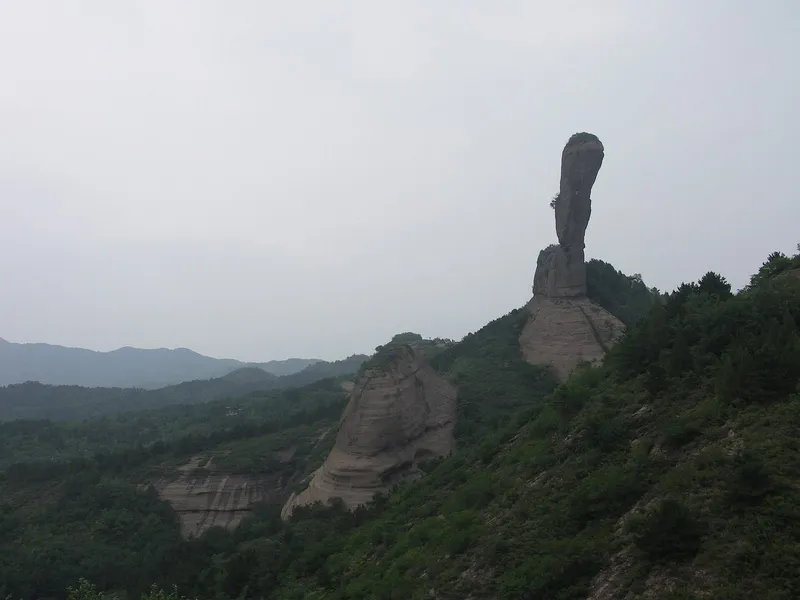
Sledgehammer Peak
The strange stone column that gives Chengde's eastern skyline its exclamation point: a baton of red Danxia sandstone, nearly 60 meters tall, standing alone on a forested ridge. The Kangxi Emperor named it for its resemblance to a laundry sledgehammer; geologists call it a textbook Danxia remnant. The surrounding national forest park — laced with more than a hundred wildflower species — pairs the walk with two of the outer temples, Pule and Anyuan, in a single cheap ticket.
Good to know · The Qingchuifeng scenic area ticket costs 50 yuan as of September 2026 and covers the peak, the forest park, and the two temples. Go in the morning light for photos of the column from the ridge path; the walk is gentle and suits all ages. It lies just east of downtown — a short taxi from the Mountain Resort.
Not every great Chinese sight is in a big city, and Chengde is the proof. Two hundred-odd kilometers northeast of Beijing, up where the mountains cool the air, the Qing emperors built themselves a summer capital: a walled garden of palaces, lakes, and hunting green large enough to hold a court, ringed by a constellation of Tibetan and Mongolian-style temples raised to bind an empire’s frontier peoples to the throne. For two centuries the empire’s real summer business happened here; then the dynasty fell and the town slept, which is why it all survived. Today a high-speed line covers the trip from Beijing in about an hour, the ensemble holds UNESCO World Heritage status, and the mountain air still delivers what it promised the court in 1703: Beijing’s history at Beijing-escape temperatures, with one of the country’s best Great Wall sections thrown in.
A Bit of History
Chengde begins with a horseback judgment call. In 1703 the Kangxi Emperor, surveying the hills northeast of Beijing where he ran his seasonal hunts, ordered a garden-palace built beside the hot river valley — part summer residence, part frontier command post. Construction ran, on and off, for nearly ninety years under his successors, producing the Mountain Resort: palaces for state business, lakes for poetry, grassland for cavalry reviews, and mountains for everything else. Every summer the court moved north, and for much of the eighteenth century this valley, not Beijing, governed the frontier.
The temples were the strategy. As the Qing consolidated control over Mongolia and Tibet, the emperors built a crescent of twelve temples outside the resort’s walls — the “Eight Outer Temples” of the name, begun in 1713 and finished in 1780 — in deliberate imitation of sacred architecture from Lhasa and beyond. The Putuo Zongcheng Temple of 1767 copied the Potala Palace itself, commissioned for Qianlong’s sixtieth birthday and his mother’s eightieth; the Xumi Fushou Temple of 1780 housed the Panchen Lama’s long journey east for the emperor’s seventieth. A saying attributed to the Qing court holds that one lamatery was worth a hundred thousand troops: temples were cheaper than garrisons, and the dynasty knew it. Mongol princes came north to pay court and went home loyal — statecraft carved in gilt and whitewash, and the frontier came to worship at the empire’s expense.
The nineteenth century was less kind. The dynasty’s money and attention moved on, and after the court stopped coming the town settled into garrison-and-market obscurity — the stagnation that, as so often in China, preserved what wealth would have demolished. The twentieth century brought neglect and then recognition: the Mountain Resort and its temples entered the UNESCO World Heritage list in 1994, and restoration followed. The newest chapter is transport. A high-speed rail line on the Beijing–Shenyang corridor has cut the journey from the capital to roughly an hour, and Chengde — once a two-day expedition — now works as a weekend trip. The palaces have not rushed to keep up, and the valley still feels like somewhere built for breathing.
Culture & Daily Life
Chengde is a small mountain city organized, mentally and physically, around its imperial guest. Downtown sits in a basin between dry green hills, the river running through it, and daily life gravitates to the water and the resort’s walls: evening promenades along the banks, morning tai chi in the gate shadows, grandparents teaching toddlers to fish for tiddlers. The pace is village-slow by Chinese big-city standards — after Beijing’s fifteen lanes of traffic, the town can feel almost rural, and that is precisely its therapeutic value for capital-weary travelers.
Tibetan Buddhism remains the local color. The outer temples are working monasteries, and on any morning you will share the courtyards with pilgrims from Inner Mongolia and Mongolia, prostrating, spinning, and refilling butter lamps beside tour groups. Dress modestly, walk the kora circuits the respectful direction, and photograph monks only with a nod of consent — the etiquette that applies in Lhasa applies here, at low-stakes intensity. The temple architecture rewards slow reading: Puning’s layout compresses the Buddhist cosmos into one hillside, and a guide for an hour — bookable through hotels or agencies — pays for itself. Wander slowly; the courtyards reward it.
Practical life is easy and cheap. The town is compact: the resort gate, the temple buses, and the main hotel streets sit within a couple of kilometers, taxis cost pocket change, and bus 6 threads the sights. Alipay and WeChat Pay work everywhere from ticket windows to street stalls. English is scarce — carry your hotel’s name in Chinese — and the rhythm to know is seasonal: summer weekends bring Beijing families up the new rail line, while spring and autumn weekdays can feel like the whole valley is yours. The local habit worth stealing: an evening stroll along the river with grilled corn, watching the temple roofs go gold and then dark.
Nature & Day Trips
Chengde’s setting does half the sightseeing. The town sits in a basin of weathered red-sandstone hills — Danxia landforms, the geologists say — and the strangest of them, the Sledgehammer Peak column, stands within the city’s own forest park. The park’s slopes carry more than a hundred species of wildflowers in season, and its ridge paths connect to two of the outer temples, making the easiest nature-and-culture combo in town. The Mountain Resort’s mountain zone, though man-framed, delivers genuine woodland hiking when you tire of lakes.
The serious day trip is the Great Wall. Jinshanling — 10.5 kilometers of Qi Jiguang-era ramparts across 67 watchtowers — lies in Luanping county on the corridor toward Beijing, about 90 minutes from Chengde by car; hikers rate it among the finest wall walks in existence, original brickwork included, with a fraction of the capital sections’ crowds. From Beijing it makes a legendary long day; from Chengde it slots naturally between the temples. Further afield, the grasslands of the Bashang plateau, the old imperial hunting grounds, lie north toward Inner Mongolia for road-trippers with days to spare — beautiful in June, frozen in January. Realistically, most visitors need only two excursions: the temples on day one, the wall on day two, with the river promenade for every evening in between.
Food & Drink
Chengde’s kitchen is frontier food — Manchu, Mongolian, and mountain-Chinese cooking that tastes like the temperature drop it accompanies — and eating is one of the town’s underrated pleasures. The imperial connection survives as banquet culture: restaurants near the resort serve the dishes that fed the court, most famously lotus-leaf-wrapped chicken and game-mushroom hotpots, and while “imperial banquet” experiences range from excellent to theater, a mushroom hotpot after a day on the wall is the right kind of history. Order one for the table, let it run, and add hand-pulled noodles at the end; it is the meal locals recommend when asked, and it suits the mountain air. Come hungry at lunch, when the kitchens are freshest, and let the waiter talk you into the day’s vegetable dish — mountain produce changes with the season, and the honest kitchens cook whatever arrived that morning.
The mountains supply the pantry. Wild mushrooms and fern shoots appear in season, alongside river fish, lamb and beef prepared Mongolian-adjacent — skewers, stews, and hotpots built for cold evenings — plus the oat and buckwheat noodles (youmian, qiaomian) that anchor rural Hebei cooking. Street level is simple and satisfying: around the resort’s gates and the downtown night stretches, stalls sell grilled corn and sweet potatoes, jianbing crepes, roasted chestnuts, and bowls of noodles and dumplings at prices that recall a smaller, kinder economy. Eat early, as the town does — kitchens wind down by nine — and graze the night stretch near the resort gate rather than the hotel dining rooms. Budgets are friendly: a street meal runs 15–30 yuan, a sit-down dinner with the hotpot treatment lands well below Beijing equivalents, and Alipay or WeChat Pay covers every counter. Tea culture skews practical — jasmine pots in small restaurants — and local liquor appears at banquet tables with toasts you should pace.
Top Sights
The Mountain Resort
Half imperial palace, half national park, entirely the reason you came. The Kangxi Emperor broke ground in 1703, and the finished ensemble — palaces, eight lakes, grassland, and mountain forest walled into some 5.64 million square meters — is counted the largest classical garden in China and the stage of Qing summer statecraft for nearly two centuries. The palace zone holds the throne rooms and sleeping quarters in cool, pine-scented courtyards — deliberately modest, an emperor cosplaying frugality. The lake zone unfurls beyond: lotus beds, willowed islets, and bridges quoting the gardens of Jiangnan, best at dawn when the mist works. Grassland and forested valleys fill the north, with hillside lookouts staging views the court planned. UNESCO inscribed the site in 1994. Practicalities as of September 2026: entry costs 130 yuan peak season (April 1–October 31) and 90 yuan off-season; hours run 7 a.m. to 6 p.m. at the summer peak, and electric carts cost 40 yuan if the mountain zone exceeds your legs. Enter at opening, do palace and lakes before the tour buses land at ten, and give it half a day.
Putuo Zongcheng Temple
The photograph that sells Chengde: a white-and-red mountain of temple rising through pine trees like a stunted Potala Palace — because that is what it is. Built in 1767 for the Qianlong Emperor’s sixtieth birthday and his mother’s eightieth, it copied Lhasa’s citadel so visiting Mongol and Tibetan nobility would see their holiest silhouette at the emperor’s summer door. Across 220,000 square meters, terraces of whitewashed cells climb to the Great Red Terrace, a 43-meter block crowned with copper-gold roofs. The halls hold Tibetan statuary and, in season, the low hum of monks; the climb is the experience, steep enough to thin the crowd to a trickle by mid-morning. Entry runs 80 yuan peak season and 60 yuan off-season as of September 2026, typically bundled with the neighboring Xumi Fushou Temple, built for the Panchen Lama’s 1780 visit. Wear real shoes, start early, and photograph back down: the temples, resort, and town stacked below read like a model of the Qing worldview — exactly the brief.
Puning Temple
The living one. Puning — built in 1755 to mark a Qing victory over the Dzungar Mongols — still functions as a monastery, and the difference is immediate: incense smoke, red-robed monks, and Mongolian pilgrims rather than a museum hush. The architectural conceit is a sermon in layout: Han-style Chinese halls up front, Tibetan-style terraces rising behind, and crowning the whole hillside the hall of the temple’s colossus. The Guanyin of Puning is a thousand-armed, thousand-eyed bodhisattva carved from five kinds of wood — pine, cypress, elm, fir, and linden — about 22 meters of gilded figure on a tall lotus pedestal, 27 meters in all and ranked among the largest wooden Buddhist statues ever made; the pavilion around it was built in three stories just to frame it. Admission is 80 yuan peak season and 60 yuan off-season as of September 2026, bundled with nearby Puyou Temple; the complex sits a short bus 6 or taxi ride northeast of the resort. Come late morning, when chanting makes the great hall genuinely transporting; allow ninety minutes — this is the temple that explains, in one hillside, what the ensemble was for.
Jinshanling Great Wall
If Mutianyu is the best first Great Wall, Jinshanling is the wall you graduate to — and for this guide’s money the finest single section open to hikers. Built early in the Ming and rebuilt in the 1570s by general Qi Jiguang, it runs 10.5 kilometers across the ridgelines of Luanping county, ticking over 67 watchtowers of individual character — painted-hall towers, story towers, shot-hole galleries — with original brickwork underfoot and barely a tour flag in sight. The eastern stretch is restored and open; the western sections remain in phases of restoration, wilder and rougher underfoot. Access is simple: 65 yuan entry in peak season (April–October), 55 yuan off-season as of September 2026; the cable car is 40 yuan one-way, a shuttle 10; the middle gate runs 4 a.m. to 6:30 p.m. in season for sunrise walkers, and tickets permit a second entry within 48 hours. It sits about 90 minutes’ drive from Chengde — similarly from Beijing — so most arrive by hired car or small-group transfer, walk the restored eastern towers for two hours, and descend with their calves reborn. Bring water, real shoes, and a layer; the ridge makes its own wind.
Sledgehammer Peak
Every imperial landscape needs a punchline, and Chengde’s is geological. Rising from a forested ridge east of downtown stands a column of red Danxia sandstone nearly 60 meters tall — isolated, vertical, and improbable, like a baton dropped by a fleeing giant. The Kangxi Emperor named it for its resemblance to a qingchui, the wooden sledgehammer used to pound laundry; today it tops every postcard in town. The scenic area wraps the column in national forest park — slopes with more than a hundred wildflower species, shade pavilions, and ridge paths looking back over the resort’s lakes — and folds in two more outer temples, the Han-fronted Pule and the round Anyuan, under a single 50-yuan ticket as of September 2026. The walking is gentle and suits all ages; morning light flatters the column best, and the circuit takes a relaxed half-day. It lies a short taxi ride east of downtown — close enough that you will keep checking, every few hours, that the sledgehammer is still standing there. It always is.
Getting There & Around
Beijing is the gateway, and the train is the answer: high-speed services run from Beijing Chaoyang station to Chengde South in as fast as about an hour as of September 2026, roughly a dozen departures a day, with second-class fares from around 50 yuan. Book on the official 12306 app or Trip.com up to about 15 days out and board with your passport — e-tickets mean no paper. Chengde South station sits some 12 kilometers from downtown and the old Chengde station, so budget a 20-to-30-minute taxi or bus into town. Driving the roughly 225 kilometers from Beijing takes around three hours; buses and tours also run the corridor, and Jinshanling sits conveniently on the way.
In town you need little: the Mountain Resort gate anchors downtown, city bus 6 connects the resort with the temple cluster, taxis cover any urban hop for pocket change (under 20 yuan from the center nearly anywhere), and the Jinshanling run is a hired-car morning — arrange through hotels or agencies, or join a small-group transfer from Beijing if you are wall-first. Alipay and WeChat Pay work at every ticket window and bus QR reader. Walk the river promenade in the evening; letting the town stay small is the point of coming.
Where to Stay
Chengde offers two sound bases. Around the Mountain Resort’s main gate and the downtown riverfront is the default: walk-in access to the palaces at opening hour, evening promenades on the water, and the densest cluster of restaurants and hotels at every tier from hostels to comfortable four-stars. The area near Chengde South station suits early departures and late arrivals — modern, functional, and quiet — but surrenders the evening riverside. Within downtown, closer to the gate beats bigger rooms, because the resort rewards a second short visit at dusk when the crowds thin. Prices sit comfortably below Beijing for comparable comfort, though summer weekends and the early-October Golden Week can fill the valley — book ahead for July and August, when Beijing’s heat sends families up the mountain. Off-season (November through March) the town empties, hotels discount hard, and the temples take on a Cold-Mountain serenity, if your coat is equal to it.
Sources & verification (8)
- https://www.travelchinaguide.com/attraction/hebei/chengde/bishu.htm
- https://www.travelchinaguide.com/attraction/hebei/chengde/eight_temple.htm
- https://www.travelchinaguide.com/attraction/hebei/chengde/
- https://www.travelchinaguide.com/china_great_wall/scene/beijing/jinshanling.htm
- https://www.travelchinaguide.com/china-trains/chengde-station.htm
- https://www.travelchinaguide.com/cityguides/hebei/chengde/
- https://www.chinadiscovery.com/hebei/chengde.html
- https://www.trip.com/trains/china/route/beijing-to-chengde/