A Food Lover's Route Through China: Beijing to Hong Kong in 13 Days
Thirteen days eating your way down China's flavor map: roast duck and copper-pot mutton in Beijing, hand-pulled noodles and halal street food in Xi'an, mouth-numbing Sichuan hotpot and a hands-on cooking class in Chengdu, then the Cantonese payoff — dim sum mornings in Guangzhou, a day trip to food-obsessed Shunde, and cha chaan teng and dai pai dong nights in Hong Kong. Each day has a themed meal plan plus practical tips on queues, bookings, and surviving the spice.
Route: Beijing Xi'an Chengdu Guangzhou Hong Kong
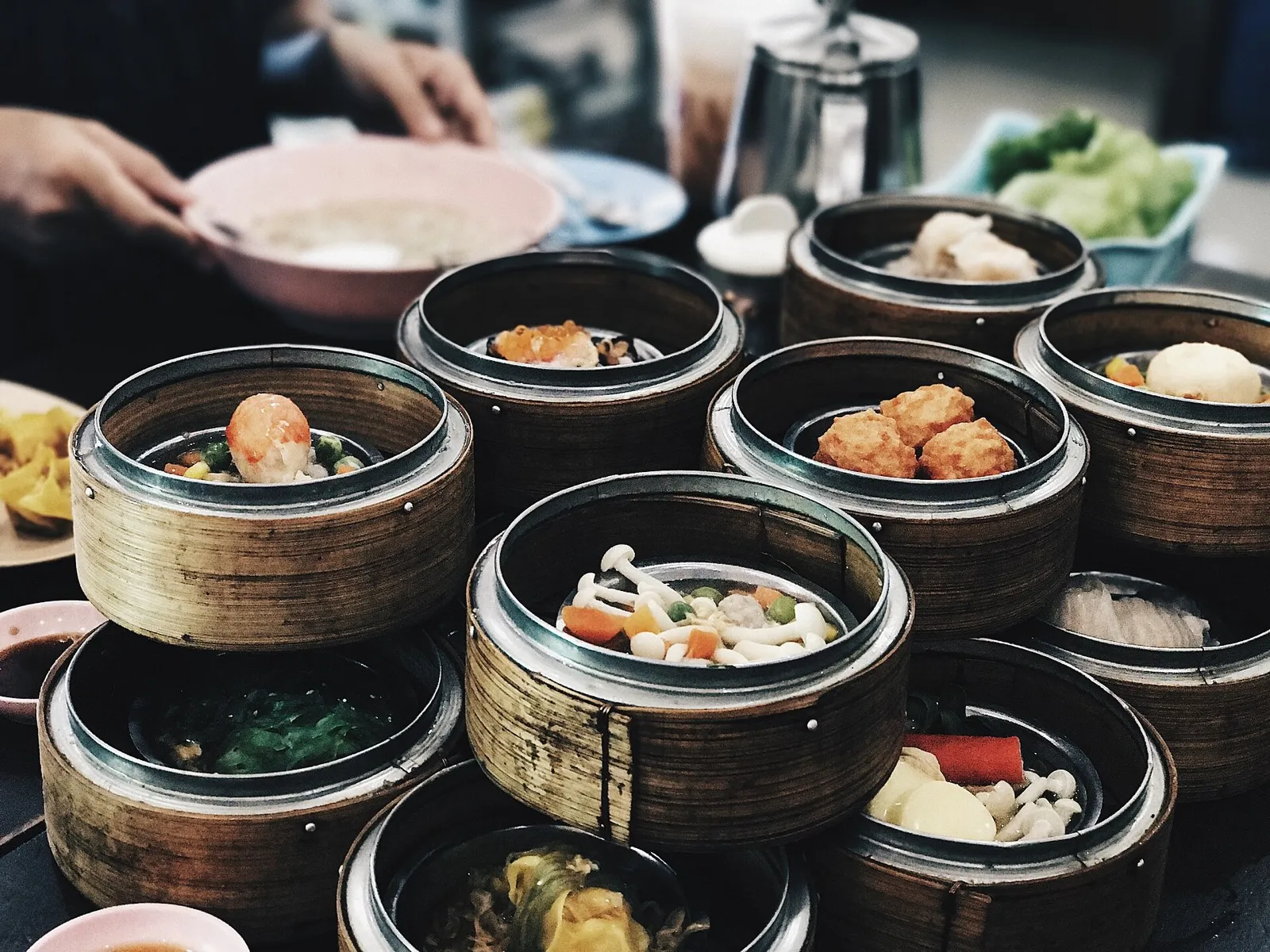
This is a pilgrimage, not a tour: thirteen days tracing China’s flavor map from the wheat-and-lamb north to the rice-and-seafood south. You will eat Beijing’s roast duck and copper-pot mutton, Xi’an’s belt-length noodles from the Muslim Quarter, Chengdu’s mouth-numbing hotpot — plus a cooking class that teaches you why — and finish in Guangdong, where dim sum mornings, Shunde’s kitchens, and Hong Kong’s cha chaan tengs close the loop. Honest advice up front: order less than you want, share everything, and keep one meal per day small. The city guides for Beijing, Xi’an, Chengdu, and Hong Kong go deeper on every stop.
Day 1: Arrive in Beijing — First Duck
Land, check in, and go straight to dinner: your first Peking duck. The ritual matters — thin pancakes, scallion slivers, sweet bean sauce, and skin dipped in sugar. Book a table at a well-known duck house through Dianping or your hotel a day or two ahead; walk-in waits at the famous names run past an hour. If you land late, duck tomorrow and keep tonight to street-side jianbing crepes.
Practical tip: Install Dianping today — menus, photos, queue numbers, and reservation buttons that work with international cards via Alipay (see the payments guide). English is patchy; a translate app closes the gap.
Day 2: Old Beijing Breakfast and Copper-Pot Mutton
Start like a local: a breakfast crawl of soy milk and fried dough sticks, jianbing off a griddle, and — for the brave — douzhi, the sour fermented mung-bean drink Beijing defends like a family member. Spend the day walking the hutongs around the Drum Tower, then do dinner properly: copper-pot mutton hotpot, paper-thin lamb and sesame pancakes with a shared bowl of sesame sauce.
Practical tip: Breakfast stalls run from about 6 to 9 a.m. and close early; dinner at popular hotpot houses peaks from 6:30 p.m. — arrive before 6 or take a queue number and wander the hutongs.
Day 3: The Duck Debate and Hutong Small Kitchens
Beijing splits into camps over duck: the hung-oven tradition with fruitwood smoke and crisp skin, versus the modern closed-oven style with leaner meat. Try the other style from Day 1 at lunch, when tables are easier to get. Spend the afternoon around Shichahai’s lakes, grazing on small courtyard-kitchen dishes, and end with tanghulu — candied hawthorn on a stick.
Practical tip: A whole duck with pancakes and sides feeds two comfortably; most places offer a one-person set. Say “bao” (打包) for the leftovers — no one bats an eye.
Day 4: High-Speed Rail to Xi’an, Muslim Quarter at Dusk
Morning G train from Beijing West to Xi’an North (about 4.5–6 hours; second class roughly ¥470–580). Check in near the Bell Tower, the most convenient base for eating. By dusk the Muslim Quarter is in full roar: sizzling lamb skewers, roujiamo (the “Chinese burger” of shredded stewed beef in flatbread), cold-dressed liangpi noodles, and persimmon cakes fried to order. Pace yourself — this is a marathon, not a sprint.
Practical tip: Buy the train ticket at the 15-day release on the 12306 app or Trip.com (see the trains guide). Xi’an North connects to the Bell Tower area by Metro Line 2 in about 30 minutes.
Day 5: Noodle Day in Xi’an
Xi’an is the capital of hand-pulled wheat: biangbiang noodles — wide as belts, slapped against the counter, dressed with chili oil — and lamb paomo, the do-it-yourself soup where you tear flatbread into a rich lamb broth. Work through them across the day: noodles at lunch, paomo for dinner, with a detour through the lanes around the Great Mosque, where the Quarter’s older food traditions hold.
Practical tip: Heat control: “wei la” (微辣) means mildly spicy and is the honest default in Shaanxi and Sichuan; “bu la” (不辣) gets you no chili at all. Save both phrases as offline text.
Day 6: Train to Chengdu — Hotpot Debut
The Xi’an North to Chengdu East G train crosses the Qinling Mountains in about 3 hours (second class around ¥263), mostly in tunnels. Tonight is Chengdu’s calling card: hotpot. Order a yuanyang pot — half fiery red broth, half mild — and learn the local rhythm: tripe dipped “seven up, eight down,” lotus root, beef tallow everything.
Practical tip: The best hotpot houses fill by 6 p.m. and do not take bookings. Use Dianping’s remote queue from your hotel, walk over when your number nears, and never skip the oil-garlic dipping bowl — it cools every bite.
Day 7: Teahouse Mornings and Classic Sichuan Dishes
Chengdu rewards slowness. Morning at a People’s Park teahouse with endless refills and bamboo chairs; lunch on the canon — mapo tofu, fish-fragrant pork, kung pao chicken — in a no-frills local kitchen, the kind locals call “fly restaurants”: shabby rooms, immortal food. Evening snacks along Jinli or the Kuanzhai Alleys: dan dan noodles, sweet water noodles.
Practical tip: Sichuan pepper (huajiao) numbs rather than burns; the burn comes from dried chilies. If both hit too hard, cold soy milk or a sweet iced drink helps — and keep tomorrow’s breakfast light.
Day 8: Cooking Class — Learn the Ma La
Half-day cooking classes are Chengdu’s best food souvenir. The standard format: a guided shop through a wet market — dried chilies, huajiao, Pixian chili-bean paste — then a hands-on kitchen where you cook mapo tofu and kung pao chicken and eat your homework. Classes run about four hours, cost roughly US$40–70, and are capped at small groups. Evening: chuan chuan xiang, hotpot’s skewered little sibling.
Practical tip: Book a day or two ahead through the usual platforms (Viator, Klook, GetYourGuide) — small-group classes sell out. Vegetarian versions are common; say “chisu” (吃素) and see our dietary guide.
Day 9: Fly to Guangzhou — Late-Night Congee
Fly Chengdu to Guangzhou, about 2.5 hours in the air from either Chengdu airport (both sit on metro lines). Guangzhou eats differently: quieter, older, Cantonese. Ease in tonight with the late-night institution — congee. Ting zai “junk congee” loaded with fish, squid, and peanut, or a plain shredded-chicken bowl.
Practical tip: Cantonese kitchens keep street hours: congee and noodle shops run late, but roast-meat shops sell out of the good goose by 8 p.m. Plan the goose for tomorrow’s dinner.
Day 10: Yum Cha — The Dim Sum Morning
The day the trip was built around. Yum cha (“drink tea”) starts early — locals are seated by 8 a.m. — and rolls until noon: har gow shrimp dumplings, siu mai, rice-noodle rolls, egg tarts, chicken feet for the committed. Take the afternoon gently along Shamian Island’s arcades and the Qingping market’s herbal stalls. Dinner: white cut chicken with ginger-scallion oil, or the roast goose.
Practical tip: Etiquette: tap two bent fingers when someone pours your tea, and leave the teapot lid propped open for a refill. Order from the paper menu by tick-mark — no Mandarin required.
Day 11: Day Trip to Shunde
An hour door to door sits Shunde, the district that quietly runs Cantonese cuisine — many of Guangzhou’s famous chefs train here. The specialties are delicate: double-skin milk pudding, steamed fish with ginger and scallion, chencun rice noodles, fried milk. Eat a late breakfast on arrival, graze the old streets, return for a light one.
Practical tip: The high-speed hop from Guangzhou South to Shunde takes only about 10 minutes (second class around ¥8, frequent service); Guangzhou South itself is a 30-minute metro ride from the center. Check the last return train before dinner.
Day 12: The 48-Minute Border — Hong Kong
The high-speed train from Guangzhou South to Hong Kong West Kowloon takes as little as 48 minutes (second class from around ¥215), with both border checks handled under one roof at West Kowloon. Drop bags, then hit a cha chaan teng for lunch: silk-stocking milk tea, pineapple bun with a slab of butter. Tonight is the finale — a dai pai dong street kitchen in Temple Street or Sham Shui Po: clams in black bean sauce, soy-sauce prawns, maybe a whole crab.
Practical tip: Get an Octopus card at any MTR station — it covers metro, trams, and convenience stores. Street spots take cash and Octopus, rarely cards. See the Hong Kong guide for neighborhoods.
Day 13: One Last Bite, and Out
Spend the last morning the way locals would: a wet-market walk as the stalls set up, one final dim sum or an egg waffle from a street cart. The Airport Express runs from Hong Kong and Kowloon stations to the airport in about 24 minutes, and both offer in-town check-in — dump luggage, then eat.
Practical tip: Octopus cards refund unused value (minus a small handling fee) at the Airport Express customer service counters — return the card at the airport rather than keeping a dead one.
Practical Notes
Intercity transport
| Leg | Mode | Time | Approx. fare |
|---|---|---|---|
| Beijing → Xi’an | G train, Beijing West to Xi’an North | 4.5–6 hours | ¥470–580 (US$65–80) |
| Xi’an → Chengdu | G train, Xi’an North to Chengdu East | ~3 hours | ~¥263 (US$37) |
| Chengdu → Guangzhou | Flight, 2.5 hours + transfers | ~4 hours door-to-door | US$80–150 |
| Guangzhou → Hong Kong | G train, Guangzhou South to West Kowloon | 48–60 minutes | from ~¥215 (US$30) |
Book trains at the 15-day release via the 12306 app; flights via Trip.com or your airline. Fares approximate as of September 2026; many trains use floating pricing.
Budget estimate (per person, excluding international flights)
- Street-lean: US$900–1,200 — guesthouses, mostly street food and local kitchens, metro and second-class rail
- Mid-range: US$1,500–1,900 — 3–4-star hotels, one marquee meal per day, the cooking class, all transport
- Comfort: US$2,300–3,000 — upscale hotels, the famous-name duck and dim sum rooms, private guides
Budget roughly double for Hong Kong hotel nights compared with the mainland cities.
Eating rhythm — the honest advice
- One “big” meal per day, maximum two; keep the other to congee, noodles, or a teahouse snack.
- Order one fewer dish than your table demands — portions run generous, and you can always add.
- Peak dinner is 6:30–8 p.m. everywhere: queue remotely on Dianping, and carry your hotel’s card in Chinese for taxi returns.
Sources & verification (5)
- https://www.travelchinaguide.com/china-trains/beijing-xian-highspeed.htm
- https://www.travelchinaguide.com/china-trains/high-speed/xian-chengdu.htm
- https://www.travelchinaguide.com/china-trains/guangzhou-hongkong.htm
- https://www.travelchinaguide.com/attraction/shaanxi/xian/moslem-street.htm
- https://us.trip.com/guide/train/china-high-speed-rail-child-ticket.html