Classic China in 10 Days: Beijing, Xi'an, and Shanghai
The first-timer's China: imperial Beijing with the Great Wall at Mutianyu, the Terracotta Warriors and Tang-era walls of Xi'an, and Shanghai's futuristic skyline — all linked by high-speed rail. This day-by-day itinerary includes booking deadlines for the Forbidden City and Terracotta Warriors, train times and fares, a Zhujiajiao water-town half day, and a realistic budget for the full route.
Route: Beijing Xi'an Shanghai
This is the route that explains China in one trip: the imperial north, the ancient heartland, and the futuristic coast, stitched together by the country’s finest asset — its high-speed rail. Ten days is enough to do it properly rather than frantically: four nights in Beijing for the Forbidden City and a proper day on the Great Wall, two in Xi’an for the Terracotta Warriors, and three in Shanghai to end with the skyline at your back. It suits first-time visitors with one to two weeks of holiday who would rather see three places deeply than six places through a train window. If it is your first China trip, start here; the city guides for Beijing, Xi’an, and Shanghai go deeper on every stop.
Day 1: Arrive in Beijing
Land, set up, ease in. After the airport express or a Didi into town, spend the afternoon walking, not sightseeing: Qianmen’s restored shopping street, then the hutong lanes around it, ending with your first Peking duck (book a table if you have your heart set on a famous name). If jet lag hits at 8 p.m., so be it — tomorrow starts early.
Practical tip: Do your logistics at the airport, not in the morning rush: confirm your international eSIM is live (see our internet guide), verify Alipay works with your foreign card, and grab a metro map. Everything else on this trip runs through those two apps.
Day 2: Tiananmen Square and the Forbidden City
The big one. Enter Tiananmen Square in the morning (advance reservation through its official mini-program is required, with your passport details), walk north through the gate, and spend three to four hours in the Forbidden City — the world’s largest palace complex — exiting through the north gate into Jingshan Park, whose hill gives you the classic sunset panorama of golden roofs.
Practical tip: Palace Museum tickets cost ¥60 in peak season and are released 7 days in advance at 20:00 Beijing time — they regularly sell out within minutes in high season. Set an alarm, book on the official website or mini-program, and pay with Alipay or WeChat. No same-day tickets are sold.
Day 3: The Great Wall at Mutianyu
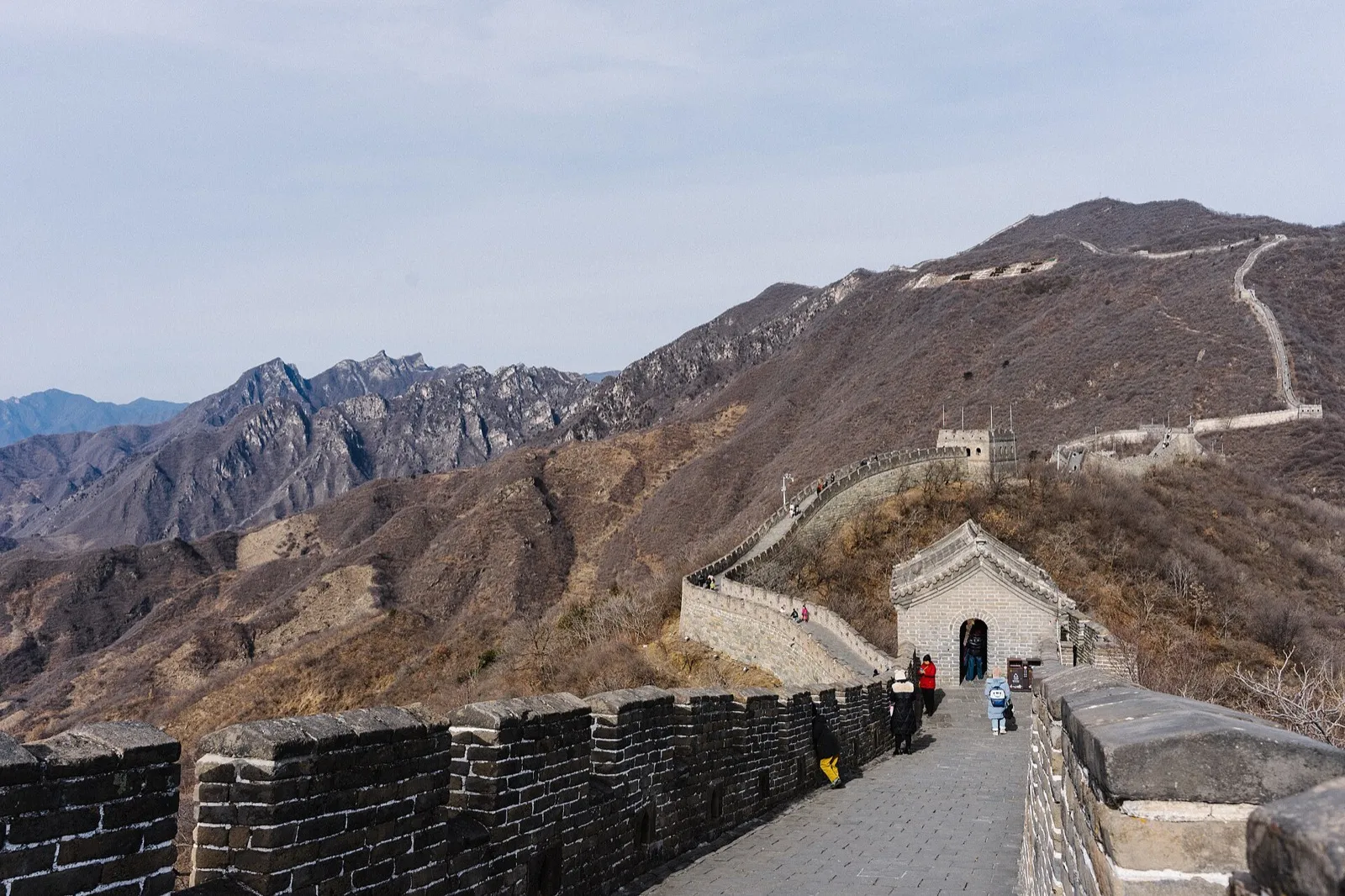
Take the day for the Wall — at Mutianyu, not Badaling. Mutianyu’s restored watchtowers ridge along steep forested hills with a fraction of the crowds, and the descent options include a toboggan run. Cable car up, walk east toward Tower 20 for the best views, toboggan down, lunch in the village below, back in Beijing by late afternoon.
Practical tip: Budget the full stack: ¥40 entrance, ¥15 compulsory shuttle, ¥140 round-trip cable car. The simplest access from the city is a direct tourist shuttle from near Dongzhimen (around ¥80 round trip, about 1.5 hours each way); budget alternatives involve the 916 bus to Huairou and a local transfer. Go early — coaches arrive by 11 a.m.
Day 4: Temples, Parks, and Hutong Beijing
A gentler day. Morning at the Temple of Heaven, where locals practice tai chi in the cypress park surrounding the masterpiece hall (buy the through ticket, not just park entry). Afternoon choices: the Lama Temple’s incense-clouded halls, the lakeside hutongs around Shichahai and Houhai, or the National Museum if history has its hooks in you. Evening: pack, and book tomorrow’s train if you have not.
Practical tip: This is the day to confirm train tickets. Beijing–Xi’an G trains run from Beijing West station and take as little as 4.5 hours; the 15-day release window means your ticket is likely on sale already — book in the 12306 app or on Trip.com before dinner.
Day 5: High-Speed Rail to Xi’an, Muslim Quarter at Dusk
Morning G train from Beijing West to Xi’an North (about 4.5-6 hours depending on the service; second class roughly ¥470-580). Check into a hotel inside or near the old walled city — it is the most atmospheric base. Spend the evening in the Muslim Quarter: sizzling skewers, roujiamo (the local “Chinese burger”), persimmon cakes, and a humming night market that has fed travelers along the Silk Road’s eastern end for centuries.
Practical tip: Aim for a train arriving by mid-afternoon. Xi’an North station is a metro ride from the center (Line 2 or 4 toward the Bell Tower area); the metro closes around 23:00, so a later arrival means a taxi.
Day 6: The Terracotta Warriors and the City Wall by Bike
Morning at the Terracotta Warriors, 40 km east of town: Pit 1’s army of life-size figures is one of archaeology’s genuine jaw-droppers. The ¥120 through ticket includes Lishan Garden, the mausoleum site a shuttle ride away — most people skip it; with time, go. Back in the city by late afternoon, climb the Ming-dynasty City Wall at the South Gate and rent a bicycle for the 13.7 km loop as the lanterns come on.
Practical tip: Terracotta Warriors tickets are released up to 7 days ahead on the museum’s official WeChat channels and sell out around holidays — book days in advance, not on the day. To get there, a Didi costs roughly ¥60-80 each way; the tourist bus 5 (306) from Xi’an station is the budget route.
Day 7: Rail (or Fly) to Shanghai, the Bund at Night
The longest travel day. The Xi’an North to Shanghai Hongqiao G train takes about 6-7.5 hours (second class roughly ¥550-660) and delivers you city-center to city-center; the flight is about 2.5 hours airport-to-airport plus transfers, which usually makes it a wash door-to-door. Take the train if the weather is clear — you cross the country’s central plains at 300 km/h. Evening: the Bund. Walk the waterfront promenade as Pudong’s skyline switches on across the river.
Practical tip: If the 6-hour train sounds long, split the difference: morning high-speed rail to Luoyang Longmen for the Longmen Grottoes, evening train onward to Shanghai. The direct flight, via Trip.com or your airline of choice, makes sense mainly when train tickets for your date are gone.
Day 8: Old Shanghai and Pudong’s View From Above
Shanghai’s essential loop on foot: Yu Garden and the bazaar lanes in the morning (go at opening), the leafy former racecourse area and Nanjing Road’s pedestrian stretch midday, and the Shanghai Museum or an art deco walk depending on your tastes. Cross to Pudong in the late afternoon and ride one of the skyscraper observation decks at golden hour, then take the ferry back across the Huangpu for a few RMB — the cheapest skyline view in China.
Practical tip: Yu Garden’s walled bazaar area gets brutally crowded by 11 a.m.; arrive for opening, then retreat to the French Concession’s coffee streets before the tour groups reorganize.
Day 9: Zhujiajiao Water Town, Half Day
Ninety minutes from downtown, the 1,700-year-old canal town of Zhujiajiao delivers the water-town postcard — stone bridges, whitewashed houses, gondolas punting down narrow channels — without needing an overnight. Entry to the old town itself is free; pay only for what you use (a canal boat ride, a garden here and there). Back in Shanghai by mid-afternoon: browse the fabric market for a tailored shirt, or collapse into a long lunch.
Practical tip: Take Metro Line 17 from Hongqiao Railway Station to Zhujiajiao station (roughly 1-1.5 hours door to door from the center) — no tour bus needed, and the total transport cost is a few dollars each way.
Day 10: The French Concession and Departure
Save Shanghai’s most pleasant neighborhood for last: plane-tree-lined streets, 1930s villas turned into cafes and boutiques, breakfast from a street vendor, a final bowl of xiaolongbao (soup dumplings — Shanghai’s invention). Metro Line 2 runs direct from the city center to both Hongqiao and (with a transfer) Pudong airports; allow 60-90 minutes.
Practical tip: If your flight leaves in the evening, spend the middle of the day at the Propaganda Poster Art Centre or Tianzifang’s converted-warehouse lanes — low-energy, high-memory, and close to the metro.
Practical Notes
Intercity transport
| Leg | Mode | Time | Second-class fare (approx.) |
|---|---|---|---|
| Beijing → Xi’an | G train, Beijing West to Xi’an North | 4.5-6.5 hours | ¥470-580 (US$65-85) |
| Xi’an → Shanghai | G train, Xi’an North to Shanghai Hongqiao | 6-7.5 hours | ¥550-660 (US$75-95) |
| Xi’an → Shanghai (alternative) | Flight, ~2.5 hours + airport transfers | ~4 hours door-to-door | US$80-160 |
Book via the 12306 app at the 15-day release or on Trip.com. Fares are approximate as of September 2026 and some trains use floating pricing.
Budget estimate (per person, excluding international flights)
- Backpacker: US$700-900 — hostels, street food, metro, second-class trains
- Mid-range: US$1,300-1,600 — 3-4-star hotels, mixed dining, Didi rides, all tickets and cable cars
- Comfort: US$2,000-2,800 — upscale hotels, business-class rail seats, private guides
Intercity trains add roughly US$150-250 to any tier. See our budget guide for the itemized daily math.
Pre-departure checklist
- Passport valid at least 6 months; confirm your visa-free entry eligibility (guide)
- Alipay and WeChat Pay linked to your international card (payments guide)
- International eSIM installed and tested before departure (connectivity guide)
- Apps downloaded at home: 12306, Amap, Didi, Dianping, a translate app
- Forbidden City tickets set for the 7-days-ahead, 20:00 release; Terracotta Warriors booked days ahead
- Attraction bookings paired with passport details exactly as printed
- Travel insurance that covers high-speed rail delays and medical care