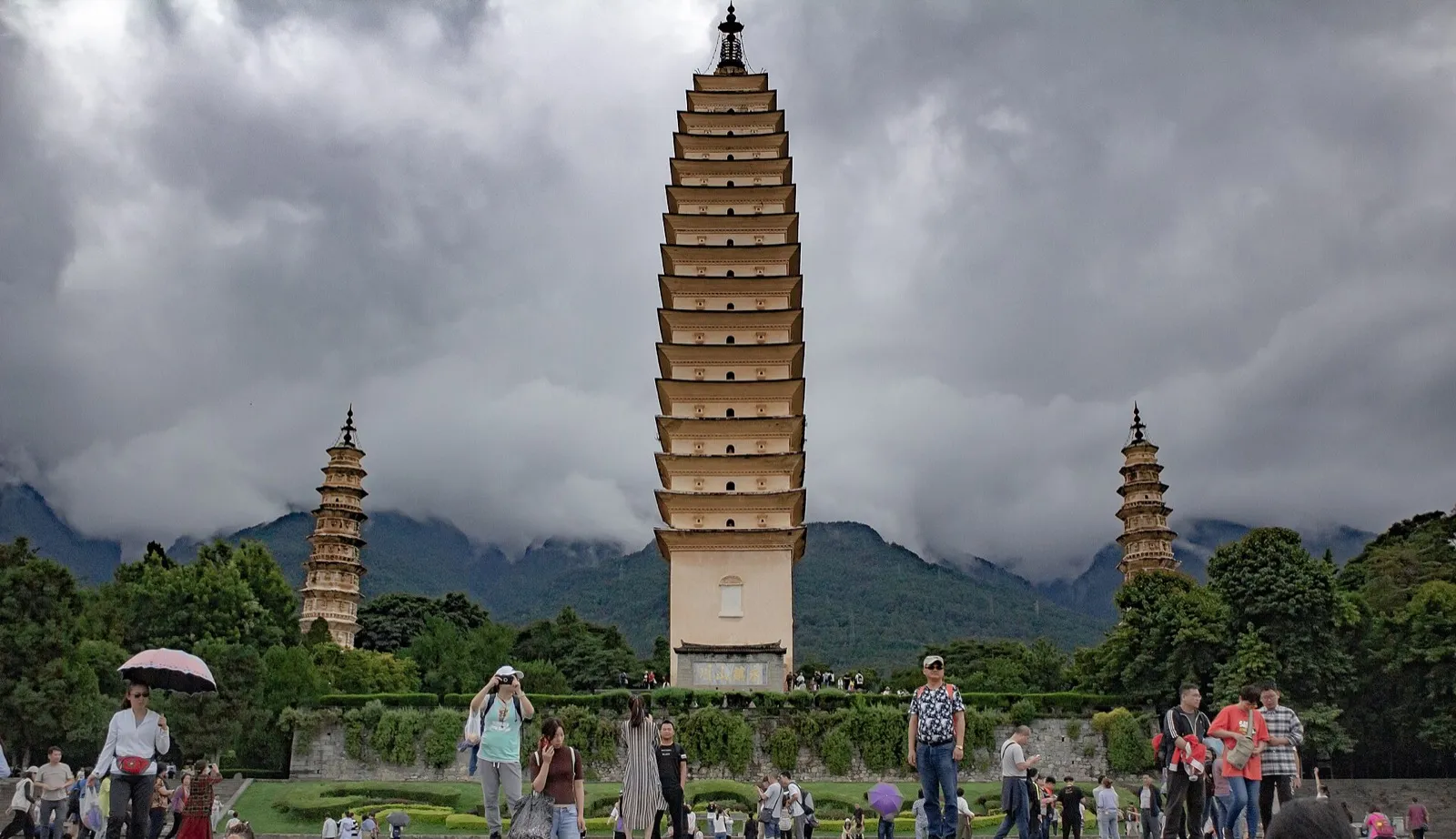
Dali sits in a valley in China's far southwest where a wall of 4,000-meter mountains drops to a vast alpine lake, and for centuries it was the capital of kingdoms the emperors of Beijing barely controlled. That geography still runs the show: mornings belong to the lakeshore, afternoons to the old town's indie cafes, and every view is framed by the Cangshan peaks or the water of Erhai. The Old Town is free, walkable, and relaxed rather than staged, Bai villages and markets surround it, and the region's defining experience — cycling or riding an e-bike the lakeshore road past farms and fishing piers — needs no ticket at all. Long a backpacker legend and now a magnet for China's remote workers and burnout escapees, Dali suits travelers who want scenery with their downtime: slow mornings, mountain light, and a culture you can actually sit down inside.
Top sights at a glance
No. 1
Erhai Lake
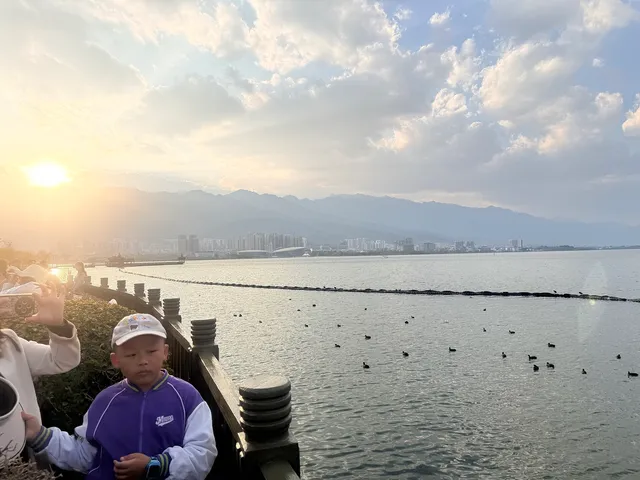
Erhai — 'Ear Lake,' for its shape — is the body of water that defines Dali, a vast highland mirror framed by the Cangshan range and dotted with islets, fishing piers, and village docks. The west shore's car-free ecological corridor strings lakeside wetlands and white-walled Bai hamlets into one long, gentle ride, while the east shore trades farmland for cliffs and big-water views. At sunset the whole surface turns to hammered silver.
Good to know · Rent a bicycle or e-bike from shops around the Old Town (bring your passport and a deposit; helmets included — insist on one). The classic west-shore ride to Xizhou and back is about 46 kilometers; the full lake loop is roughly 128 kilometers, best split over two days (as of September 2026).
No. 2
Dali Old Town
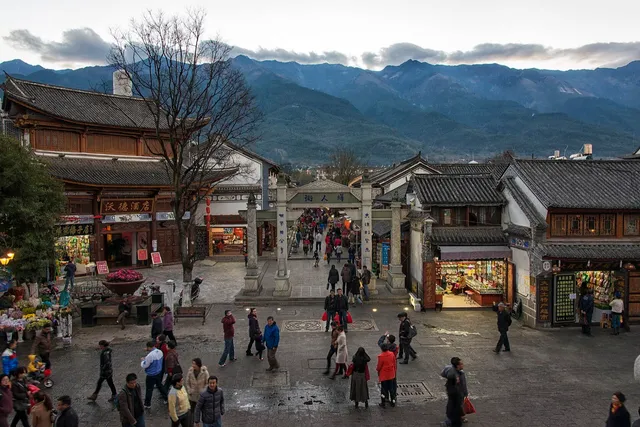
A Ming-dynasty grid of stone streets beneath rebuilt gate towers, Dali's Old Town is that rare Chinese ancient town that still feels like a neighborhood: no entry ticket, no closing time, and streets where laundries and noodle shops share walls with third-wave coffee bars. Renmin Road collects the independent shops and buskers, Foreigner Street lives on its 1990s backpacker legacy, and the evening crowd flows between street-food grills and courtyards with live music.
Good to know · Entry is free and the town never closes; the South Gate makes the classic first entrance. Mornings are quiet and best for photography — come early, then use the town as your base for the lake and mountains (as of September 2026).
No. 3
The Three Pagodas
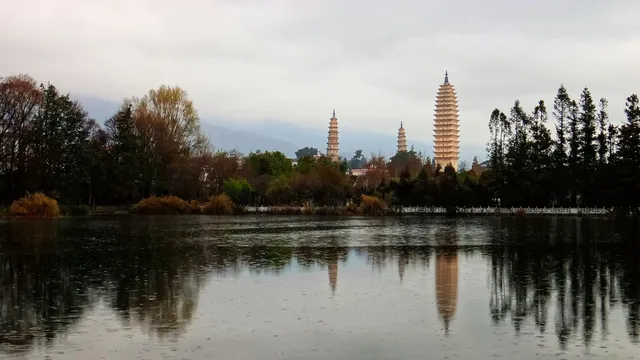
Dali's postcard has real depth: the central Qianxun Pagoda, rising nearly 70 meters, was raised by the Nanzhao kingdom in the ninth century, flanked a century later by two smaller companion towers — and all three still stand, absorbing more than a dozen centuries of earthquakes that flattened everything around them. Behind them the rebuilt Chongsheng Temple climbs toward the mountains, and the Reflection Pond in front delivers the famous upside-down shot.
Good to know · Entry runs about ¥75 (as of September 2026), open roughly 7:30 AM–6:30 PM, extended in summer months. The complex sits 1.5 kilometers northwest of the Old Town — an easy walk or short taxi ride. Book via the official mini-program or Trip.com with your passport; go at opening for clear pagoda light.
No. 4
Cangshan Mountain
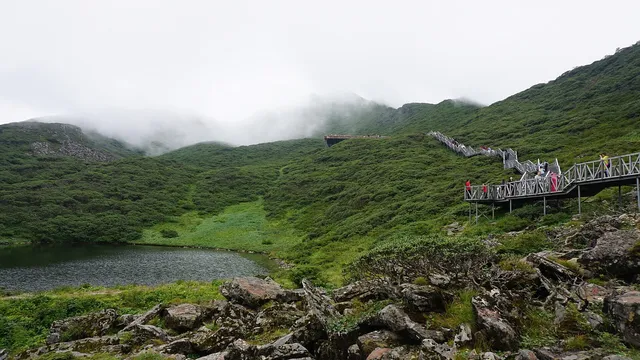
Nineteen peaks, all above 3,000 meters and several above 4,000, wall in the Dali valley from west to east — this is the mountain in every photo you take at lake level. The genius move is the Jade Belt Road, an 18-kilometer path carved along the mountainside at about 2,600 meters, near-flat, shaded, and constantly framed over Erhai below. Nunneries like Jizhao serve simple vegetarian lunches, and streams drop through the forest the whole way.
Good to know · Mountain entry is around ¥30–35, with three separate cableways: budget Zhonghe (from about ¥60 return), Gantong (roughly ¥80–115 return, near Jizhao Nunnery), and the high Ximatan gondola toward 3,900 meters (roughly ¥240–300 return, weather-dependent) — prices vary by season as of September 2026. Take a cableway up, walk the Jade Belt Road one way, and descend a different one.
No. 5
Xizhou Village
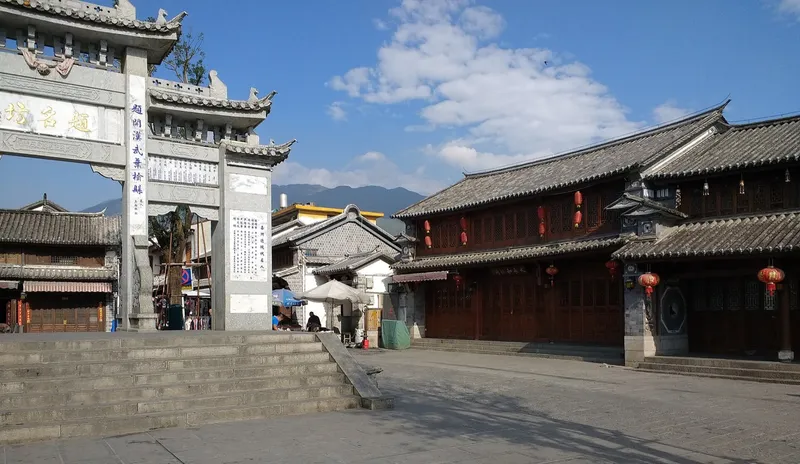
Eighteen kilometers north of the Old Town, Xizhou is the Dali valley's best-preserved Bai merchant town, famous for the morning market on Sifang Street, sugar-dusted flatbreads, and mansions built by tea-and-trade families in the early 1900s. The Yan Family Compound, the grandest of them, opens its carved courtyards as a museum of Bai architecture, and several old houses still stage the Bai three-course tea ceremony — bitter, sweet, and lingering, like life, locals say.
Good to know · The village is free to wander; the Yan Family Compound charges ¥25 and opens roughly 8:30 AM–6:00 PM (as of September 2026). Come before 10 AM for the market at full swing, then continue to Zhoucheng village next door for Bai indigo tie-dye workshops.
Dali is what happens when China’s ancient-town tourism grows up. The setting does the heavy lifting: a green wall of mountains on one side, a huge blue lake on the other, and a walled Ming-era town in between where the light is famous among photographers and the pace makes Chengdu look frantic. This was the capital of the Nanzhao and Dali kingdoms, and the Bai people who farm the valley never really handed over the keys. Unlike most of China’s rebuilt “ancient” towns, the Old Town charges no ticket and never closes, and the best experience, riding the lakeshore past farms and fishing piers on a rented e-bike, costs less than lunch. Dali has become a byword in China for slowing down, and it wears that role lightly. If you are choosing between Dali and Lijiang: Dali is looser and more lived-in; Lijiang is more polished and more commercialized.
A Bit of History
For most of its first millennium in the Chinese story, Dali was not in it. The Nanzhao kingdom, founded in 738 with its capital on this plain, grew powerful enough to defeat Tang imperial armies sent against it — most famously at the Battle of Tianbao in 751, a disaster for the Tang recorded in mournful Tang poetry — and its successor, the Dali Kingdom (937–1253), ruled a realm covering much of today’s Yunnan with quiet continuity. Both dynasties were devoutly Buddhist — legend holds that nine of their kings eventually abdicated to become monks at the royal Chongsheng Temple, whose Three Pagodas still anchor the valley — and the kingdom’s white marble became so famous that polished limestone is still called “Dali stone” in Chinese.
The independent era ended in 1253, when Kublai Khan’s Mongol armies swept across the mountains and took the kingdom in a single winter campaign, folding Yunnan into the Yuan empire. Dali faded from geopolitics but prospered as a trade hub on the Tea Horse Road — the caravan network carrying Pu’er tea north into Tibet and horses and salt south; stone lanes across the region were worn hollow by centuries of mule trains. The walled Old Town visible today is largely a Ming reconstruction, laid out in the 1390s under the Hongwu emperor on the old kingdom’s footprint — which is why the town reads as a proper city grid rather than a village.
The nineteenth and twentieth centuries were rough. Dali stood at the center of the Panthay Rebellion (1856–1873), a Muslim-led uprising that briefly governed the region from the old town before its brutal suppression, and a violent 1925 earthquake badly damaged the town — one of the worst in modern Yunnan’s memory, and one reason the pagodas’ survival gets so much respect. Backpackers found Dali in the 1990s, when Foreigner Street’s cafes made it a required stop on the Asia overland trail. China’s domestic tourists and remote workers followed, and today the valley balances heritage, farming, and an economy built on the idea that staying still can be the destination.
Culture & Daily Life
Dali is the heart of Bai country. The Bai — “the white people,” for their whitewashed house walls — farm the valley and fish the lake in villages that still follow the old layout: houses facing each other across cobbled lanes, screen walls painted with ink landscapes, carved door lintels, and corner towers for the family altar. Their signature arts are everywhere: indigo tie-dye from Zhoucheng village drying on poles like flags, marble inlays, and the three-course tea ceremony, in which guests drink first bitter, then sweet, then a lingering spiced brew — three chapters of life in three cups.
Daily life keeps a distinctly unhurried register. Mornings start with markets; afternoons belong to the Old Town’s cafes and courtyards, where laptops and chessboards share tables; evenings run to street food and low-key live music. Since the 2010s Dali has become China’s capital of “lying flat” — the loosely defined art of opting out of big-city grind — and national media have chronicled the arrivals: artists, craftspeople, and digital nomads who rent courtyards for the price of a Beijing studio share. The result is a town with an unusual density of bookshops, bakeries, studios, and coffee roasters for its size, and a visitor population that blends backpackers, Chinese honeymooners, and long-stay remote workers into one undemanding crowd.
Pick your dates loosely and you may catch the valley at play: the Third Month Fair (Sanyuejie), a thousand-year-old Bai festival of trade, horse racing, and song held around the third lunar month, is the big one. Practical notes: the valley sits at about 2,000 meters (6,600 feet) — strong sun, cool evenings, dry air — and English, while present in the Old Town’s traveler quarter, is thinner than in Beijing or Shanghai; a translation app earns its keep outside the core streets.
Nature & Day Trips
Dali’s two headline landscapes — the Cangshan massif and Lake Erhai — share one valley, which is why outdoor days here need no long transfers. The mountain side offers the Jade Belt Road traverse, forest walks past nunneries and waterfalls, and, for the properly acclimatized, cableway access toward the 3,900-meter high country. The lake side offers the corridor ride, village-hopping, and wetland boardwalks where herons outnumber tourists on weekday mornings; fishermen still work from flat-bottomed boats at first light, nets cast in silhouettes photographers wait hours for.
Farther out, the options scale nicely. Weibaoshan, an hour or so south, is a quiet Taoist mountain stacked with ancient temples and the claimed birthplace of the Nanzhao kingdom. Shaxi, two to three hours away by road, preserves a complete Tea Horse Road market square — flagstones, wooden theatres, and very little else. Nuodeng village, north toward Yunlong, draws food pilgrims for its centuries-old dry-cured ham. All three reward a hired car or driver more than public transport.
Within the valley, the honest advice is to leave slack in the schedule: Dali’s weather changes fast, the mountain hides in cloud some mornings, and the best lake light often arrives just as you were planning to head home. A flexible day beats a packed one.
Food & Drink
Dali eats like the valley it is: lake fish, mountain produce, dairy, and wheat-and-rice street food, all filtered through Bai kitchens. The item you will dream about afterward is Xizhou baba, a flaky griddle flatbread made two ways — sweet with rose-petal sugar or salty with minced pork and scallion — pulled blistering off the pan in the morning markets. Then there is rushan, Yunnan’s dairy fan: strips of stretched cheese toasted over charcoal and rolled around rose sugar, a street snack that surprises every dairy-loving Western visitor.
Fish from Erhai anchors the classic dinner table, most famously sour-spicy fish, simmered with tomatoes, pickled chilies, and herbs; order it with a plate of the valley’s greens and rice. Bai cooking also runs adventurous — look for dishes built around mushrooms, fern shoots, and edible flowers in season (roughly June to October, wild mushroom menus appear across town; eat them in restaurants, never self-cooked). Nuodeng ham, dry-cured for years in village cellars, shows up shaved over noodles or steamed with honey, and makes an excellent souvenir if you can resist eating it on the spot.
Drink like a local in transition: the sweet three-course tea at a ceremony, pu’er by the pot in a courtyard, and — increasingly a Dali signature — craft beer and third-wave coffee, where the valley’s traveler economy has bred a genuinely good roasting and brewing scene. Renmin Road alone could anchor a caffeine pilgrimage. Vegetarians travel well here: the Buddhist kitchens on Cangshan and the vegetable-forward Bai table make meatless days easy.
Prices sit below big-city China; market breakfasts cost pocket change, a noodle lunch is small money, and a fish dinner for two with beer stays reasonable by Western standards. Street food is safe by ordinary caution — busy stalls with short menus and queues — and tap water remains off the menu everywhere in China.
Top Sights
Dali’s sights spread across a single valley, so plan by side of the road: lake days, old town evenings, one mountain day, and a morning for Xizhou. Carry your passport for tickets; payment runs on Alipay or WeChat Pay everywhere.
Erhai Lake
Erhai is the reason Dali looks the way it does — a broad highland lake roughly forty kilometers long that doubles every sunset behind the Old Town. The modern marvel is the west-shore ecological corridor, a car-free path stitching lakeside wetlands, willow groves, and village docks into one continuous ride; the east shore, quieter and wilder, gives you cliffs, causeways, and the classic photo of Cangshan across the water. The numbers worth knowing: the classic Old Town–Xizhou–Zhoucheng ride is about 46 kilometers round trip, while the full lake loop runs roughly 128 kilometers — a long but achievable single day on an e-bike, or two days on a bicycle (as of September 2026). E-bikes rent from shops across the Old Town: bring your passport and a deposit, check battery range and brakes, take the helmet, and photograph the license plate — roadside checks happen. Inside the corridor, rental stands meter rides by the quarter-hour, so rent in town first. Wind picks up after lunch; ride the east shore early.
Dali Old Town
The Old Town is free, open around the clock, and best understood as a grid you can memorize in an hour: Fuxing Road runs north–south through the middle from the South Gate’s brooding tower; Renmin Road crosses it east–west as the indie strip of cafes, bakeries, record shops, and buskers; and Foreigner Street — the upper block of Huguo Road — keeps the flag of the 1990s backpacker era flying in bars and courtyard cafes. Gate towers mark the walls at the cardinal points; the South Gate is the postcard, framed by moat and willows. Come early morning for stone streets to yourself and old men playing chess under the walls; come at night for grilled street food and courtyard music. One honest warning: the core streets get packed on summer weekends and Chinese holidays — it does not change the verdict that this is China’s most livable old town.
The Three Pagodas
Everything else in the valley is scenery; this is history. The central Qianxun Pagoda — square, sixteen stories, nearly 70 meters — rose in the ninth century under the Nanzhao kingdom, and its two flanking towers, slimmer and octagonal, followed roughly a century later under the Dali Kingdom. Between them they have ridden out more than a dozen centuries of earthquakes, including the violent 1925 quake that gutted the town: the pagodas stood. The royal Chongsheng Temple behind them was less lucky and lay in ruins for centuries; the sprawling complex you walk today is a faithful reconstruction from 2005, ascending terrace by terrace toward the mountain. The mandatory photo comes from the Reflection Pond, where all three pagodas double themselves in still water with Cangshan behind. Entry runs about ¥75 (as of September 2026), open roughly 7:30 AM–6:30 PM, extended in summer. The site sits 1.5 kilometers northwest of the Old Town — walk it or take a short taxi — and two unhurried hours cover it well; book ahead via the official mini-program or Trip.com with your passport.
Cangshan Mountain
The nineteen peaks of the Cangshan range wall in the valley like a green rampart, and the mountain’s engineers left one perfect gift: the Jade Belt Road, an 18-kilometer path carved along the mountainside at about 2,600 meters, nearly flat, crossing streams and ravines on stone bridges with Erhai spread out two vertical kilometers below. Three separate cableways (run by different companies — one ticket will not transfer) put you up there: Zhonghe is the budget lift from the Old Town’s edge; Gantong drops you near the Jizhao Nunnery, whose vegetarian kitchen is a destination in itself; and the Ximatan gondola climbs to a cirque lake toward 3,900 meters for those who want thin air and views into snow season. Mountain entry runs around ¥30–35, with cableways roughly ¥60 return for Zhonghe, ¥80–115 for Gantong, and ¥240–300 for Ximatan depending on season (as of September 2026) — book on-site or via official mini-programs, and check the weather: the gondola closes in wind and cloud, and even the Jade Belt Road demands a layer, sunscreen, and water at this altitude.
Xizhou Village
Twenty minutes north of the Old Town, Xizhou rewards the short trip with the valley’s most authentic morning. The Sifang Street market gets going before nine — Bai grandmothers selling greens by the bundle, sugar cane pressed to order, and griddles of Xizhou baba, the town’s famous flaky flatbread, made sweet with rose-petal sugar or salty with pork and scallion. Around the market stands the reason travelers come: dense clusters of Bai merchant houses, white-walled and timber-carved, built by families who made fortunes on the Tea Horse Road. The grandest, the Yan Family Compound — a sprawling early-1900s mansion of linked courtyards that mixes Chinese, Bai, and a cheeky Western final house — opens as a museum of Bai architecture for ¥25 (open roughly 8:30 AM–6:00 PM as of September 2026). Several old mansions stage the three-course tea ceremony for visitors: bitter, sweet, and aftertaste, in that order. Continue one village north to Zhoucheng for indigo tie-dye workshops where you can dip your own scarf.
Getting There & Around
Most arrivals come by rail. High-speed trains link Dali with Kunming in about two hours — the fastest services run around 1 hour 55 minutes, with dozens of departures daily from early morning to mid-evening — and trains continue north to Lijiang in roughly two hours (as of September 2026). Book on the official 12306 app or Trip.com with your passport. Dali’s railway station sits in Xiaguan, the modern commercial center, about 13 kilometers south of the Old Town: buses cover the run in under an hour; a taxi or DiDi takes 30–40 minutes. The small airport (DLU), east of Xiaguan, is domestic-only in practice — most international visitors arrive via Kunming.
In the valley, the Old Town is walkable, and everything else is a ride: e-bikes and bicycles from Old Town shops (passport and deposit; the lake loop is a full-day outing), frequent minibuses along the west shore, metered taxis, and cheap DiDi coverage throughout. A hired car with driver makes sense for Shaxi or Nuodeng. Pack for altitude — about 2,000 meters — with sunscreen, sunglasses, and a warm layer for evenings year-round.
Where to Stay
Three bases, three moods. The Old Town itself is the social choice: courtyard guesthouses off Renmin Road put you steps from food, coffee, and evening music — accept some noise and pick a room around a quiet courtyard. The lakeside villages just below the Old Town on the west shore, around Caicun and northward, trade convenience for water views and heron-filled mornings; lake-view rooms there suit couples and anyone coming to do nothing beautifully. Across the lake, Shuanglang, the east shore’s old fishing-port-turned-resort-town, buys you sunrise over the Cangshan wall and the quietest cycling starts.
For a slower, more village experience, a night or two in Xizhou — in a converted Bai courtyard — is worth reshuffling an itinerary for. Avoid planning around Chinese public holidays if you can: the valley swells, prices climb, and the lakeshore loses its calm. Three nights covers the classic valley; four or five let the slowness work on you, which is rather the point.
Sources & verification (12)
- https://www.chinadiscovery.com/yunnan/dali/erhai-lake.html
- https://www.chinadiscovery.com/yunnan/dali/dali-old-town.html
- https://www.travelchinaguide.com/attraction/yunnan/dali/3pagodas.htm
- https://en.wikipedia.org/wiki/Three_Pagodas_of_Chongsheng_Temple
- https://www.travelchinaguide.com/attraction/yunnan/dali/mt_cangshan.htm
- https://www.chinadiscovery.com/yunnan/dali/cangshan-mountain.html
- https://www.chinadiscovery.com/yunnan/dali/xizhou-village.html
- https://www.travelchinaguide.com/attraction/yunnan/dali/yan-compound.htm
- https://www.yunnanexploration.com/destinations/dali/xizhou-ancient-town
- https://www.trip.com/trains/china/route/kunming-to-dali/
- https://en.wikipedia.org/wiki/Dali_City
- https://en.wikipedia.org/wiki/Erhai