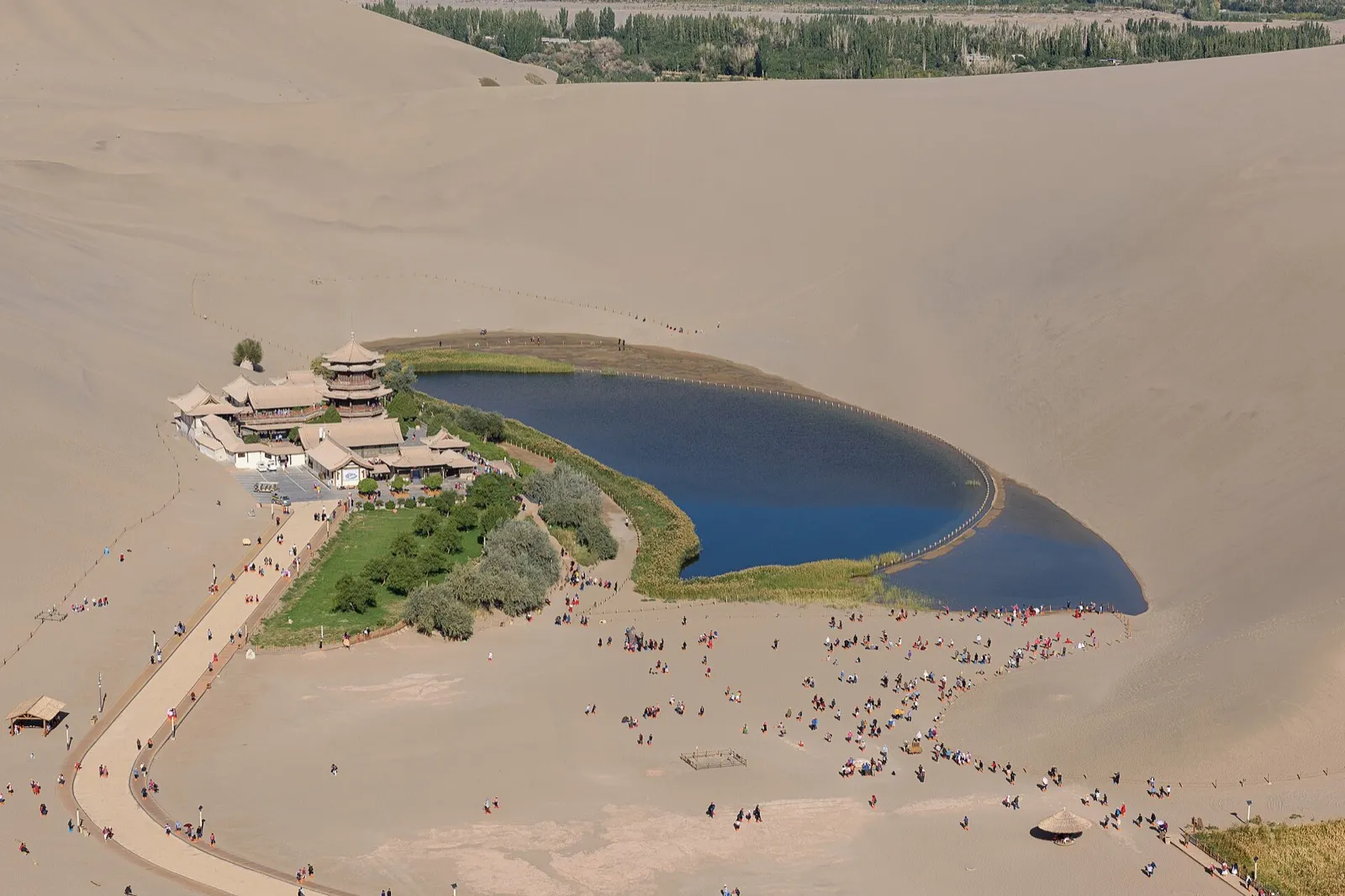
For a thousand years, Dunhuang was the last gas station of civilizations — the oasis where the Silk Road forked around the Taklamakan Desert, where camel caravans traded silk for rest, and where monks carved nearly five hundred decorated caves into a cliff above the river bed. The Mogao Grottoes remain one of the world's great art experiences, now protected by a strict real-name reservation system that punishes the unprepared. Balance the caves with sunset from the singing sand dunes of Mingsha Mountain, the wind-carved yardang 'Ghost City' far out in the Gobi, and the lamb-smoke conviviality of the Shazhou Night Market. This page explains the 2026 ticketing rules for Mogao, the west-line day-trip logistics, and the desert rhythms — scorching days, cool nights — that shape everything here. Come for the art; stay for the stars.
Top sights at a glance
No. 1
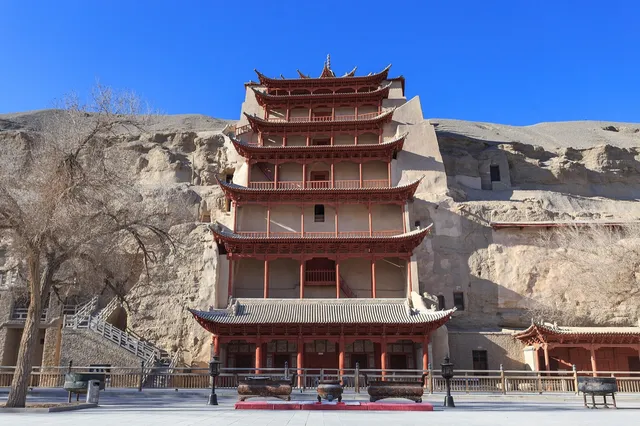
The Mogao Grottoes
A kilometer of cliff face honeycombed with 735 caves — nearly five hundred painted — holding some 45,000 square meters of murals and two thousand-plus sculpted figures, created from 366 AD through the Yuan dynasty. This is the largest hoard of Buddhist art on earth, and the visit is engineered to protect it: two documentary films at a modern visitor center, then a shuttle to the cliff, where a guide unlocks a handful of caves for your small group. No photos inside; the paintings outshine anything a camera would take.
Good to know · The standard ticket (¥238 in 2026) includes both films, transport, and eight caves. It is real-name and date-specific: reserve one to thirty days ahead on the official Mogao mini-program or website with your passport — summer slots sell out weeks in advance. Arrive at the visitor center 30 minutes early; if regular tickets are gone, a ¥100 emergency ticket covers four caves.
No. 2
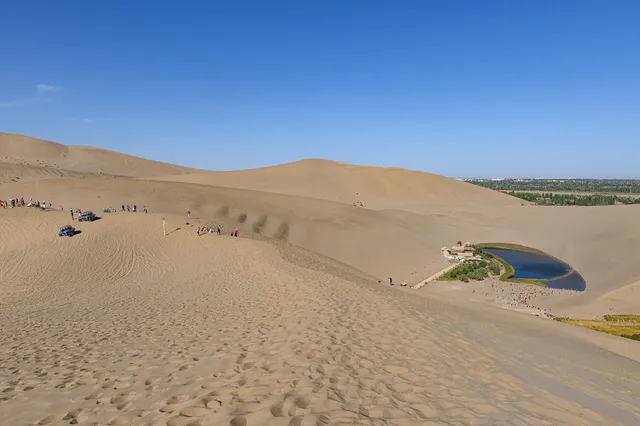
Mingsha Sand Dunes & Crescent Lake
The desert arrives at the city limits: a wall of silk-smooth dunes with the improbable spring of Crescent Lake cupped in their fold — an oasis that has refused to be buried for two thousand years. Ride a camel along the dune flank like a Silk Road trader, huff up the ridge for the sunset panorama, or sit and listen: the mountain hums when wind drags sand down its slopes. In summer the park stays open into the evening, and drone-and-light shows over the dunes have become their own phenomenon.
Good to know · Entry is ¥110 and — a genuine rarity — your ticket works for three days, so come once at midday heat and again for sunset (as of September 2026). Camel rides cost around ¥100 extra. Enter after 5:00 PM in warm months: sunset, then stars, then the walk home to bed. Sand gets everywhere; rent the shoe covers.
No. 3
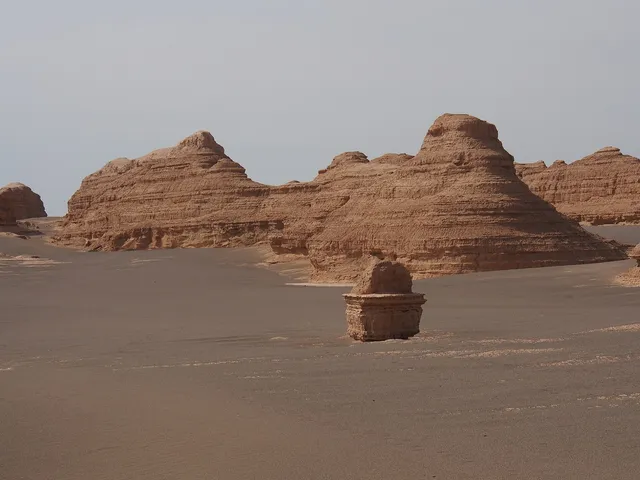
Yadan National Geological Park
Out where the Silk Road crossed its bleakest stretch, wind has sculpted the dried lakebed into a fleet of earthen warships, pyramids, and peacocks — yardang landforms on a scale found nowhere else in China, nicknamed the 'Ghost City' for the moaning wind between them. You tour by park shuttle between four viewpoint clusters, and the showcase comes last: the 'West Sea Fleet,' colossal hull-like ridges best watched at sunset, when the rock glows rust-orange under an enormous Gobi sky — Dunhuang's farthest-flung and most memorable outing.
Good to know · Entry is ¥50 plus a mandatory ¥70 shuttle (as of September 2026). The park sits roughly 180 kilometers northwest of the city — about three hours each way — so most visitors charter a car or join a small-group west-line day trip that also stops at Yumen Pass. Bring windproof layers; the Gobi breeze has teeth even in summer.
No. 4
The Silk Road History & Dunhuang Museum
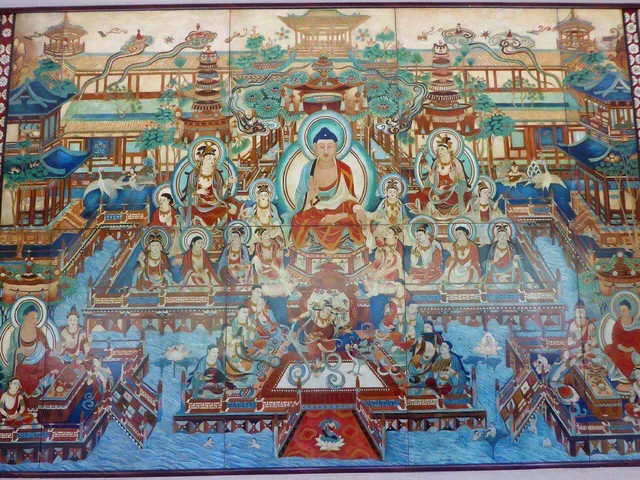
Dunhuang means 'grand beacon,' a Han-dynasty frontier fortress that became the Silk Road's great crossroads, and the free, well-curated city museum is the fastest way to understand how a garrison town grew rich on camel traffic. Galleries walk you through the oasis's two-thousand-year story — Han wooden slips, frontier letters, Silk Road tombs, and faithful full-scale replicas of the Library Cave and its murals, which conveniently let you photograph what the caves themselves forbid. Visit before your Mogao slot and the real caves will read twice as deep.
Good to know · Admission is free with your passport; closed Mondays. Open roughly 8:30–18:30 in summer (as of September 2026), and it sits centrally near the night market district — an easy hour or two between other plans. The replica caves and Library Cave exhibit are the must-sees; docent-led tours in Chinese run at intervals.
No. 5
Shazhou Night Market
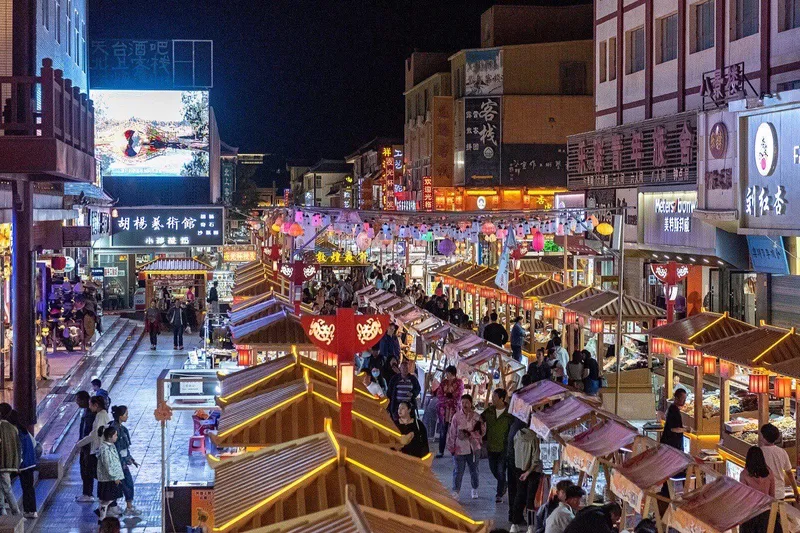
The oasis's evening heart: when the heat finally lets go, all of Dunhuang drifts to the night market district for lamb grilled over coals, noodles pulled to order, and cups of apricot-peel water on long shared tables. The lanes divide into a food quarter — smoky, loud, and genuinely excellent — and a crafts stretch of camel-bell trinkets, gauzy desert gowns, and dried fruit. The specialty roster reads like a Silk Road ingredient list: cumin, chili, hand-pulled flour, desert onions.
Good to know · The market runs nightly; the scene peaks after dark, roughly 8:00 PM onward (as of September 2026). Bring cash-free payment — Alipay or WeChat Pay work at every stall. Bargain good-naturedly in the crafts lanes, starting near half the quoted price, and save dried-fruit shopping for the supermarkets if you are counting yuan.
Every travel era gets one place that sums it up, and for the Silk Road it was here. Dunhuang sat at the hinge of the Hexi Corridor, where traders, monks, and armies funneled through one oasis before the desert decided their fate — and everyone passing through seems to have paid tribute in art. The result is the Mogao Grottoes, a millennium-long gallery of Buddhist painting that ranks with anything in the world, plus dunes you can slide down before dinner. This is also the most logistically demanding stop in Northwest China: cave tickets run on a strict real-name reservation system, the best geology lies 180 kilometers out in the Gobi, and the desert clock — brutal midday, gorgeous evenings — dictates your schedule. Plan around those facts and Dunhuang delivers the most vivid two or three days you can spend in China.
A Bit of History
The Han dynasty built Dunhuang’s luck on purpose. Around 111 BC, after pushing the Xiongnu nomads out of the Hexi Corridor, Emperor Wu planted commanderies along it to hold it — and Dunhuang, “grand beacon,” became the westernmost gate of the empire. Two passes guarded the roads out: Yumen, the Jade Gate, named for the jade caravans that rolled through it, and Yangguan, the Southern Pass. Beyond them the Silk Road split around the lethal Taklamakan Desert, and every merchant crossing either direction now rested, resupplied, and paid taxes in this green rectangle of an oasis.
Wealth begat faith. According to an inscription recorded at the site, a wandering monk named Yuezun saw a vision of golden light over Sanwei Hill in 366 AD and cut the first cave into the cliff across the Daquan River. Silk Road money did the rest: for a thousand years — Northern dynasties, Sui, Tang, Tibetan occupation, the return of Chinese rule, the Xixia, the Yuan — merchants, garrisons, and wealthy families sponsored cave after cave, each a private chapel of murals and painted sculpture. Nearly five hundred decorated caves survive, a continuous thousand-year record of faith, fashion, and international contact that has no parallel anywhere.
Then the sea routes killed the Silk Road, the Ming court pulled the frontier back east, and the desert reclaimed Dunhuang for five centuries. The modern chapter began in 1900, when a Taoist caretaker accidentally broke into a sealed cave — the now-famous Library Cave — packed with tens of thousands of manuscripts. Within a decade the bulk had been acquired by the archaeologist Aurel Stein and the philologist Paul Pelliot and carried off to London and Paris, a loss China still feels keenly; the episode is presented frankly in the museum. UNESCO inscribed the Mogao Grottoes in 1987 among China’s first World Heritage sites, and the Dunhuang Academy has guarded them as a working research institute ever since — which is why your visit today is booked, timed, and guided like a conservation event.
Culture & Daily Life
Modern Dunhuang is a small, orderly oasis city of maybe two hundred thousand, ringed by poplar windbreaks and grape trellises, its nightlife concentrated entirely around the night market district. Cotton, melons, and grapes — dried into famously sweet raisins — anchor the economy alongside tourism, and the fruit here tastes like it: the desert’s brutal day-night temperature swings stack sugar into Li Guang apricots and purple grapes that ruin you for supermarket versions.
The population is overwhelmingly Han, with a Hui Muslim community running much of the restaurant trade — which is why the city’s lamb is uniformly excellent. Culturally the town is steeped in its own myth: the dancing girls with pipas slung backward, a motif lifted from Tang cave murals, appear on everything from theater posters to hotel lobbies, and evening performances staging the Mogao story draw packed houses.
Life runs on desert time. Mornings are cool and busy; by early afternoon in summer the streets empty into shaded teahouses and hotel naps; the town reboots around five and stays up late under dry, star-thick skies. Plan museums and markets around that rhythm, drink more water than seems reasonable, and keep a layer in your daypack, because a day that touches 35°C can still hand you a genuinely cold evening. English is sparse outside the main hotels; a translation app plus a smile covers nearly everything.
Nature & Day Trips
Understand one thing about Dunhuang’s setting: the oasis is an exception, and the Gobi is the rule. The city sits in a green pocket between dying snowmelt rivers and an ocean of gravel and dune stretching unbroken toward Xinjiang. That proximity is the gift — Mingsha Mountain’s dune field begins practically at the bus stop — and the discipline, because everything you will want to do outside town spreads along desert roads: the west line to Yumen Pass and the Yadan yardangs, the southern line to Yangguan’s ruins, the caves just over the hills.
The landscapes are geology at full volume. Yardangs — wind-carved ridges of compacted lakebed — build entire ghost cities at Yadan; the dunes at Mingsha sing, actually hum, under sliding sand; mirages pool on the highway to the passes. The night sky away from town is dark enough that the Milky Way throws a shadow on moonless nights — desert camps and stargazing trips have become a legitimate reason to extend a stay.
Climate is the itinerary’s silent author. July highs average around 34°C and heatwaves push well past it, winters drop well below freezing, spring can ship dust storms up from the basin, and rain — around 35 millimeters a year — is a novelty. The sweet windows are May–June and September–October: warm days, cold nights, long golden evenings. Whatever the season, the daily rule holds: sightsee early, shelter midday, let the evening light do the heavy lifting.
Food & Drink
Dunhuang eats like a caravan town: wheat, lamb, and fruit, with spices sourced from four empires’ worth of trade routes. The signature dish is lu rou huang mian — “donkey meat yellow noodles” — springy hand-pulled noodles dyed gold with plant alkaline water and dressed with sliced braised donkey and a savory mushroom gravy; it sounds adventurous and eats like the world’s best beef lo mein, around ¥40 a plate. Hu yang men bing — lamb stewed with wide ribbons of dough that drink the broth — is the other heavyweight, built for sharing.
Lamb is the city’s love language: cumin-dusted chuan’r grilled over coals, often threaded on slivers of red willow (hong liu) that perfume the meat; hand-grabbed boiled lamb with a salt dip; lamb soup with vermicelli for breakfast. Round out the table with sha cong bing — flatbread baked with wild sand chives — cold-dressed desert salads, and a stream of apricot-peel water (xing pi shui), the local sweet-sour answer to iced tea at a few yuan a cup.
Fruit is Dunhuang’s dessert course: Li Guang apricots in July, seedless grapes and raisins all autumn, melons so sweet they are sold by the half. In the night market’s craft lanes you will meet camel-milk sweets, dried apricots, and jujubes — price them against the supermarkets before committing. A solid market feast with drinks runs ¥50–100 per person; sit-down restaurants a touch more. One universal warning: the dry air dehydrates you faster than you notice, so keep the tea and apricot water coming.
Top Sights
Budget your days around three time blocks — caves in the morning, dunes for sunset, desert depths as a dedicated day — and Dunhuang sequences itself perfectly.
The Mogao Grottoes
Begin at the beginning, because in 2026 Mogao begins whether you are ready or not. The standard visit starts at the Mogao Digital Exhibition Center on the city’s edge with two films — a history piece and a flying-camera tour of the painted caves — then shuttles 15 kilometers to the cliff, where Dunhuang Academy guides unlock a sequence of eight caves for your group: wheeling apsaras, Sogdian donors in silk, serene monumental Buddhas. The caves — 735 in total, painted continuously from 366 AD — are, for many travelers, the peak experience of a China trip, precisely because they feel unrepeatable.
So respect the machinery that keeps it that way. Tickets are real-name, date-specific, and released online one to thirty days ahead via the official Mogao reservation mini-program or website — summer morning slots sell out weeks in advance, so book the moment your dates are fixed. The regular ticket (¥238 in 2026) covers films, shuttles, and eight caves; no photography inside, bags go in lockers, and you must reach the visitor center 30 minutes before your slot with the passport you booked under. If regular tickets are gone, the ¥100 emergency admission buys four caves without films — a fine fallback, not a substitute. Deep-cave fans can buy special-cave tickets on site for a few select masterpieces.
Mingsha Sand Dunes & Crescent Lake
Half the joy of Dunhuang is that you need not drive anywhere for a desert sunset. Mingsha Mountain — the Singing Sand Dunes — rises directly at the city’s southern edge, and Crescent Lake, a thin bow of water framed by reeds and a pagoda, has crouched beneath the dunes for some two thousand years without being swallowed. The classic circuit: enter the park in the late afternoon, ride a camel along the dune flank to the lake, then climb the wooden ladder up the ridge for sunset — the light turns the sand apricot, the city glitters faintly behind you, and the dune field runs bare to the horizon.
The ticket mechanics are unusually friendly: ¥110 buys entry, valid for three days, so visit in daylight and return for the evening show without paying twice (as of September 2026). In summer the park stays open well past dark — sand-sledding, camel trains with bells, and drone-light spectacles over the dunes. Climbing sand is a full-leg workout; the ladder helps, but the last ridge is earned. Sand will infiltrate every device you own — a scarf, tied shoes, and a Ziploc for your phone are the difference between comedy and tragedy.
Yadan National Geological Park
Dedicate a full day to the far horizon. Yadan National Geological Park — “Ghost City” to everyone — protects a dried lakebed 180 kilometers northwest of town where wind has spent eternity carving compacted sediment into yardangs: ramparts, sphinxes, and, in the finale, the “West Sea Fleet,” a congregation of hull-shaped ridges like a naval armada becalmed in stone. Visitors rotate through four viewpoint zones by mandatory park shuttle; between them, the Gobi simply runs to the skyline, which is its own kind of spectacle.
The tour ends at the fleet on purpose: sunset is the show, when the rock warms to rust and the shadows stretch a kilometer long. Most travelers come via a chartered car or small-group west-line day trip that strings together Yumen Pass — a sparse Han-era beacon fort of outsized poetic fame — and sometimes Yangguan; a long day with a lot of road, and worth every kilometer. Tickets are ¥50 plus the required ¥70 shuttle (as of September 2026). Two desert-handbook cautions: wind at the viewpoints is relentless, so pack a windproof layer year-round, and this is the driest, most exposed day of the trip.
The Silk Road History & Dunhuang Museum
Before the caves, take the free version — it will change what you see in the real ones. The Dunhuang Museum, near the market district, compresses two thousand years of oasis history into a couple of well-signposted floors: Han frontier slips in surprisingly legible ink, tomb murals, Silk Road coinage, and a moving section on the Library Cave manuscripts and their dispersal to London and Paris. Most useful for visitors are the full-scale replica caves, painted with reproductions of headline murals — shoot them here, since the originals forbid photography.
The museum doubles as the best Silk Road primer in Northwest China: exhibits explain the two desert routes that forked at Dunhuang, the beacon-tower relay that carried messages 10,000 li to the capital, and the multicultural mix — Chinese, Central Asian, Indian, Tibetan — visible in the cave art. Allow ninety minutes; admission is free with a passport; and note it closes Mondays (hours run roughly 8:30–18:30 in summer, as of September 2026). Come the morning of your Mogao slot, or any afternoon too hot for the dunes.
Shazhou Night Market
End your days where the town ends its own. The Shazhou night market district assembles each evening a few blocks from the old city center: lanterns, grill smoke, and the pre-dinner promenade of half of Dunhuang. The food lanes serve the full local canon — red-willow lamb skewers sizzling in ranks, donkey-meat yellow noodles pulled to order, lamb-and-dough stew bubbling in copper pots — washed down with cold apricot-peel water. Seating is communal and convivial; joining a table of strangers is how travel stories get told.
Beyond the food quarter, a crafts market sells the Silk Road souvenir canon — camel bells, dune-grass weavings, flowing desert-gown photo costumes, dried apricots and raisins in bulk. Prices start high and negotiation is expected: open around half the quote and settle smiling. The market’s rhythm matches the desert’s — dead in daylight, glorious from about 8:00 PM until late (as of September 2026) — so slot it after your dune sunset and let the day end the way the oasis has always ended: fed, cool, and slightly sandy.
Getting There & Around
Dunhuang Mogao International Airport, about 13 kilometers east of town, receives direct flights from Xi’an (around two hours), Lanzhou (under two), and a shifting roster of other cities; an airport bus runs into town in about half an hour, or a taxi costs around ¥40. By rail, Dunhuang station — 13 kilometers from the center — serves slower trains along the old Lanzhou–Xinjiang artery.
High-speed travelers usually ride the Lanzhou–Urumqi line instead: about four hours from Lanzhou to Jiayuguan (the Ming fort at the corridor’s throat, worth a stop), then onward to Liuyuan South station — still a couple of hours by road from Dunhuang, by shuttle bus or shared car. However you arrive, the classic approach up the Hexi Corridor — Lanzhou, Zhangye’s rainbow mountains, Jiayuguan, Dunhuang — doubles as the best sightseeing route in the province.
In town, taxis are cheap and metered, DiDi works, and the city bus to the Mogao visitor center costs a few yuan; a hotel near the night market puts dinner and museums in walking range. The one exception is the west line to Yumen Pass and Yadan — 300-plus kilometers round trip, so charter a car or book small-group tour seats the day before.
Where to Stay
Two bases cover it. The practical choice is central Dunhuang, within a few minutes’ walk of the night market district: mid-range hotels at friendly prices, the bus stops for Mogao and the dunes nearby, and the town’s whole evening rhythm on your doorstep. Travelers holding dawn cave slots sometimes base near the Mogao Digital Exhibition Center on the city’s edge, though most central hotels reach it in ten minutes by taxi.
For the experience option, spend one night at a desert camp beyond the dunes: camel rides, bonfire dinners, and a sky so crowded with stars it feels like cheating. Camps range from basic tents to glamping domes, best booked ahead in summer, and they pair naturally with a sunrise walk on Mingsha. Whatever you choose, reserve early for July–August, when the oasis fills and the cave tickets — the real constraint — go first.
Sources & verification (7)
- https://www.dha.ac.cn/info/1020/7498.htm
- https://www.mgk.org.cn
- https://whc.unesco.org/en/list/440
- https://www.travelchinaguide.com/attraction/gansu/dunhuang/sand.htm
- https://us.trip.com/travel-guide/attraction/dunhuang/dunhuang-yardang-national-geopark-76516
- https://www.chinadiscovery.com/gansu/dunhuang/dunhuang-museum.html
- https://ca.trip.com/things-to-do/detail/105242218