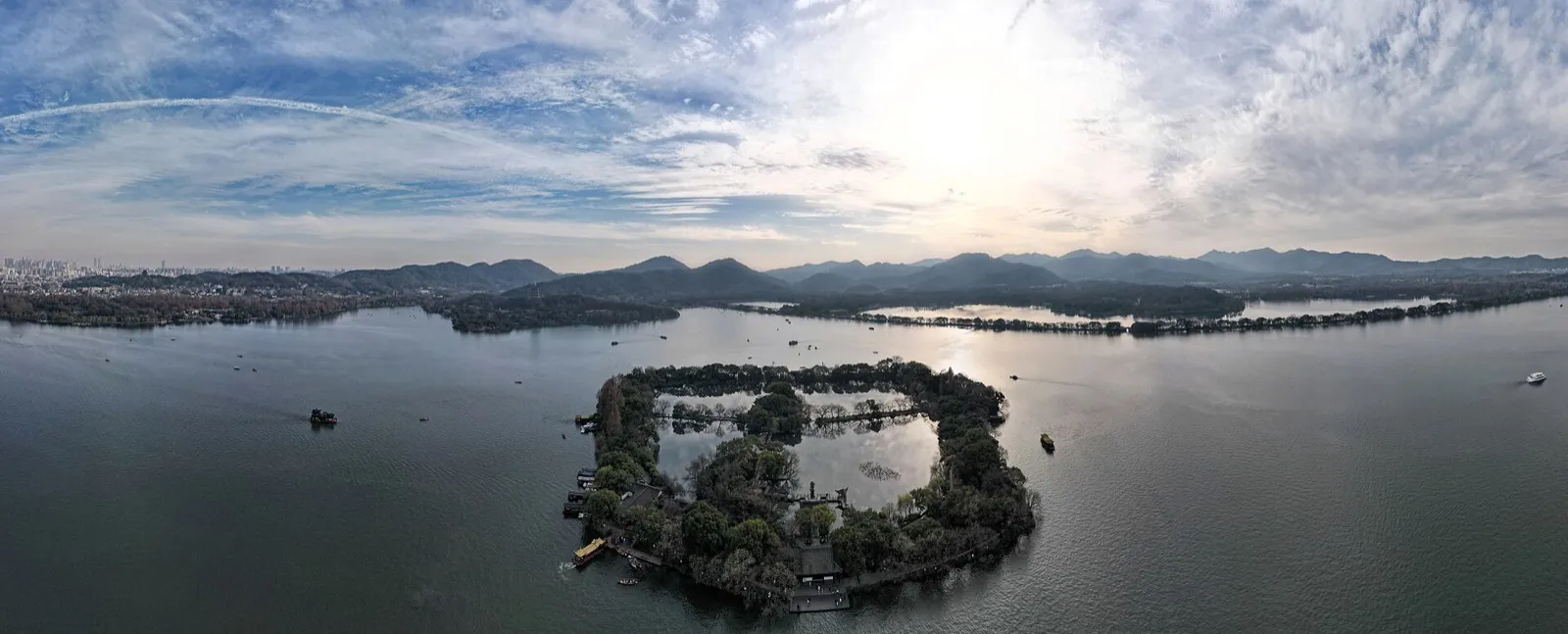
Hangzhou is the classical China of the imagination: a still lake ringed with pagodas and willows, hills terraced with tea, and a canal that once carried the wealth of an empire to its southern terminus. The old saying goes that above is heaven and below are Suzhou and Hangzhou, and West Lake is why — a UNESCO World Heritage landscape that has been free to enter since 2002, open around the clock. Add a thousand-year-old temple that dropped its ticket in 2025, tea villages where you can taste the spring harvest on the farm, and a network of wetlands and canal streets, and you get China's most rewarding easy escape. Best for independent travelers pairing it with Shanghai, 45 minutes away by high-speed rail, or with Suzhou's gardens next door — and for anyone who likes walking, tea, and cities that slow down instead of shout.
Top sights at a glance
No. 1
West Lake
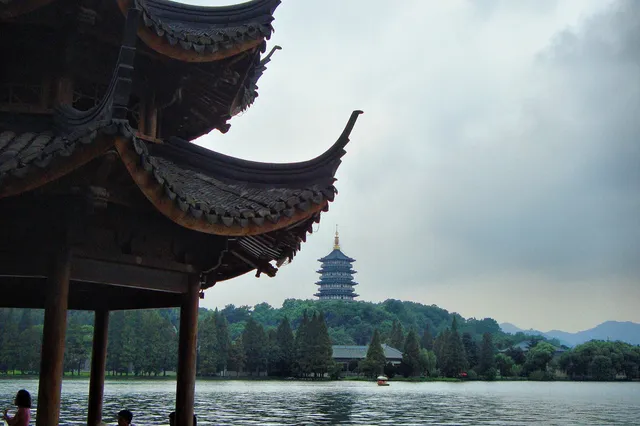
West Lake is the reason the saying 'above is heaven, below are Suzhou and Hangzhou' exists: a shallow, willow-fringed lake of causeways, pagodas and little islands, with hills folded behind it. It has been drawing poets for twelve centuries, UNESCO listed it in 2011, and the entire shoreline is free and open around the clock. Boats, pagodas and gardens around the edge charge separately, but the main event — the light on the water at dawn and dusk — costs nothing.
Good to know · The lake is free, no reservation needed, and open 24/7. Come before 8 am or at dusk; avoid national holiday weeks entirely. The standard sightseeing boat runs about RMB 55–70 including the stop at the Three Pools island; the Leifeng Pagoda lookout costs about RMB 40. Metro Line 1 to Longxiangqiao puts you at the lakeshore in a few minutes on foot.
No. 2
Lingyin Temple
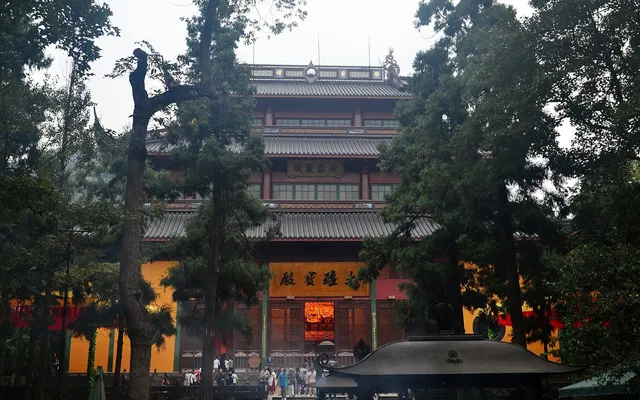
Founded by an Indian monk in 328 AD, Lingyin is one of China's great Buddhist temples, set in a forested valley below Feilai Peak, where more than 300 Buddhas were carved into limestone cliffs between the 10th and 15th centuries. In a landmark move the whole scenic area — temple, peak and hillside shrines — dropped all entrance fees in December 2025 and switched to free timed reservations, which makes one of China's most-visited sacred sites astonishingly good value.
Good to know · Entry is free but you must book a real-name timed slot, one to seven days ahead, on the official 'Hangzhou Lingyin Feilai Peak' mini-program in WeChat or Alipay (passports work). Weekend slots sell out fast. Hours run roughly 7:30 am to 5:30 pm; arrive at opening. Bring the passport you booked with.
No. 3
Longjing Tea Villages
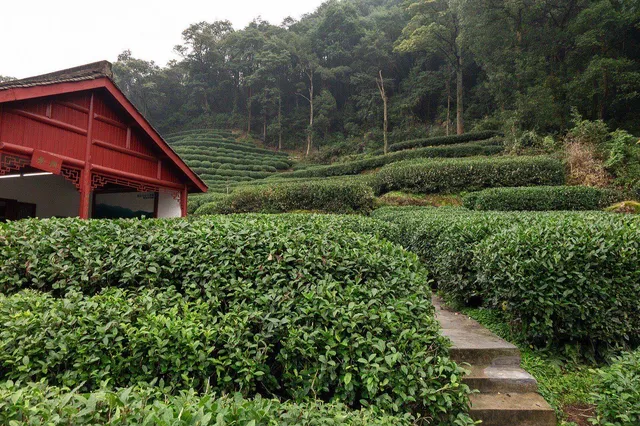
The hills southwest of the lake grow China's most famous green tea, Longjing — 'Dragon Well' — and a scatter of villages sits among the terraces, chief among them Longjing Village and Meijiawu. Terraces and walking paths are free to wander, farmhouses pour tastings all day, and in late March the harvest season turns the whole valley into the best-smelling hike in eastern China. This is Hangzhou at its slowest and most rural, twenty minutes from downtown.
Good to know · Picking season runs March to May, peaking around early April (pre-Qingming tea commands the top prices); autumn is quiet and still green. Tea runs roughly RMB 100–800 per 500 grams depending on grade — taste before you buy, and buy from farmhouses or licensed shops rather than street sellers. A DiDi from the lake takes about 20–30 minutes.
No. 4
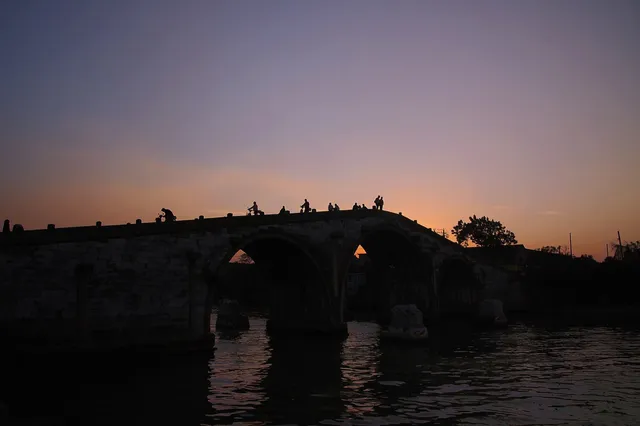
The Grand Canal
Hangzhou is the southern terminus of the world's longest canal, and the working waterway that made the city rich is now a UNESCO World Heritage site with a lovely slow way to see it. North of downtown, the Gongchen Bridge district strings whitewashed lanes — Qiaoxi Historical Block, Xiaohe Old Street — along the water, with small museums and teahouses in restored warehouses. A RMB 3 water bus or a lantern-lit night cruise both deliver the canal, at very different budgets.
Good to know · The local water bus costs about RMB 3; the tourist night cruise from Wulinmen Wharf runs about RMB 100 and departs around 7:30 pm for an hour's round trip to Gongchen Bridge (book on Trip.com or the official mini-program with Alipay/WeChat). Metro Line 5 or 1 gets you to the canal district. Go at dusk for the lanterns.
No. 5
Xixi Wetland
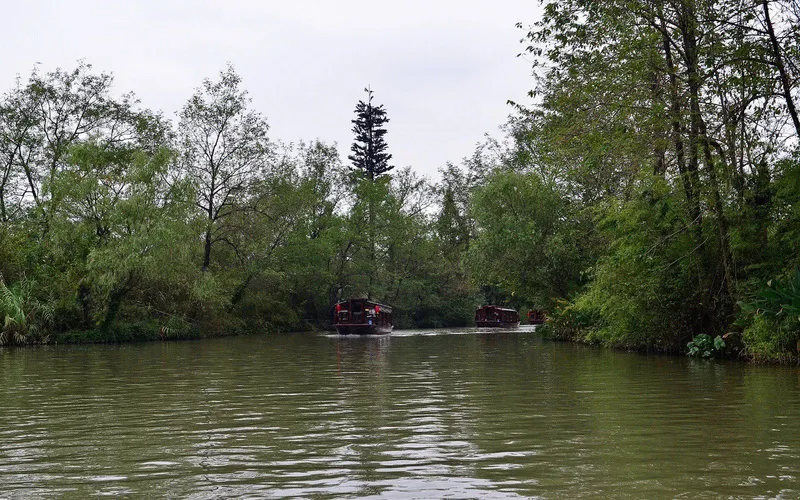
China's first national wetland park is a 1,700-year-old patchwork of ponds, persimmon trees, reed beds and fishing hamlets just five kilometers from West Lake — the place wealthy Hangzhou families came to escape the city, which today is exactly what it offers you. The park is split between a paid eastern zone with boat routes and a free western zone, and even on busy weekends it absorbs crowds better than almost anywhere in the region.
Good to know · The eastern zone ticket is about RMB 80 (around RMB 65 booked online) with electric boats about RMB 60 extra; hours run roughly 7:30 am–6:30 pm April to October, shorter in winter. Book via the official channel or Trip.com with Alipay/WeChat. Allow half a day; combine with an evening back at the canal or lake.
Hangzhou is the picture most first-time visitors carry of China before they ever land: a still lake ringed with pagodas, tea terraces climbing the hills, willows trailing into the water. The old saying — “above is heaven, below are Suzhou and Hangzhou” — has been repeated for a thousand years, and West Lake is the reason. What surprises people is the price: nothing. Hangzhou abolished the lake’s entrance ticket in 2002, making one of the country’s most celebrated landscapes free and open around the clock, and it extended the same logic to its most famous temple in 2025. Two or three days here pairs naturally with Shanghai, 45 minutes away by high-speed train. Come if you want China’s classical landscape painting at walking pace — with the best cups of green tea of your trip at the end of every trail.
A Bit of History
Hangzhou’s fortunes begin with water. When the Grand Canal stitched the Yangtze delta to the Yellow River basin in the seventh century, Hangzhou became its southern terminus, and the barges that arrived loaded with grain, silk and salt left loaded with the tax revenue of empires. A thousand-kilometer canal made a provincial town rich.
The lake, meanwhile, was being curated by some of China’s greatest poets, who happened to be posted here as governors. Bai Juyi in the Tang dynasty and Su Shi in the Song both organized the dredging that kept West Lake from silting into farmland, and the causeways built from the dredged mud still carry their names — Bai Causeway, Su Causeway — and still make the lake’s best walks. The line between civic engineering and landscape painting has always been thin in Hangzhou.
In the 1130s, after northern China fell to invasion, the defeated Song dynasty made Hangzhou — then called Lin’an — its capital. For the next 140 years it was probably the largest city on earth, a metropolis of perhaps a million people whose pleasure boats, teahouses and painted markets entered European legend when Marco Polo described it as the finest and most splendid city in the world. The Mongols took it in 1276; the capital moved; but the lake and the tea culture stayed.
What Hangzhou did next is more relevant to your trip than any dynasty. In 2002 the city tore down the ticket gates around West Lake — the first major Chinese attraction to abolish admission — betting that free entry would pump money into hotels, restaurants and tea shops instead. The bet paid: tourism revenue has grown more than tenfold since, a playbook now studied across China and extended in December 2025 to the Lingyin Feilai Peak scenic area. Meanwhile Hangzhou quietly became a tech capital — Alibaba’s home city, host of the 2016 G20 summit and the 2023 Asian Games — which explains why the barista scanning your QR code may be building an app of her own.
Culture & Daily Life
Hangzhou runs on tea the way Shanghai runs on coffee. Longjing green tea is the local language: families exchange it, restaurants cook shrimp in it, and on spring weekends half the city drives into the hills to drink the new harvest within sight of the bushes it came from. Teahouses along the lake fill with old men and their thermoses; a glass of tea bought at a farmhouse table comes with an afternoon of sitting in it.
Daily life gathers around the water. At dawn the lakeshore belongs to swimmers, taichi groups and ballroom dancers; by mid-morning it belongs to wedding parties, who photograph the causeways so reliably that they’ve become part of the scenery. In autumn the whole city smells of osmanthus, the tiny yellow flower that flavors cakes and wine here. People speak a Wu dialect as soft as Shanghai’s, queue politely for the metro, and take a certain pride in the “slow city” label — an odd one for a place that hosts Alibaba, but accurate at street level. The tech money is real, though: this is one of the most cash-free cities in China, so arrive with Alipay or WeChat Pay set up, and expect even a three-yuan boat to be paid by QR code.
Buddhism is the other deep current. Lingyin Temple is an active monastery, not a museum — on any morning you’ll share the incense smoke with pilgrims who drove hours, and the hillside shrines up the valley get working worshippers lighting incense at 7:30 am. Dress like you’d dress in any working church, and you’ll be fine.
Nature & Day Trips
For a city so close to Shanghai’s sprawl, Hangzhou is startlingly green. The hills southwest of West Lake are laced with stone paths between tea villages — you can walk two or three hours from Longjing Village over ridgelines of tea terraces and drop into Meijiawu for lunch, all free. The lake’s shoreline paths and the botanic gardens in its northwest corner keep a full day of easy walking on their own.
East of downtown, the Qiantang River is famous for the world’s largest tidal bore, a wall of water that rolls upstream each month and is said to top out near nine meters; the season peaks around the middle of the eighth lunar month (usually September or October), when the city treats it as a festival. Farther afield, the Liangzhu Archaeological Park north of the city protects a 5,000-year-old city site that UNESCO inscribed in 2019 — its museum is free, closed Mondays, and rarely busy with foreign visitors. Wuzhen, a polished canal town about an hour away, makes an easy water-town add-on if Suzhou’s villages aren’t on your route.
Food & Drink
Hangzhou cooking belongs to the light-handed school of Jiangnan cuisine: sweeter than Sichuan, gentler than Shanghai, built around lake fish, bamboo and vinegar. The classic dishes every local will tell you to order: West Lake fish in vinegar (a poached grass carp, sour-sweet, more interesting than it sounds), Dongpo pork (a square of pork belly braised in Shaoxing wine until it’s spoon-tender, named for the poet-governor Su Shi), and Longjing shrimp, stir-fried with fresh tea leaves. Beggar’s chicken — a whole bird wrapped in lotus leaf and baked in clay — is the theatrical one.
Breakfast is noodles. Pian’er chuan, the city’s signature bowl, tops alkaline noodles with preserved greens, bamboo shoots and sliced pork; noodle shops do their heaviest business before nine in the morning. Street snacks to chase it with: cong baohui, scallion-stuffed flatbread pancakes pressed on a griddle, and osmanthus cakes in autumn.
Geographically, the lakeshore restaurants charge for the view; walk one or two blocks inland from the water and the same dishes drop in price by a third. Hefang Street in the old quarter is the touristy but honest place to graze on snacks, and the tea villages do excellent farmhouse lunches — chicken from the yard, bamboo shoots, spring greens — for the price of a salad back home. A good sit-down local meal runs RMB 60–120 per person; a noodle breakfast costs less than a coffee in Shanghai.
Top Sights
West Lake
Start with the free thing, because it’s the best thing. West Lake is a UNESCO World Heritage cultural landscape — pagodas, causeways, islands and gardens assembled over twelve centuries — and since 2002 the entire shoreline has been free and open 24 hours a day, unusual anywhere in China. The lake rewards repetition: Su Causeway’s willows at first light, the Baochu Pagoda silhouette from the northern shore at dusk, the lotus beds north of the island in July. The full shoreline loop is roughly 14 kilometers, flat and bike-friendly, with electric sightseeing carts for the tired.
Two paid add-ons are worth it. The standard sightseeing boat (about RMB 55–70) crosses to the little island where the Three Pools Mirroring the Moon stand — the pagodas printed on the one-yuan note — and the ticket includes the island stop. The Leifeng Pagoda, rebuilt in 2002 over the ruins of the 975-year original, charges about RMB 40 for the elevator ride to the best sunset platform on the lake. Skip the “West Lake through ticket” bundles; the free shoreline plus one or two paid sights is the right dose. Arrive before 8 am or after 5 pm, and never attempt it during a national holiday week — October 1–7 is the single worst moment in the Chinese travel calendar.
Lingyin Temple
Lingyin — “Temple of the Soul’s Retreat” — was founded in 328 AD and rebuilt sixteen times since; today it’s a working monastery of painted halls under old trees, with the hillside shrines of Yongfu and Taoguang temples above it. The walk in is half the visit: Feilai Peak, the limestone hillock across the stream, holds more than 300 Buddhist carvings chiseled between the 10th and 15th centuries, including the famous laughing Maitreya Buddha by the bridge.
The practical news is genuinely new: since December 1, 2025, the whole Lingyin Feilai Peak scenic area — peak, temple, hillside shrines — has been free, ending over four decades of ticketing (the RMB 45 park ticket and RMB 30 temple voucher are gone). The catch is access control: entry runs on free real-name reservations with timed slots, booked one to seven days ahead on the official “Hangzhou Lingyin Feilai Peak” mini-program in WeChat or Alipay — passports are supported, so do this yourself rather than paying a reseller. Hours run roughly 7:30 am to 5:30 pm, and weekend and holiday quotas fill up days ahead; the first weekend after the policy launched, slots sold out entirely. Book before you arrive in Hangzhou, arrive at the 7:30 opening, and bring the passport you registered.
Longjing Tea Villages
Twenty minutes’ drive from the lakeshore, the city ends and the tea begins. Longjing Village, the closest and most famous, stacks its terraces up a steep valley around the eponymous spring; Meijiawu, farther west, is wider and calmer, with more of a working-farm feel. Neither village charges admission — the terraces, the paths between them, and the ridge trails connecting the two are all free — and every other farmhouse is a tea room where a table, a view and endless refills of fresh Longjing cost a few dollars.
Timing shapes the experience. The harvest runs from late March into May, and the two weeks around Qingming in early April produce the pre-Qingming tea that sells for small-fortune prices; villages are crowded then, but you can watch picking and pan-firing in real time. Autumn is the connoisseur’s secret — dry, clear, still green, uncrowded. Prices run roughly RMB 100–800 per 500 grams depending on grade and season, and the honest rule is to taste at a farmhouse table, then buy from the farmer or a licensed shop, never from a street seller “shipping special today.” Go on a weekday if you can, take a DiDi (about 20–30 minutes each way), and if spring weather holds, walk the ridge path between the villages rather than riding.
The Grand Canal
Everyone photographs West Lake; almost nobody walks the canal, which is exactly why you should. Here the Grand Canal — 1,800 kilometers of working waterway, UNESCO-listed in 2014 — ends its journey from Beijing at the arched Gongchen Bridge, and the warehouses along its banks have become one of Jiangnan’s nicer historic quarters: the Qiaoxi Historical Block, with restored lanes and a cluster of small museums devoted to the city’s crafts (umbrellas, fans, blades), and Xiaohe Old Street, a quieter stretch of canal-side houses where locals actually live.
The budget move is the public water bus, a real commuter boat that plies the canal for about RMB 3 — absurdly, one of the cheapest boat rides in China. The evening move is the night cruise, about RMB 100 for an hour’s round trip from Wulinmen Wharf departing around 7:30 pm, with lantern-lit banks and the bridge floodlit at the turn. Take the water bus by day, wander Qiaoxi and Xiaohe on foot, then decide if the night cruise is worth it — it is, on a clear evening. Metro gets you to the northern canal district from downtown in about twenty minutes.
Xixi Wetland
Before the city surrounded it, Xixi was where Hangzhou’s gentry kept their fishing cottages; today it’s China’s first national wetland park, a web of ponds, persimmon orchards and reed channels that feels improbably remote for somewhere five kilometers from the lake. It absorbs crowds in a way the narrow sights can’t — you rent a boat, drift, and mostly hear birds.
Know the geography: the developed eastern zone is the ticketed one, about RMB 80 at the gate (roughly RMB 65 online), with electric boat cruises at about RMB 60 extra; the western zone is free, rougher, and better for walking. Hours run roughly 7:30 am–6:30 pm from April to October, shorter in winter. Autumn is the local favorite — the persimmons ripen and the reeds go bronze — but any season works, because the point is the pace change: half a day of water and quiet between the lake and the canal. Book tickets on the official mini-program or Trip.com with Alipay/WeChat, take the metro most of the way and a DiDi for the last stretch, and don’t over-plan — Xixi rewards drifting more than it rewards itineraries.
Getting There & Around
The Shanghai–Hangzhou corridor is one of the busiest rail lines on earth: over 200 departures a day, as fast as 45 minutes from Shanghai Hongqiao to Hangzhou East, second class roughly RMB 30–90. Just turn up and tap through 12306 or Trip.com — book same-day for weekdays, a day or two ahead for weekends. Beijing is 4.5–7 hours east. Hangzhou Xiaoshan International Airport (HGH) handles most domestic plus growing international service; Metro Line 19, the airport express, reaches the city center in 45–60 minutes for about RMB 9, while a DiDi runs RMB 100–130 and around 50 minutes.
In town, the metro (about a dozen lines) covers everything in this guide — Longxiangqiao for the lake, Line 19 and Line 1 for the airport, the northern lines for the canal — and the Alipay transit QR code works at every gate. Didi is cheap and instant; shared bikes scatter the lakeshore. For the lake itself, use feet, bikes, boats and the sightseeing carts; for the tea villages and Xixi, DiDi fills the gaps.
Where to Stay
Three bases cover it. The Hubin lakeshore, southeast of West Lake, is the first-timer’s choice: wake up five minutes from the water, walk to dinner, metro at the door — pay a premium for lake views and don’t bother, since you’ll be outside all day. The Wulin Square and canal district north of downtown is the local, better-value pick: bigger rooms for the money, the night cruise at your doorstep, honest noodle shops, and the metro to the lake in ten minutes. The third option is the hills themselves — guesthouses in Longjing Village and Meijiawu let you wake up inside the tea terraces, best on a slow itinerary that trades museums for mornings on foot.
One warning across all three: prices spike hard around Chinese public holidays, especially the first week of October, when the lake area effectively sells out. Book early or avoid those weeks.
Sources & verification (11)
- https://olachina.org/hangzhou
- https://olachina.org/west-lake-hangzhou
- https://whc.unesco.org/en/list/1334
- https://whc.unesco.org/en/list/1443
- https://us.trip.com/travel-guide/attraction/hangzhou/xixi-national-wetland-park-81715/
- https://www.klook.com/en-US/activity/5951-xixi-national-wetland-park-ticket-hangzhou/
- https://us.trip.com/travel-guide/attraction/hangzhou/hangzhou-grand-canal-night-cruise-97351
- https://www.travelchinaguide.com/cityguides/zhejiang/hangzhou/ferry.htm
- https://www.travelchinaguide.com/attraction/zhejiang/hangzhou/canal.htm
- https://www.tripadvisor.com/Attraction_Review-g298559-d1807931-Reviews-Meijia_Dock-Hangzhou_Zhejiang.html
- https://www.gochinatravel.org/en/hangzhou