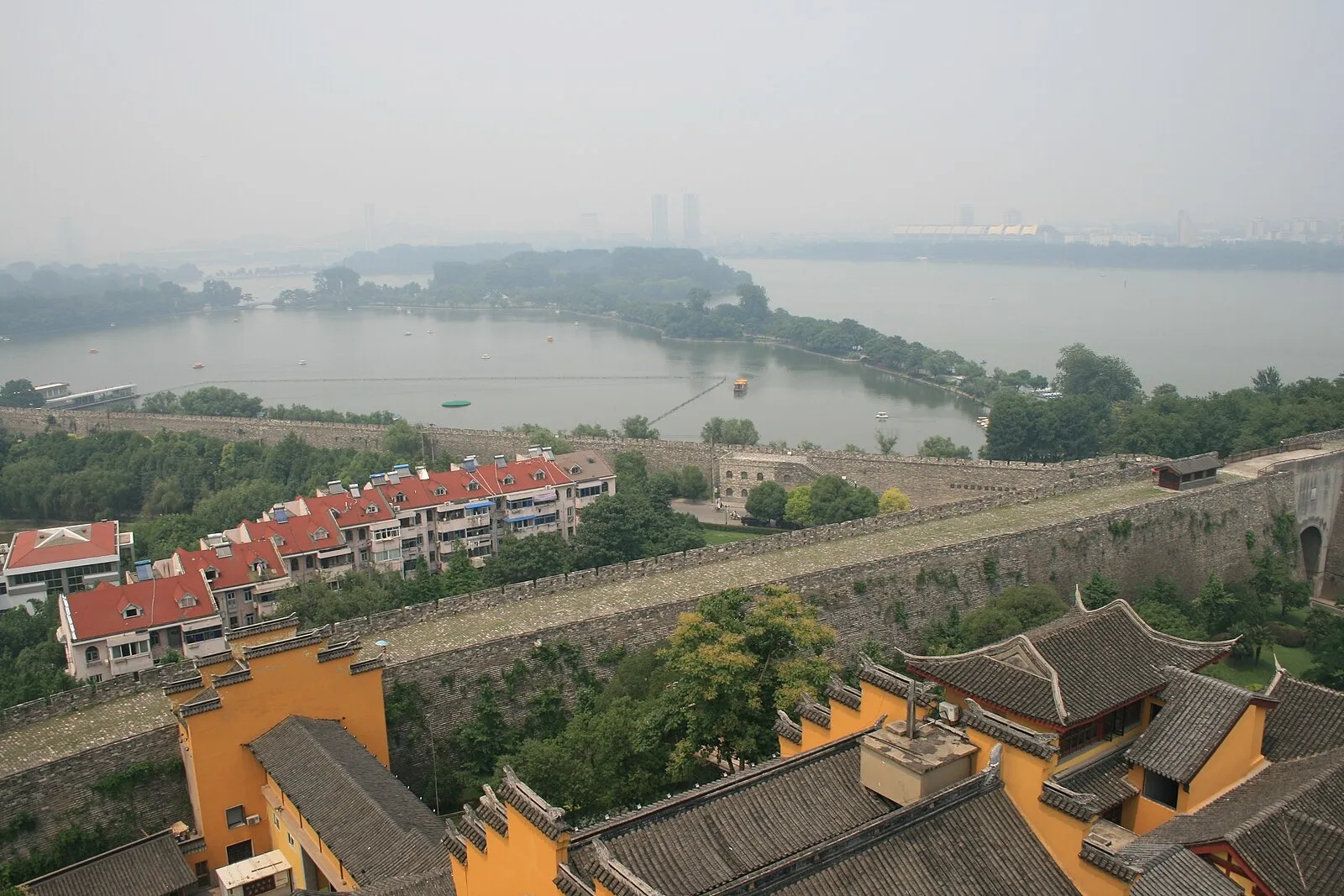
Nanjing, capital of Jiangsu province on the Yangtze, has been the seat of more failed and founding dynasties than any other Chinese city, and the layers show. A Ming emperor's tomb and the longest city wall of its age sit on the same wooded mountain as the white mausoleum of Sun Yat-sen; riverside lanes where scholars once sat the imperial exams now glow with lantern-lit boat traffic. One hour from Shanghai by high-speed train and noticeably calmer than Beijing or Xi'an, it packs imperial grandeur, Republic-era architecture, and one of China's great duck-based food cultures into a compact, green, very walkable city. Nanjing suits history-minded first-timers, museum lovers, and anyone who wants a serious but relaxed China destination without the crush.
Top sights at a glance
No. 1
Sun Yat-sen Mausoleum
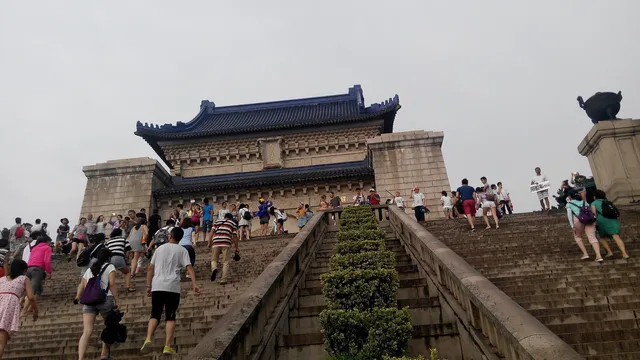
The white-marble, blue-tiled tomb of the man who led the 1911 revolution that ended imperial China, draped across the lower slope of Purple Mountain and climbed by 392 granite steps. Completed in 1929 and designed by architect Lu Yanzhi in the shape of a freedom bell, it is part monument, part pilgrimage, and the single most symbolic view in the city — forest to the horizon when you turn around at the top.
Good to know · Admission is free but real-name reservation is required via the official Zhongshan scenic-area WeChat channels, released about seven days ahead; the mausoleum closes on Mondays except public holidays, and is open roughly 8:30 AM–5:00 PM as of September 2026. Take Metro Line 2 to Xiamafang and the shuttle or a 20-minute walk. Come early for cool air and thin crowds.
No. 2
Ming Xiaoling Mausoleum
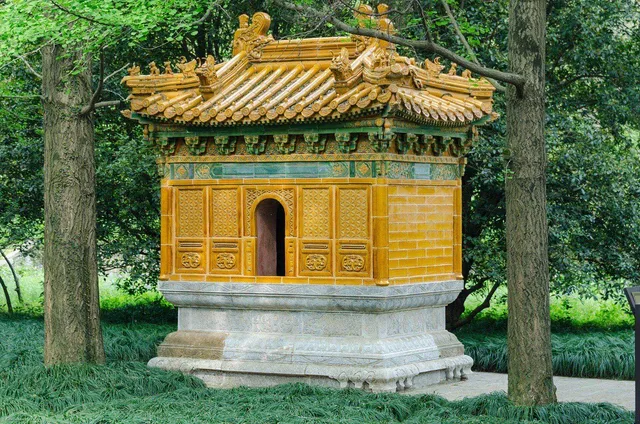
The tomb of Zhu Yuanzhang, the founding Ming emperor, set in pine forest on the same mountain as Sun Yat-sen's mausoleum. Its Sacred Way — guarded by weathered stone lions, camels, elephants, and mythical beasts — is one of the most photogenic walks in eastern China, superb in autumn. Built from 1381, it is the model every later Ming and Qing imperial tomb copied, and UNESCO listed it in 2003.
Good to know · Entry is 70 yuan including neighboring Plum Blossom Hill; a two-day combined ticket for the main Purple Mountain sites runs about 100 yuan (as of September 2026). Grounds open from around 6:30 AM, the tomb palace area from 8:30 AM. Ride Metro Line 2 to Muxuyuan and follow the signs; mornings are quietest.
No. 3
The Confucius Temple & Qinhuai River
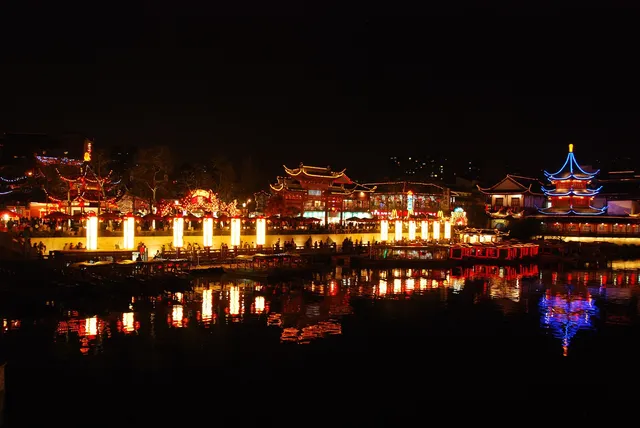
Fuzimiao is the temple, but the real sight is the scene: a pedestrian quarter of snack stalls and shops strung along the Qinhuai River, where for centuries scholars lodged before the imperial examinations held next door. After dark, red lanterns and glowing eaves reflect in the water and painted wooden boats drift under arched bridges — Nanjing's classic evening, and worth planning your days around.
Good to know · The riverside quarter is free; the temple's main hall costs around 30 yuan, and the night boat cruise from the Fuzimiao pier is about 80 yuan for a 40-minute loop (as of September 2026). Ride Metro Line 3 to Fuzimiao. Go at dusk, and book cruise tickets ahead on weekends.
No. 4
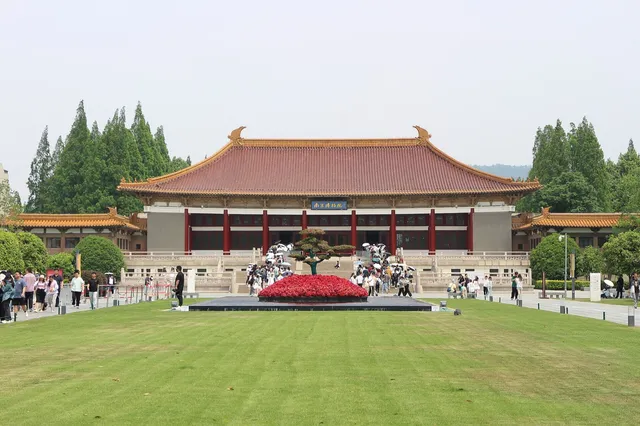
Nanjing Museum
One of China's largest museums, founded in 1933 and spread across six galleries in a park on the city's east side. Expect Jiangsu's pick of everything: jade burial suits, Ming porcelain, Republic-era archives — and, in the basement, a full recreated 1930s street with old-shop facades, a period post office, and a working old-fashioned cinema that visitors walk straight into. Easily half a day.
Good to know · Admission is free with real-name reservation through the museum's official WeChat account, released about seven days ahead; closed Mondays except public holidays, open roughly 9:00 AM–5:00 PM with last entry at 4:00 PM (as of September 2026). Use your passport to book. Metro Line 2 to Muxuyuan, then a short walk.
No. 5
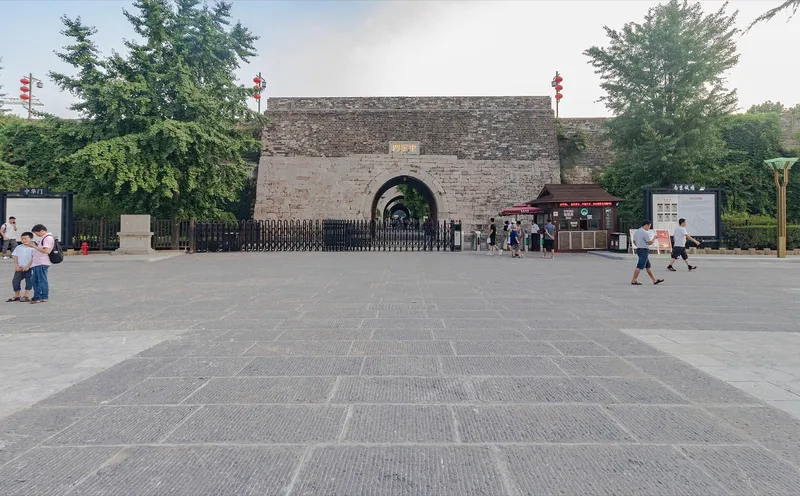
Nanjing City Wall
When Zhu Yuanzhang finished his capital's defenses around 1393, he had enclosed the city behind the longest brick wall on earth — some 35 kilometers shaped to follow lakes and hills rather than any grid. Roughly two-thirds still stands, and you can walk on top of much of it. The masterpiece section is Zhonghua Gate, a vast multi-courtyard barbican built to trap entire armies.
Good to know · Zhonghua Gate entry is about 50 yuan, open roughly 8:30 AM–5:00 PM (as of September 2026); other wall sections such as Xuanwu Lake and Jiefangmen charge a little less. Metro Line 1 to Zhonghuamen puts you at the gate's doorstep. Walk at golden hour for the skyline-and-old-rooftops views.
Nanjing is the best city in eastern China for travelers who want their history heavy and their crowds light. It held the throne longer than any other southern capital — six successive dynasties made it their seat between the third and sixth centuries, the founding Ming emperor built his wall, palace, and tomb here, and the republic that replaced the emperors chose it as capital too. The result is a city of doubled stories: a Ming gate tower facing a Republic-era boulevard, an emperor’s tomb up the hill from a revolutionary’s. Add plane-tree avenues older than most European boulevards, a duck-obsessed food culture, and one of China’s finest museums, and Nanjing earns its two or three days several times over. One high-speed hour from Shanghai, it slips easily into any first itinerary — and feels like a discovery even though it shouldn’t.
A Bit of History
Nanjing’s résumé starts early. In 229 AD the Kingdom of Wu made this Yangtze crossing its capital, and through the fractured third-to-sixth centuries — the Eastern Jin, Song, Qi, Liang, and Chen dynasties — “Jinling,” as poets still call it, remained the refugee capital of Chinese civilization whenever northern invaders held the north. Those Six Dynasties left behind a refined, scholarly self-image, Buddhist pagodas carved into the riverside cliffs, and a claim to greatness every later ruler had to reckon with.
The Ming made it real again. Zhu Yuanzhang, a peasant-turned-conqueror, proclaimed himself emperor here in 1368, spent nearly three decades throwing a wall around the city that was the longest on earth, and built a tomb for himself on Purple Mountain. His son moved the court to Beijing in 1421, but Nanjing kept the southern capital’s dignity — and briefly held what was called the Porcelain Tower, one of the medieval world’s most celebrated buildings, until war destroyed it in the nineteenth century. In 1842 the treaty ending the First Opium War was signed aboard a British ship anchored off the city, the first of the “unequal treaties.”
Then came the hardest chapters. The Taiping rebels made Nanjing their heavenly capital from 1853 to 1864 and left it in ruins. In 1912 Sun Yat-sen was inaugurated here as the republic’s first president, and the Nationalist government made it the capital of China again from 1927 — paving plane-tree boulevards, building ministries in gray stone, until December 1937, when the invading Japanese army committed the massacre the city’s memorial hall now documents, at the cost of some 300,000 lives. The capital returned in 1946, then left for the last time in 1949. Modern Nanjing, capital of Jiangsu and a metropolis of over nine million, carries all of it quietly.
Culture & Daily Life
Nanjing’s personality comes from being the capital of things that ended. Locals joke about their own straightforwardness — the affectionate local stereotype is the honest, unpretentious “Nanjing turnip” — and the city is friendlier and less hurried than Beijing or Shanghai. It is also a deep-green city: the London plane trees planted along the funeral route to Sun Yat-sen’s tomb in the late 1920s now arch over whole districts, turning Moling Road, Yihe Road, and the avenues around the old government quarter into tunnels of leaves that catch fire every November.
The Republic-era layer is uniquely photogenic. The Presidential Palace complex, mansion districts around Yihe Road, the campuses of Nanjing University — gray brick, tiled roofs, 1930s inscriptions — give central Nanjing a texture no other Chinese city has. Ming and imperial layers thread through it: city wall fragments between office towers, the Yangtze River Bridge that China built without foreign help in 1968 and still regards as a point of national pride.
Daily travel works the way it does across urban China. Alipay and WeChat Pay cover everything from duck stalls to metro gates (set them up before you arrive — see /guides/payments/), and every sight in this guide runs on real-name reservations booked with your passport number through official WeChat mini-programs. Xuanwu Lake fills with dawn taiji and boat rentals; the alleys of Laomendong fill at dusk with locals herding visiting relatives; and around the Confucius Temple, young couples in rented Tang and Republican costume queue for night portraits.
Nature & Day Trips
Purple Mountain (Zijin Shan), the 450-meter forested ridge that hosts the two great mausoleums, doubles as the city’s lung: paved hiking paths, lakeside tea houses at Zixia Lake, and cable cars to the summit observatory make it an easy half-day of green between sightseeing blocks. Xuanwu Lake, just inside the old wall’s northern reach, offers flat causeway strolls between five islets with the city wall for company — the best free walk in town, particularly at sunset.
For a proper day trip, Qixia Mountain, about an hour northwest by metro-and-bus or taxi, is the local autumn pilgrimage: Qixia Temple, a Tang-era Buddhist foundation, sits below slopes of red maple that draw the whole province in late November. The Yangtze itself is worth an hour — the riverside park beneath the 1968 bridge puts you eye to eye with freighters and the bridge’s revolutionary sculptures.
Beyond the city, most visitors find Nanjing’s nature serves the itinerary rather than competing with it: one mountain morning, one lake evening, and the rest of the time in museums and on walls.
Food & Drink
Nanjing eats duck. Not once a season, but daily, in more preparations than anywhere in China — the city claims the title of duck capital, and the claim survives the first taste. The classic is salted duck (yanshui ya), brined, poached, and served cool with translucent skin; quarter portions from deli counters cost a few dollars and make a perfect light lunch. The people’s dish is duck blood and vermicelli soup (ya xue fen si tang): a bowl of clear duck broth with coagulated duck blood, duck organs, vermicelli, and fried tofu puffs, finished with chili oil. It costs 15 to 25 yuan, exists on nearly every corner, and is the best cheap meal in the city.
Beyond duck, the local canon runs through soup-filled tangbao dumplings eaten with a straw and a warning, pan-seared beef potstickers from the city’s centuries-old halal kitchens, sesame-crusted flatbreads, osmanthus-scented sweet lotus root stuffed with sticky rice, and water-boiled bamboo shoots when spring arrives. Prices sit comfortably below Shanghai’s: 30 to 50 yuan covers a generous noodle-and-dumpling lunch, and a full duck banquet with beer rarely tops 100 yuan a head.
The eating neighborhoods are Fuzimiao, where the snack stalls concentrate tourist traffic and the side streets hide the older shops; Laomendong, a restored quarter of teahouses and old Nanjing snacks that stays pleasant deep into the evening; and the student-priced lanes around Nanjing University. The honest strategy: eat the duck dishes anywhere with a queue, and save one meal for the Qinhuai riverfront at night.
Top Sights
Book every ticketed sight below in advance with your passport through official WeChat mini-programs, paying with Alipay or WeChat Pay; slots for the free sites go fastest. Purple Mountain’s two mausoleums pair naturally into one big day; the rest spread comfortably across a second.
Sun Yat-sen Mausoleum
The funeral monument to the founder of modern China is also its most famous piece of modern architecture: a white marble stairway in blue and granite, rising 392 steps through pines to a memorial hall and tomb chamber beneath a blue-tiled roof. Designed by architect Lu Yanzhi in the shape of a freedom bell and completed in 1929, it made Sun the permanent neighbor of the Ming emperors he displaced — a deliberate piece of political theater you can still feel. The climb is steady rather than brutal, and the payoff doubles at the top: the stone dais of the hall, then the green spill of Purple Mountain all the way to the Yangtze.
Entry is free, but this remains one of the few Nanjing sights where real-name reservation is strictly enforced — book through the official Zhongshan scenic-area channels about seven days ahead with your passport (as of September 2026). The mausoleum closes on Mondays except public holidays and admits visitors roughly 8:30 AM–5:00 PM, so plan around it. Metro Line 2 to Xiamafang, then the shuttle or a twenty-minute walk through plane trees. Arrive near opening for quiet steps and thin air, and add the Music Stage amphitheater (10 yuan) below for its semicircular acoustics.
Ming Xiaoling Mausoleum
Walk the Sacred Way first. Past a red-walled gate, a path bends gently through camphor trees between paired statues — lions, xiezhi beasts, camels, elephants, qilin, horses — carved in the 1400s and worn smooth by six centuries of weather, every one of them positioned to guard the sleep of Zhu Yuanzhang, the founding Ming emperor, entombed here with Empress Ma from the 1380s onward. The tomb mound itself sits unopened beneath the forest behind the Square City terrace, as it has since before the Forbidden City was imagined.
This is the mausoleum that set the template for all later Ming and Qing imperial tombs, which is why UNESCO inscribed it in 2003 as part of the Imperial Tombs of the Ming and Qing Dynasties — in the lineage, it is the first of the line. Entry is 70 yuan including Plum Blossom Hill next door (bare beauty in late February when tens of thousands of plum trees bloom; a leafy picnic spot the rest of the year), and the two-day Purple Mountain combo ticket runs about 100 yuan (as of September 2026). Grounds open around 6:30 AM with the tomb palace area from 8:30 AM; Metro Line 2 to Muxuyuan. In late autumn the ginkgo and maple color makes it the most beautiful walk in Nanjing.
The Confucius Temple & Qinhuai River
By day, Fuzimiao is a pleasant temple-and-shopping quarter: the Confucius Temple itself, first raised in the Song dynasty and rebuilt after repeated destruction, its main hall charging around 30 yuan, with the imperial examination museum next door explaining why scholars swarmed this district for 600 years. But the schedule that matters is the evening one. When the lanterns come on along the Qinhuai River, the quarter turns into the scene from every classic Chinese painting of a pleasure quarter — glowing eaves, arched bridges, wooden boats sliding past restaurant windows.
The night boat cruise from the Fuzimiao pier is the proper way to see it: about 80 yuan for a 40-minute loop through the lit riverscapes, best booked ahead on weekends, with departure windows running into late evening (as of September 2026). The quarter is free to wander, Metro Line 3 stops at Fuzimiao, and restored Laomendong old town is a ten-minute walk south — pair them into one long, lantern-lit evening. If your trip spans the Lunar New Year, the Qinhuai Lantern Fair here is the largest in China and transforms the whole riverfront.
Nanjing Museum
China’s museums are excellent, but few are as pleasant to actually visit as this one: a 1933 foundation set in a landscaped park, spread across six buildings, and stocked with the best of a province that has been wealthy since imperial times. Expect jade and silver burial suits sewn from hundreds of plaques, luminous Ming porcelain, and galleries of Republic-era archives and artifacts — but the crowd-pleaser is the basement: a full recreated 1930s street, complete with old shopfronts, a period railway-office ticket window, and a cinema actually screening vintage films. It is the Republic of China as walkable diorama, and unlike anywhere else in the country.
Admission is free but strictly reserved: book through the museum’s official WeChat account with your passport number about seven days ahead, because slots vanish; the museum closes on Mondays except public holidays and runs roughly 9:00 AM–5:00 PM with last entry at 4:00 PM (as of September 2026). Metro Line 2 to Muxuyuan, then a short walk through the park gates. Give it a half day, start at the history gallery, and leave the Republic street for last — it is the exit you will not want to take.
Nanjing City Wall
The wall Zhu Yuanzhang built around his capital between 1366 and 1393 remains the longest surviving city wall in China: originally some 35 kilometers, shaped with imperial indifference to geometry so that it absorbed lakes, rivers, and hills into the defenses. About two-thirds still stands, and walking a section of it — brick widths stamped with the names of the provinces that fired them — ranks among the great urban walks anywhere. The best stretch starts at Zhonghua Gate, the largest surviving castle-style gate in China: a labyrinth of four sequential courtyards and hidden soldier chambers designed to swallow an army of ten thousand, with the old town spread out from its ramparts.
Zhonghua Gate entry is about 50 yuan, open roughly 8:30 AM–5:00 PM (as of September 2026); Metro Line 1 stops at Zhonghuamen at the gate itself. For scenery rather than siegecraft, walk the Jiefangmen section beside Xuanwu Lake, where the wall paths run between water and skyline, or the short stretch by Jiming Temple for the classic view of pagoda, lake, and wall in one frame. Evening visitors catch the wall floodlit; the paths close earlier than the views demand, so time it accordingly.
Getting There & Around
Most international arrivals route through Shanghai, and the train is the move: high-speed G trains run from Shanghai Hongqiao to Nanjing South in as little as an hour — one of China’s busiest corridors, with dozens of departures daily and second-class fares around 110 to 140 yuan depending on the train (as of September 2026). From Beijing, fast trains take roughly three and a half to four and a half hours. Nanjing South station is a vast, well-signed hub on metro Lines 1, 3, and S3; book tickets up to about 15 days ahead on the official 12306 app with your passport. Nanjing Lukou International Airport sits southeast of the city, linked by the S1 metro line to Nanjing South in around 40 minutes for under 10 yuan.
The metro — more than a dozen lines, English signage, a few yuan by distance — reaches everything in this guide: Line 2 for both Purple Mountain mausoleums and the museum, Line 3 for Fuzimiao, Line 1 for Zhonghua Gate. DiDi rides across town typically cost 15 to 40 yuan, and shared bikes fill the last kilometer. Traffic is manageable by Chinese megacity standards; the central sights cluster tightly enough that a day of walking plus metro covers most of the city.
Where to Stay
Three bases fit different trips. Xinjiekou, the commercial dead center, is the logistics pick: metro interchange for everything, the widest hotel range, and the Presidential Palace and university quarter in easy reach — best for first-timers on tight schedules. The Fuzimiao–Laomendong riverside is the atmosphere pick: restored lanes, lantern-lit evenings out the front door, the night boat at the doorstep — liveliest, louder on weekends, and best for travelers who want the classic Nanjing evening without planning it. The Xuanwu Lake and Gulou area is the calm pick: leafy streets, the university quarter’s cafes, lakeside morning runs, and easy Line 1 access — good for slower trips and return visitors.
Wherever you book, stay within or near the old wall’s orbit: Nanjing’s core is compact, and a base inside it keeps every sight within a short metro ride. Two nights cover the mausoleums, the museum, and the wall; three let you add Qixia Mountain or unhurried duck dinners without arithmetic.
Sources & verification (10)
- https://en.wikipedia.org/wiki/Sun_Yat-sen_Mausoleum
- https://en.wikipedia.org/wiki/Ming_Xiaoling
- https://whc.unesco.org/en/list/1004/
- https://www.travelchinaguide.com/attraction/jiangsu/nanjing/fuzimiao.htm
- https://en.wikipedia.org/wiki/Qinhuai_River
- https://en.wikipedia.org/wiki/Nanjing_Museum
- https://en.wikipedia.org/wiki/City_Wall_of_Nanjing
- https://en.wikipedia.org/wiki/Zhonghua_Gate
- https://www.travelchinaguide.com/attraction/jiangsu/nanjing/city-wall.htm
- https://www.trip.com/trains/china/route/shanghai-to-nanjing/