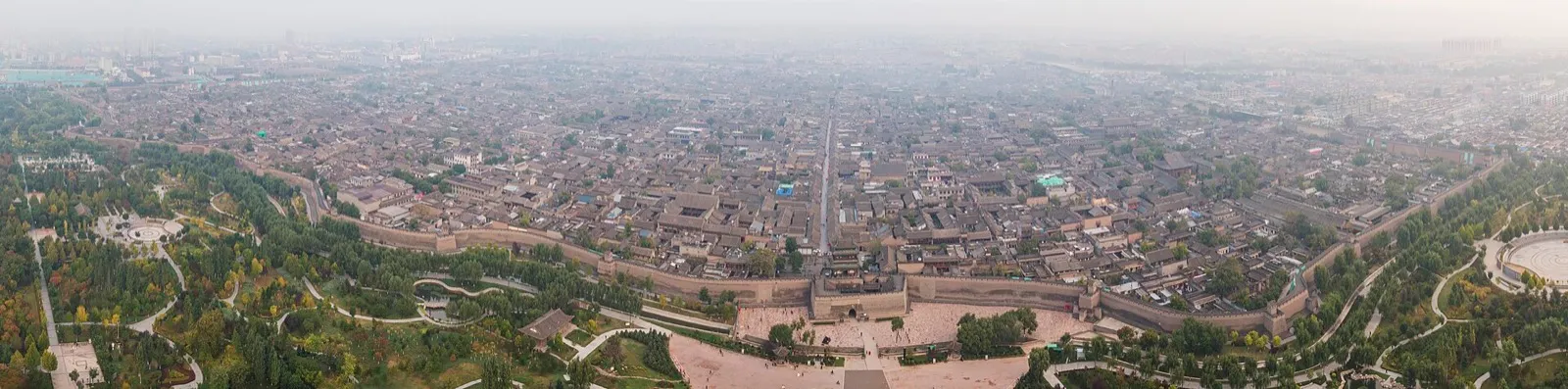
Pingyao is the rarest kind of Chinese sight: an entire county town, wall and all, that survived the twentieth century intact. Inside six kilometers of Ming-dynasty ramparts, some forty thousand people still live and work among gray-brick courtyards, temple roofs, and the narrow lanes of a grid plan drawn in the 1370s. Two hundred years ago this was the financial capital of China — the place where the first draft bank, Rishengchang, invented Chinese money transfer in 1823 — and its counting houses, county yamen, and merchant compounds now read as one seamless open-air museum, protected by UNESCO since 1997. The city is free to enter, a single ¥125 pass covers twenty-two sights, and the high-speed rail from Beijing or Xi'an stops just outside the walls. Use it as a deliberate stop between the headline cities, stay overnight for the lantern-lit lanes, and pair it with the painted sculptures of Shuanglin Temple and the vast Wang Family Courtyard.
Top sights at a glance
No. 1
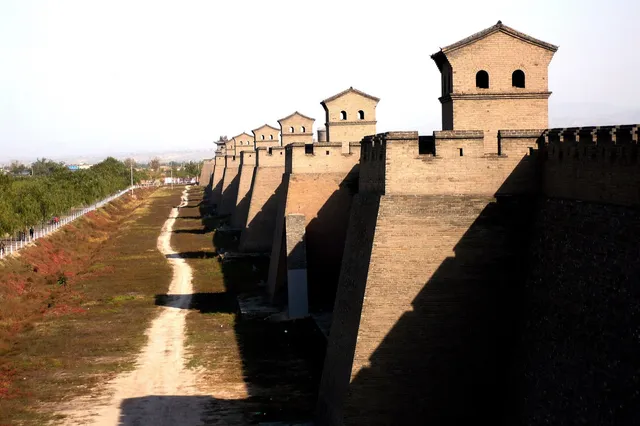
The Pingyao City Wall
Rebuilt in 1370 in the early Ming and never substantially rebuilt since, Pingyao's wall is the frame that makes the whole city legible: a roughly six-kilometer circuit of packed-earth-and-brick ramparts, twelve meters high, punctuated by six gates and some seventy watchtowers. Walk the top from the South Gate for the intended view — an unbroken sea of gray courtyard roofs and temple ridges inside, flat farmland outside, and lanterns switching on along the streets below at dusk. The full circuit takes about two hours; most visitors walk a photogenic stretch and save their legs.
Good to know · The wall is included in the ¥125 ancient-city through ticket (valid three days, as of September 2026); you can climb at the South Gate and other access points. Sites open roughly 8:00–18:00, shorter in winter — go early morning or an hour before close for soft light and thin crowds.
No. 2
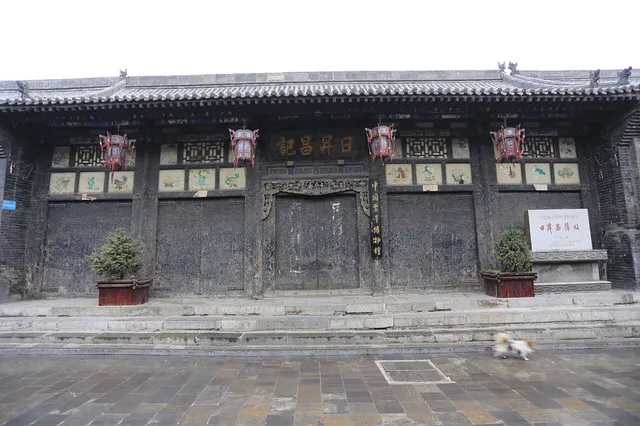
Rishengchang Draft Bank
In 1823, on a modest courtyard fronting West Street, Shanxi merchant Lei Lvtai opened Rishengchang — China's first draft bank, the institution that replaced carts of silver with paper remittance and made Pingyao the banker to the empire. The compound is now a museum laid out much as the bank operated: dim counting rooms behind lattice windows, back-office chambers, exhibition halls tracing branches that reached as far as Russia, and the vault below. It is small, dense, and the best explanation of why this unassuming county town once moved the country's money.
Good to know · Entry is included in the ¥125 through ticket; allow an hour and read the English captions, which are good. Come early or late — the rooms are narrow and midday groups stack up. It sits on West Street a short walk from the South Gate area, easy to pair with the wall and the yamen in one loop.
No. 3
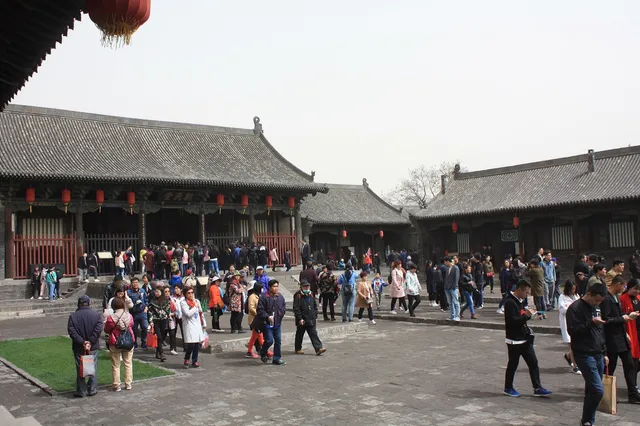
The Ancient County Government Office
Pingyao's yamen — the seat of the county magistrate — is the largest and best-preserved government compound of its kind in China, reached through a screen wall and a string of courtyards that staged the whole machinery of imperial local rule: courtroom, clerks' offices, gardens, storehouses, a jail with period restraints, and the residence where the magistrate lived out his posted years. Court-session reenactments run for visitors, gavel and all, and the exhibits on county governance are more gripping than they sound — the imperial state in miniature.
Good to know · The yamen is covered by the ¥125 through ticket (as of September 2026) and sits just off the city's central axis southwest of Ming–Qing Street; allow about an hour. Ask at the gate for reenactment times — shows run several times a day in season — and go before the tour buses arrive around mid-morning.
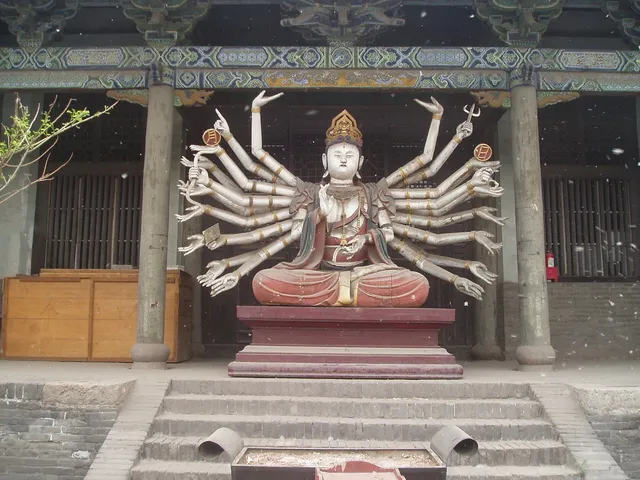
No. 4
Shuanglin Temple
Six kilometers southwest of the walls, behind a plain village facade, waits the best art collection most visitors have never heard of: more than 2,000 painted clay sculptures spanning Song, Yuan, and especially Ming eras, arranged in temple halls where armored guardians, serene bodhisattvas, and tiny narrative tableaux crowd every pedestal and wall. Shuanglin is part of the UNESCO World Heritage inscription alongside the city itself, yet it sees a fraction of the visitors — you will often have the halls nearly to yourself. Connoisseurs rank it among China's finest painted-sculpture ensembles.
Good to know · Shuanglin charges a separate ¥35 ticket, not covered by the city through ticket (as of September 2026). It is about 15 minutes by taxi from the South Gate, or an easy bike ride; some travelers combine it with the Wang Family Courtyard on an organized half- or full-day trip. Hours run roughly 8:00–18:00 in the high season.
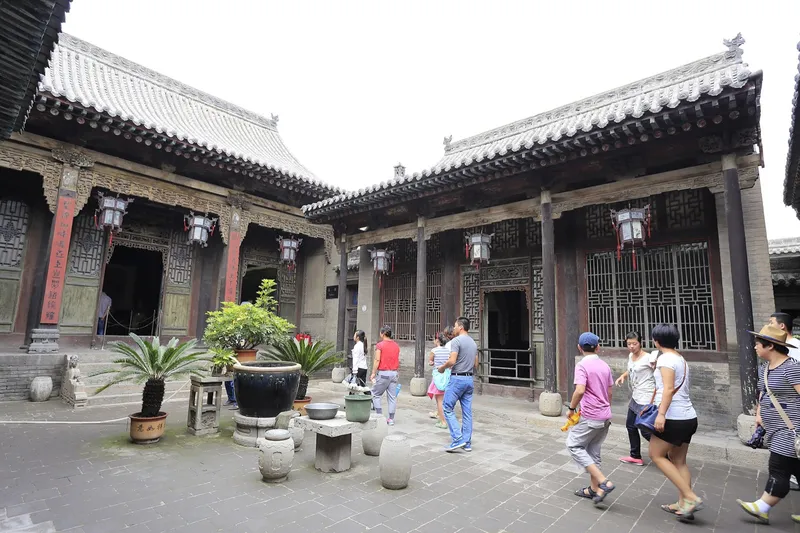
No. 5
Wang Family Courtyard
Thirty-five kilometers from Pingyao in Lingshi County, the Wang clan — Shanxi merchants who converted trade fortunes into official rank — built a compound so large it is nicknamed the Folk Forbidden City: whole lanes of gray-brick courtyards stacked up a hillside, stitched by tunnels and stairways, carved edge to edge in the famous Shanxi trio of wood, brick, and stone. Where Pingyao shows the bankers' offices, the Wang compound shows where the money lived — a clan city of several hundred rooms. It is the strongest single day trip from the walled city.
Good to know · Admission is ¥55, with hours around 8:30–17:30 (as of September 2026). From Pingyao, most visitors take an organized day tour, a hired car, or a train to nearby Jiexiu plus a taxi — budget half a day including transport. Wear real shoes: the compound is a hillside of steps.
Everyone knows China preserves its headline monuments. What surprises people about Pingyao is that the whole town made it — not a temple or a restored street, but an entire walled county seat, grid plan and gates and some forty thousand residents, walking around inside six kilometers of 1370s ramparts as they have for six centuries. This was, per UNESCO’s citation, the financial center of China in the late nineteenth and early twentieth centuries — the county town where a Shanxi merchant invented the draft bank in 1823. Today the wall is walkable, the banks and yamen are museums, the courtyards are guesthouses, and the high-speed rail from Beijing or Xi’an stops ten minutes from the gate. Pingyao rewards travelers who slow down for a night or two: half the magic happens after the day-trippers leave and the lanterns come on.
A Bit of History
Pingyao’s story starts long before its wall. Tradition traces the town’s founding to the Western Zhou, nearly three thousand years ago, but the city you visit took shape in 1370, when the first Ming emperor’s government rebuilt the defenses of counties across China — and Pingyao’s wall, laid out as a neat square with six gates, settled the street grid that still organizes every lane you will walk.
Geography did the rest. Pingyao sat on the overland routes between Beijing and the northwest, and its families — squeezed by thin loess farmland — made a specialty of leaving home to trade. By the Ming and Qing dynasties, Shanxi merchants ran empires in salt, soybean oil, dyes, camel caravans, and long-distance exchange across the northern frontier. The revolution came in 1823, when local merchant Lei Lvtai and his partners opened Rishengchang on West Street: China’s first draft bank, a house that took silver in one city and paid it out in another by paper. The idea ran like wildfire — at its height Rishengchang alone operated branches across the country and beyond, and competing Pingyao piaohao multiplied until, as UNESCO’s inscription notes, this county town functioned as the financial hub of late-Qing China, with Ming–Qing Street as its ticker tape.
The fall was as swift as the rise. Modern state banking and the early twentieth-century railways — which bypassed Pingyao for nearby junction towns — drained the piaohao’s business, the bankers moved to Shanghai and Taiyuan, and the old city simply went to sleep, too poor to demolish itself. Wealth had already rebuilt the town in its own image: temple restorations, opera stages, and more than seventy old shops lining South Street, the city’s central axis, with pawnshops, drapers, and counting houses. That stagnation became the miracle: when China began protecting its built heritage in earnest, Pingyao emerged as the most complete surviving county town of the Ming-Qing era, and UNESCO inscribed it — wall, temples, courtyards, and the twin outlier sanctuaries of Shuanglin and Zhenguo — in 1997. The bankers’ interiors are museums now; the town itself, mercifully, is not.
Culture & Daily Life
What makes Pingyao different from China’s many rebuilt “ancient towns” is that the walls contain a working town. Schoolkids stream out of alleys on e-bikes at noon, morning wet markets set up along the west lanes, grandfathers play cards in gate shadows, and laundry crosses courtyards on bamboo poles — all within earshot of the ticket office. The main arteries, Ming–Qing Street and the gate approaches, hum with shops and snack stalls; walk one lane off them and the noise drops to wind chimes and mahjong tiles, and you have the old city to yourself. The town stages itself: mornings belong to residents’ errands and school runs, midday to tour groups, and after dark the main streets put on their lantern show while locals walk the lanes beneath the walls. Winter is cold but atmospheric — around Chinese New Year, lantern displays and temple fairs give the city a festival glow.
Architecture is the culture here. Nearly everything is gray brick and courtyards: single-story houses folded around trees and door screens, lintels carved with a merchant family’s aspirational mottos, red lanterns hung for festival effect. Local crafts carry the same story — Pingyao’s polished lacquerware and paper-cuts are the souvenirs with real roots, and several workshop compounds let you watch both being made.
Etiquette is easy. The city is flat, walkable, and unhurried; locals are used to foreigners and rarely pushy. A few habits mark you as a good guest: peek into open courtyards rather than wandering into closed ones, ask before photographing residents, carry cash-free payment (Alipay and WeChat Pay work everywhere, down to the noodle stalls), and keep the volume down in the residential lanes after dark. Evenings are the town’s best hour — lantern-lit, cool, and quiet — which is precisely why staying overnight beats a day trip.
Nature & Day Trips
Pingyao is a flat-loess affair — the scenery is human-made, and the wall top is the best viewpoint in the county. Time a walk on the ramparts for early morning or the hour before closing: mist in the lanes, kilns of cooking smoke at breakfast, and the low sun throwing the watchtowers’ shadows across the roofs. Sunrise and sunset are the show; midday glare flattens everything.
The genuine day trips sit outside the walls. Closest and most rewarding is Shuanglin Temple, six kilometers southwest, whose 2,000-plus painted sculptures are covered under Top Sights below. Its quieter sibling, Zhenguo Temple, twelve kilometers northeast, charges a separate ¥25 and preserves interiors far older than the wall itself. South toward Jiexiu, the Wang Family Courtyard (below) anchors a full day, and the cliff-hugging temples of Mianshan scenic area — a mountain resort four kilometers beyond the compound — tempt travelers with an extra day and strong legs. North, the Qiao Family Courtyard offers the classic merchant-compound experience on a smaller (and pricier) ticket than Wang’s; most independent travelers pick one compound, and this guide picks Wang. None of these require a rental car — trains, taxis, and small-group tours cover them all.
Food & Drink
Shanxi cooking is noodle-and-vinegar country, and Pingyao eats well within that canon. The town’s signature is Pingyao beef — a whole cut braised in spiced broth, cooled, and sliced thin for cold plates; it appears on every restaurant menu and in vacuum packs at every gift shop, and eaten fresh at a courtyard table it is far better than its luggage-food reputation. Around it sit the Shanxi staples: kaolaolao, oat-flour cylinders steamed shoulder to shoulder in bamboo and served with garlic-chili vinegar; wan tuo, a cool buckwheat jelly sliced into strips and dressed sour-spicy for summer; and bowl after bowl of hand-pulled noodles, from tomato-egg to braised-meat toppings.
Two local habits should shape how you eat. First, the vinegar: Shanxi mature vinegar is to China what balsamic is to Italy, and it seasons everything here — dip the dumplings, dress the noodles, and buy a bottle. Second, the setting: dozens of family-run courtyards a lane off the main streets serve the same food as the lantern-dressed restaurants on Ming–Qing Street, at half the price and twice the calm.
Budgets are friendly: ¥30–60 covers a generous meal, night-market snacks run pocket change, and the evening food stalls near the gates do a lively trade in grilled skewers and fried dough. Alipay and WeChat Pay work at every stall; bring an appetite for noodles and trust the vinegar. Eat on the town’s rhythm, too: morning markets along the western lanes sell baked flatbreads and fresh soy milk for pocket change, lunch is noodle-shop territory, and dinner is when the courtyard kitchens shine — a cold plate of beef, a hot noodle bowl, and the vinegar doing its work. For drinks, skip the soda: teahouses keep bottomless pots of jasmine tea, and Shanxi even pours vinegared soft drinks for the curious.
Top Sights
Pingyao’s sights cluster into one walled loop — wall, banks, yamen, and lanes — plus two out-of-town giants. With a three-day through ticket you can split them comfortably: wall and main streets on day one, temples and compounds after.
The Pingyao City Wall
Start on top, because from the ramparts the whole proposition makes sense: a six-kilometer square of Ming-era masonry, twelve meters high, encircling an unbroken fabric of gray-tiled courtyards with barely a modern roofline in view. Pingyao’s wall dates substantially to its 1370 rebuild — packed earth cased in brick, with six barbicaned gates and some seventy watchtowers, a count tradition famously links to Confucius’s 3,000 disciples and 72 sages. The whole plan earned the town its old nickname, the Turtle City: the south gate as head, the north as tail, and the paired east and west gates as flippers.
You climb at the South Gate or other access points with the through ticket, and the classic outing is a long stretch of wall in the first hour of light or the last hour of it — the interior lanes glow, the watchtower shadows stretch across the roofs. The full circuit takes around two hours over uneven crenellations; most visitors walk twenty minutes out from the South Gate and back. Sites open roughly 8:00–18:00 in season, shorter in winter (as of September 2026), and the top gets windy — bring a layer.
Rishengchang Draft Bank
Money is Pingyao’s plot, and this compound is where the plot begins. Rishengchang — “prosperity as ever” — opened in 1823 as the first draft bank in China, and its surviving premises on West Street run three courtyard-deep: the front counters where silver crossed the lattice, the back offices where proprietors drafted remittance letters, secure rooms of weighted scales and coded ledgers, and exhibits tracing a branch network that reached across the country and beyond it. The captions do real teaching work — within a decade of Rishengchang’s debut, rivals multiplied down the same street until a single county town cleared the empire’s long-distance payments, which is why historians reach for the phrase “China’s Wall Street.”
For visitors it is a compact hour, included in the ¥125 through ticket (as of September 2026). Read the story of the coded draft — a letter no bandit could read without the bank’s changing key — and you will never look at a money transfer the same way. Go at opening or near close; the rooms are small and the midday groups queue shoulder to shoulder.
The Ancient County Government Office
Where Rishengchang shows the money, the yamen shows the state. This is the county magistrate’s compound — by common description the largest and best-preserved of its kind in China — and it stages the full apparatus of imperial local government in a sequence of courtyards southwest of the central axis: the courtroom where magistrates held session under a painted crane-and-cloud ceiling, the administrative offices, the garden where the official relaxed, the residence where his household lived, and a jail whose period cells and restraints make the system’s coercions uncomfortably concrete. Six hundred years of magistrates served here, and the exhibits trace their paperwork, salaries, and pitfalls with dry wit.
The crowd-pleaser is the court-session reenactment — actors in Qing robes, a grievance delivered, a gavel dropped — which runs several times a day in season; ask at the gate for the schedule on arrival. The compound is covered by the through ticket (as of September 2026) and takes about an hour. Combine it with Rishengchang and the wall in a single morning loop — three stops, one complete picture of a town run exactly as the Ming founders drew it.
Shuanglin Temple
The best art in Pingyao County is not inside the walls. Six kilometers southwest, Shuanglin Temple — inscribed on the World Heritage list alongside the city itself — guards more than 2,000 painted clay sculptures, most from the Ming dynasty, arranged hall by hall in a crescendo: armored guardians mid-stride with scarves frozen in wind, arhats with faces so particular they read as portraits, a Bodhisattva pantheon stacked wall-to-wall in gilded vermilion and faded mineral blue. Admission is a separate ¥35, not covered by the city through ticket (as of September 2026), and the temple sits about fifteen minutes by taxi from the South Gate. Go in the morning, when side-light rakes the figures, and give the halls at least an hour. A taxi out to Shuanglin and onward to the Wang Family Courtyard makes a natural day trip; many travelers book it as an organized half- or full-day tour from the old town.
Wang Family Courtyard
Thirty-five kilometers west in Lingshi County, the Wang Family Courtyard is what a merchant fortune looked like when it compounded for generations: a hillside clan-city of hundreds of rooms — nicknamed the Folk Forbidden City — whose courtyards, lanes, bridges, and tunnels the Wang family built up from Qing-era trade wealth and decorated with the Shanxi signature trio of wood, brick, and stone carving. Admission is ¥55, hours run about 8:30–17:30, and the visit takes two to three hilly hours (as of September 2026). Getting there from Pingyao means an organized day tour, a hired car, or a train toward Jiexiu plus a taxi — budget half a day door to door. Compared with the better-marketed Qiao Family Courtyard to the north, Wang’s is larger, cheaper, and far less fenced-off; unless you have a compound obsession, make this the one. Pair it with Shuanglin Temple and you have the definitive Pingyao day two.
Getting There & Around
Pingyao’s rail setup is unusually traveler-friendly. The high-speed Pingyaogucheng station, about ten kilometers from the gates, sits on the Datong–Xi’an line: around four hours from Beijing and a handful of direct trains daily, roughly two and a half to three hours from Xi’an North, and just half an hour or so from Taiyuan (as of September 2026). Shuttle buses and taxis cover the ten kilometers into town in twenty to thirty minutes. The older, conventional Pingyao station sits barely a kilometer from the walls for slow trains; the nearest airport is Taiyuan Wusu, about a hundred kilometers northeast, from which the high-speed connection is easiest.
Inside the walls you need nothing but shoes: the whole town is a flat two-kilometer square, the sights line up along the central axis, and distances run in minutes. E-bike rentals and electric carts fill the gap for tired legs or luggage. Cars cannot usefully enter the lanes: pick lodging inside the walls and walk the way the town was drawn.
Where to Stay
Stay inside the walls — the entire point of Pingyao is waking up inside it. The classic choice is a courtyard guesthouse, a restored merchant compound with carved lintels, kang beds or canopied wooden beds, and lanterns strung over the yard; options range from backpacker-simple to boutique-polished, clustered within a few lanes of the South Gate and Ming–Qing Street. Night owls should base near the South Gate or South Street for the food and bar stretch; light sleepers do better on the quieter western lanes, two minutes from everything and a world away in noise.
For longer stays or lower prices, modern hotels line up outside the walls near the transport hubs — practical, but you surrender the lantern-lit evenings. Book well ahead for the May and October holiday weeks, when courtyard rooms vanish first, and for late September, when the international photography festival fills the lanes with exhibitions.