China's Great Outdoors in 12 Days: Huangshan, Zhangjiajie, Yangshuo, and Jiuzhaigou
Four headline landscapes in one trip: sunrise above the granite pines of Huangshan, the sandstone pillars of Zhangjiajie that inspired Avatar, the karst peaks and bamboo-raft rivers of Yangshuo, and the turquoise terraced lakes of Jiuzhaigou — linked by high-speed rail and two short flights. Every day carries an effort grade from easy to hard, a weather Plan B for the mountains, and the booking rules that matter: summit lodging on Huangshan, Zhangjiajie's 4-day park pass, and Jiuzhaigou's advance online reservation.
Route: Huangshan Zhangjiajie Guilin Chengdu Jiuzhaigou
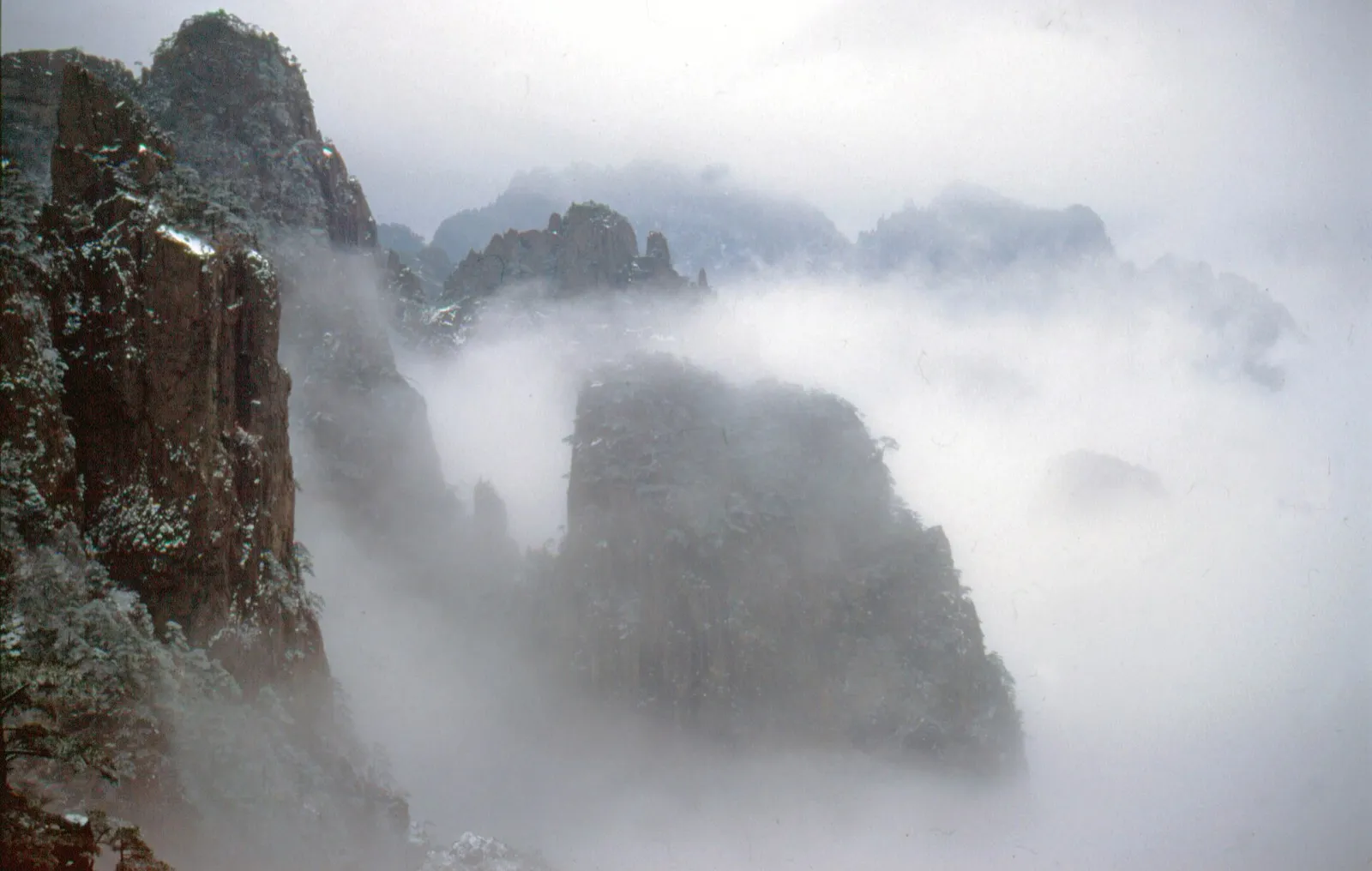
China’s four most famous landscapes are surprisingly linkable in twelve days: the granite pines and seas of cloud of Huangshan, the sandstone pillars of Zhangjiajie, the karst towers and rivers around Yangshuo, and the mineral-blue lakes of Jiuzhaigou, reached through Chengdu. It is a hiking trip with transit between the trails, so every day below carries an effort grade — easy, moderate, or hard — and the mountain days carry a Plan B, because fog and rain up there are normal, not bad luck. Start with the getting-around guides before you commit to dates; then let the city guides fill in the detail.
Day 1: Arrive in Huangshan City (Tunxi) — Easy
Land at Huangshan Tunxi airport or ride the rails into Huangshan North, and settle into the old town of Tunxi. Walk Tunxi Old Street at dusk — Ming-and-Qing-style shopfronts, tea merchants, ink-stone carvers — and buy summit supplies: rain shells, snacks, water. Rest early; the mountain starts tomorrow.
Practical tip: Book your summit-hotel night for tomorrow today, if you have not already. Rooms on the mountaintop run roughly ¥800–2,000 and the good-view ones sell out weeks ahead in season. Leave the big luggage at your Tunxi hotel and carry an overnight pack only.
Day 2: Up Huangshan — Overnight on the Summit — Hard
Early bus to the Yungu (east) cable car and ride up into the granite. The classic first-day loop links the North Sea and Beginning-to-Believe Peak lookouts with the West Sea Grand Canyon’s cliff-hugging walkways — the most exposed, most memorable hiking on the mountain. Check into your summit lodge by mid-afternoon, then walk to a sunset point as the crowds thin and the light turns gold.
Practical tip: Bring a warm layer even in summer — summit nights run cold — and expect 3–5 hours of actual walking with serious stair sections. If weather closes in, skip the canyon and shorten the loop; the stone steps get slick fast.
Day 3: Sunrise, Descend, and Roll South — Moderate
Set an alarm for the pre-dawn walk to a viewpoint near your lodge — arrive 30–40 minutes before sunrise for a rail spot. After a lodge breakfast, hike south past the Welcoming-Greeting Pine and ride the Yuping (front/south) cable car down. By late afternoon you should be at Huangshan North station for the direct G train to Changsha South (about 3.5–4 hours; roughly six departures daily) — overnight near the station.
Practical tip: If dawn is a white-out, sleep in and take a later descent — the trains are frequent enough to forgive. Sunrise spots get packed in season; your lodge map marks the nearest one, and 20 minutes is usually all it takes from the Beihai-area hotels.
Day 4: Changsha to Zhangjiajie — First Pillars — Easy
Morning G train from Changsha South to Zhangjiajie West (2.5–3.5 hours; second class roughly ¥150–275). Base yourself in Wulingyuan town, the quiet gateway nearest the park’s main entrances. Afternoon: walk the riverfront, eat, and study the park map — tomorrow you go in early.
Practical tip: Buy the park ticket online for tomorrow and bind it to your passport. The standard ticket is ¥228–236, valid 4 days with unlimited re-entry, eco-shuttle buses included; the Bailong Elevator and the cableways charge separately. (As of September 2026.)
Day 5: Zhangjiajie — Avatar Pillars and the Canyon — Moderate
In by opening (before 8 a.m. beats the tour buses), ride the shuttle to the Bailong Elevator — 326 meters of glass up a cliff face — and walk the Yuanjiajie plateau, where the sandstone towers that inspired Avatar’s floating mountains crowd the ravine. Descend on foot through the Ten-Mile Natural Gallery rather than riding down.
Practical tip: The viewpoint walkways jam from 10 a.m. to 2 p.m. Do the big-name platforms first, then escape sideways onto quieter links — the 4-day ticket means nothing is wasted if you save a trail for tomorrow.
Day 6: Zhangjiajie — Golden Whip Stream or Tianzi Mountain — Moderate
Choose your own grade. The easy-moderate option is Golden Whip Stream, a nearly flat, shaded riverside walk under the pillars — monkeys included; keep snacks zipped. The harder option is Tianzi Mountain’s ridge trails and the Emperor’s Throne viewpoint, with cable car up and legs down. Either way, be out by late afternoon and pack for tomorrow’s long ride.
Practical tip: Weather Plan B: in rain, pick Golden Whip Stream (forest shelter, low exposure) over the ridge walks. The shuttles stop by early evening — check last-bus times at your entrance gate each morning.
Day 7: The Long Ride South to Yangshuo — Easy
A direct D train runs Zhangjiajie to Guilin in about 7 hours — a travel day; board with snacks and downloaded podcasts. By evening you are in karst country: transfer to Yangshuo town (40–60 minutes by direct bus or Didi) and sleep to the sound of the Li River.
Practical tip: If the direct train’s timing is poor, the alternative is the high-speed route back through Changsha — similar total time, more transfers. Book whichever combination lands you in Yangshuo before dark; see the trains guide for booking mechanics.
Day 8: The Li River by Raft — Easy
The postcard day. The most scenic stretch of the Li River is the Yangdi-to-Xingping section — motorized bamboo rafts carry four passengers past the 20-yuan-note landscape and the karst wall that made this China’s most painted river. Afternoon in Xingping old town, maybe the short uphill walk to the riverside viewpoint above town.
Practical tip: Raft tickets are quota-limited and weather-dependent — book online a day ahead (Trip.com and Klook both sell official slots), and know that rafts stop running in high water after heavy rain. Your Plan B: the Xingping riverside walk, which is free and lovely.
Day 9: Yulong River and the Karst by Bike — Easy to Moderate
Recovery day, Yangshuo style. Morning bamboo raft on the Yulong River — poled, not motored, calmer and greener than the Li River — then rent bicycles (or an e-bike) for the valley lanes out past the Moon Hill arch, rice paddies, and water-buffalo traffic. Climb Moon Hill’s steps if the legs want one last argument; otherwise ride, eat beer fish, repeat.
Practical tip: The Yulong raft has no railings — sit kids and cameras inboard. Cycle before 11 a.m. or after 3 p.m.; tour-bus traffic on the valley road builds midday, and the sun in the open karst is not a joke.
Day 10: Fly to Chengdu — Easy
Morning bus or Didi back to Guilin (about 1.5 hours) and a short flight west to Chengdu (roughly 2 hours). Land in the plains, drop the hiking poles, and take the afternoon easy: a People’s Park teahouse, ear-cleaning optional, hotpot optional but recommended — you have earned the extra spice.
Practical tip: This is the trip’s built-in rest day — use it. Same-day laundry, shoe check, and early night, because tomorrow’s mountain leg starts with a train and ends at 3,000 meters of elevation in Jiuzhaigou county.
Day 11: The Rails to Jiuzhaigou — Easy to Moderate
Morning train from Chengdu East to Huanglongjiuzhai station — the line opened in 2024 and the fastest trains do it in 1 hour 39 minutes (second class roughly ¥130–300) — then a 1–2 hour bus or shared transfer to the valley gateway town. Check in, walk the riverfront boardwalk, and acclimatize; the valley gate sits around 2,000 meters and the walkways climb gently from there.
Practical tip: Jiuzhaigou requires advance online reservation through official channels (WeChat mini-program or website) — there is no walk-up ticketing. Peak-season entry is around ¥280 including the park bus, with a daily visitor cap of 41,000 that sells out in Chinese holiday weeks. Book your exact day the moment your Chengdu train is fixed.
Day 12: Jiuzhaigou Valley — The Long Blue Day — Moderate
In at opening (entry runs 7:30 a.m. to 2 p.m., and you want the earliest slot anyway), ride the park bus to the top of the Y-shaped valley and work back down the boardwalks past the lakes that made this park China’s fairyland: Five-Flower Lake’s gradient blues, Pearl Shoal’s silk waterfall, the primeval forest at the top if the legs agree. Out by late afternoon for the ride toward the station — or the short hop from Jiuhuang airport toward Chengdu.
Practical tip: Weather Plan B: the valley is gorgeous in light rain, but if storms close the gorge highway — rare but possible — Chengdu makes a fine final day; keep one unscheduled evening there in reserve.
Practical Notes
Intercity transport
| Leg | Mode | Time | Approx. fare |
|---|---|---|---|
| Huangshan North → Changsha South | Direct G train (~6 daily) | 3.5–4 hours | ~¥400–500 (US$55–70) |
| Changsha South → Zhangjiajie West | G/D train | 2.5–3.5 hours | ¥151–275 (US$22–39) |
| Zhangjiajie → Guilin | Direct D train (~2 daily) | ~7 hours | ~¥200–380 (US$28–53) |
| Guilin → Chengdu | Flight | ~2 hours | US$80–150 |
| Chengdu East → Huanglongjiuzhai | C/D train, then bus to the valley | 1.5–2 hours + 1–2 hours | ¥130–300 (US$18–42) |
Book trains at the 15-day release on 12306; flights via Trip.com. Fares approximate as of September 2026; many trains float prices by demand.
Budget estimate (per person, excluding international flights)
- Lean: US$1,000–1,300 — hostels and valley guesthouses, dorm on the Huangshan summit, public buses and shuttles
- Mid-range: US$1,600–2,100 — 3–4-star hotels, private summit room, official rafts and cable cars, two short flights
- Comfort: US$2,400–3,200 — lodges with views, private transfers at every leg, guides for the big hiking days
The two summit/big-park entries — Huangshan lodging, Zhangjiajie’s ¥228–236 pass, Jiuzhaigou’s ¥280 ticket — are the fixed costs to book first. See the budget guide for daily math.
Fitness and weather — the honest advice
- Hardest days: Day 2 (Huangshan summit loop) and Day 5 (Zhangjiajie plateau). Cable cars and elevators replace the worst descents if knees object.
- Every mountain day has a listed Plan B; use it without guilt. Pack layers — summit nights and 3,000-meter Jiuzhaigou evenings drop near freezing outside high summer.
- Book first: summit hotel → Jiuzhaigou reservation → park passes → trains, in that order.