Chengdu vs Chongqing: Teahouses or Neon Verticality?
Chengdu and Chongqing sit an hour apart by high-speed rail and share a love of chili and late nights, but they travel completely differently. Chengdu is flat, slow, and built around pandas, teahouses, and easy day trips; Chongqing is vertical, loud, and best after dark, with a skyline that climbs cliffs and a metro that runs through apartment blocks. This comparison sorts them by traveler type, days, budget, season, and food tolerance, and explains why five days is the practical minimum for both. It also covers the panda-base reservation, the Dazu day trip, and the terrain mistakes that catch first-time visitors in Chongqing.
The verdict
Pick Chengdu for pandas, teahouses, a slower pace, and easier day trips; pick Chongqing for a short, intense city break built around night views, vertical terrain, and hotpot. Together they make an ideal five- to six-day southwest pairing.
Pick Chengdu if
First-timers and slow travelers who want pandas, tea culture, mild food options, and flat, forgiving streets.
Pick Chongqing if
Short-break travelers and photographers who want dramatic night skylines, cliff-top views, and the fieriest hotpot in China.
The short version
- Chengdu needs 3–4 days; Chongqing works in 2–3. Five days covers both, six is better.
- The cities are one to three hours apart by high-speed rail, with second class from roughly 85–237 yuan.
- Chengdu's panda base costs 55 yuan and releases tickets up to 14 days ahead; book the first morning slot.
- Chongqing is not a walking city. A 500-meter map distance can mean ten flights of stairs — use the metro.
Chengdu and Chongqing are the southwest’s twin capitals, an hour or so apart by rail, and locals will happily argue all night about which one is the real capital of Sichuan food. For a visitor, the split is more practical than tribal. Chengdu is horizontal: flat streets, park teahouses, panda enclosures, and day trips across the fertile Sichuan Basin. Chongqing is vertical: a peninsula wedged between two rivers, with buildings stacked up cliffs, escalators as public streets, and a monorail that passes through a residential tower. One asks you to slow down. The other asks you to keep your footing.
The Short Answer
Pick Chengdu if this is your first stop in southwest China, if you want to see pandas, or if you want a city that is easy to walk and easy to leave for day trips. Pick Chongqing if you have only two or three days, if you want the most cinematic night skyline in China, or if you want to eat the city’s defining hotpot where it was invented.
Five days is the practical minimum for both: three in Chengdu, two in Chongqing. Six gives you a spare morning for pandas or a day trip and still leaves time for Dazu. If you have fewer than four days, pick one. They are close enough that combining them is easy, but each has enough to fill a short trip on its own.
Head to Head
| Dimension | Chengdu | Chongqing |
|---|---|---|
| Best for | Pandas, teahouses, slow city life, easy day trips | Night skylines, dramatic terrain, hotpot, short breaks |
| Time needed | 3–4 days | 2–3 days |
| Budget | US$60–100 per person per day (mid-range) | US$50–90 per person per day (mid-range) |
| Crowds | Panda base mornings sell out; parks are busy at weekends | Viewpoints and Hongya Cave are packed on weekend evenings and holidays |
| Weather risk | Overcast and damp much of the year; hot, humid summers | Summer heat is severe; river fog and humidity year-round |
| Day trips | Dujiangyan and Mount Qingcheng (about 1 hour), Leshan, Jiuzhaigou by bullet train | Dazu Rock Carvings (about 2 hours), Wulong Karst (2.5 hours) |
| Food | Málà cooking, hotpot, snacks, tea, plenty of mild options | Fierier hotpot, offal, xiaomian noodles, street barbecue |
| Ease for first-timers | Very easy — flat, metro-connected, patient pace | Medium — vertical terrain and layered streets complicate navigation |
Who Should Pick Chengdu
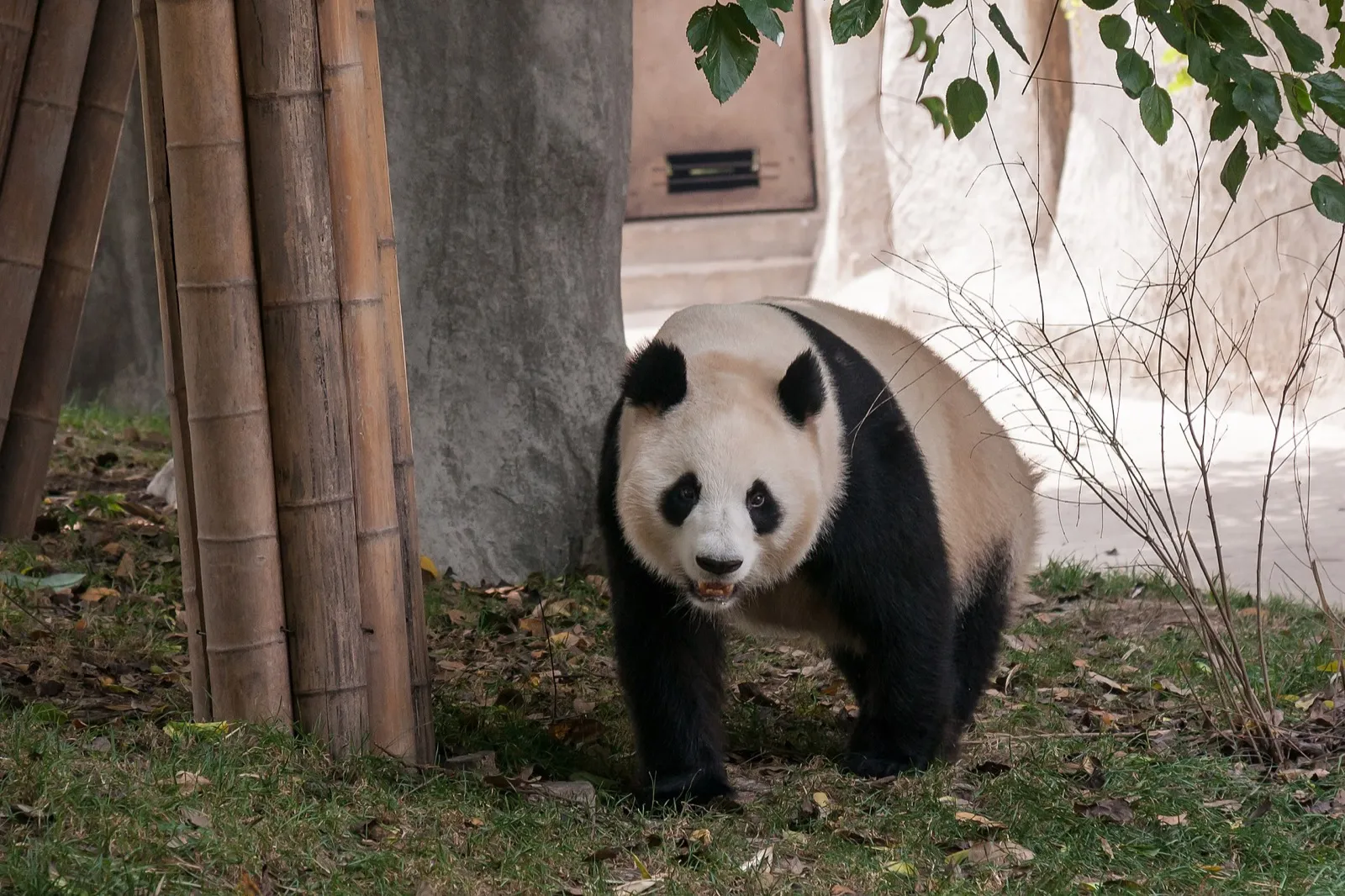
Choose Chengdu if pandas are on your list. The Chengdu Research Base of Giant Panda Breeding charges 55 yuan for adults, sells tickets online with real-name booking up to 14 days ahead, and runs morning entry from 7:30 from March to October. Pandas eat and move early; by noon they sleep. Take Metro Line 3 to Panda Avenue and be at the gate for opening, not at 10 a.m.
Chengdu also wins for travelers who want a city that does not fight them. The metro is cheap and bilingual, the streets are flat, and the city’s signature activity — sitting in a bamboo chair at a park teahouse with a bottomless gaiwan — costs less than a coffee. People’s Park and Heming Teahouse are the classic version, but every neighborhood has its own. Add Wuhou Shrine (50 yuan), the Du Fu Thatched Cottage (50 yuan), and Kuanzhai Alley’s free lanes, and three days pass comfortably.
Finally, pick Chengdu if you want day trips without a production. Dujiangyan and Mount Qingcheng are about an hour away, Leshan’s giant Buddha is under an hour by rail, and bullet trains now reach Huanglong Jiuzhai station in roughly 1 hour 40 minutes. Chengdu is the best base in China for combining city food with UNESCO-listed countryside.
Who Should Pick Chongqing
Choose Chongqing if you want a short, high-impact city break. Two days is enough for the essential loop: Hongya Cave at dusk, the Yangtze River Cableway (about 20–30 yuan one way; confirm on the official mini-program), the Liziba monorail-through-a-building viewpoint, and a night on the Qiansimen Bridge. Hongya Cave is free; the lights usually come on between 6:30 and 7:30 p.m. and switch off around 10–11. The classic photograph is taken from across the river, not inside the complex.
Chongqing also wins for food and nightlife. This is where dockworkers reputedly simmered cheap offal in chili broth, and the local hotpot is the maximalist version: beef tallow, chilies, Sichuan pepper, and a nine-grid pot. Expect 80–120 yuan per person. The city stays awake late, and the riverside promenades are the best free walk in southwest China after dark.
Pick Chongqing if you are continuing on a Yangtze cruise, or if you want a day trip to the UNESCO-listed Dazu Rock Carvings. Baodingshan admission is 115 yuan as of October 2026, covering the main carvings and museum; confirm shuttle arrangements at the visitor center. The carvings justify the two-hour transfer — budget a full day and start early.
How to Combine Them
Combining them is one of the easiest pairings in China. High-speed trains link Chengdu East and Chongqing North, West, or East in roughly one to three hours, with most useful services around 1 hour 15 minutes to 2 hours; second class runs from about 85 to 237 yuan depending on the train. Book on 12306 or Trip.com with your passport, and check which Chongqing station your ticket uses — the city has several, and the wrong one costs time.
The minimum sensible split is three nights in Chengdu and two in Chongqing, five days total. Six days lets you add Dazu or a slow panda morning without cutting something else. A natural order is Chengdu first, then Chongqing: you acclimatize in the flatter, gentler city, then finish with the vertical nightscape and a Yangtze cruise departure if that is on your route. The reverse works if you are arriving from the east.
Do not day-trip between them. Both cities reward evenings, and a same-day return wastes the best hours. If you have a week, add Leshan or Dujiangyan from Chengdu rather than a third city.
Common Mistakes
- Giving each city one day. Chengdu’s pandas and parks deserve a full day; Chongqing’s terrain slows every plan. Two nights minimum each.
- Arriving at the panda base at midday. The animals are active early and asleep by noon. Book the first entry slot and arrive at opening.
- Treating Chongqing as walkable. Mapping apps measure horizontal distance. A 500-meter walk can include staircases, overpasses, and major level changes; use the metro for anything uphill.
- Ordering “medium” spice in Chongqing. Even wei la is hot by Western standards. Ask for qing tang (clear broth) if you need an escape hatch.
- Assuming the hotpots are the same. Chengdu’s is aromatic and slightly gentler; Chongqing’s is darker, beefier, and built around offal. Try both and decide for yourself.
- Skipping Dazu because it is “just another temple.” The Baodingshan carvings are among China’s greatest rock-art sites and a genuine UNESCO highlight.
- Booking during Golden Week without reservations. Panda tickets, trains, and riverside hotels all sell out; prices spike.
Sources & verification (8)
- https://www.panda.org.cn/cn/service/ticket/
- https://www.travelchinaguide.com/china-trains/chengdu-chongqing.htm
- https://www.trip.com/trains/china/route/chengdu-to-chongqing/
- https://www.travelchinaguide.com/attraction/sichuan/chengdu/panda-breeding-and-research-center.htm
- https://www.travelchinaguide.com/attraction/sichuan/chengdu/wuhou_temple.htm
- https://www.travelchinaguide.com/attraction/chongqing/hongya-cave.htm
- https://www.travelchinaguide.com/attraction/chongqing/dazu.htm
- https://chongqingdeeptour.com/guide-to-yangtze-river-cable-car-in-chongqing/