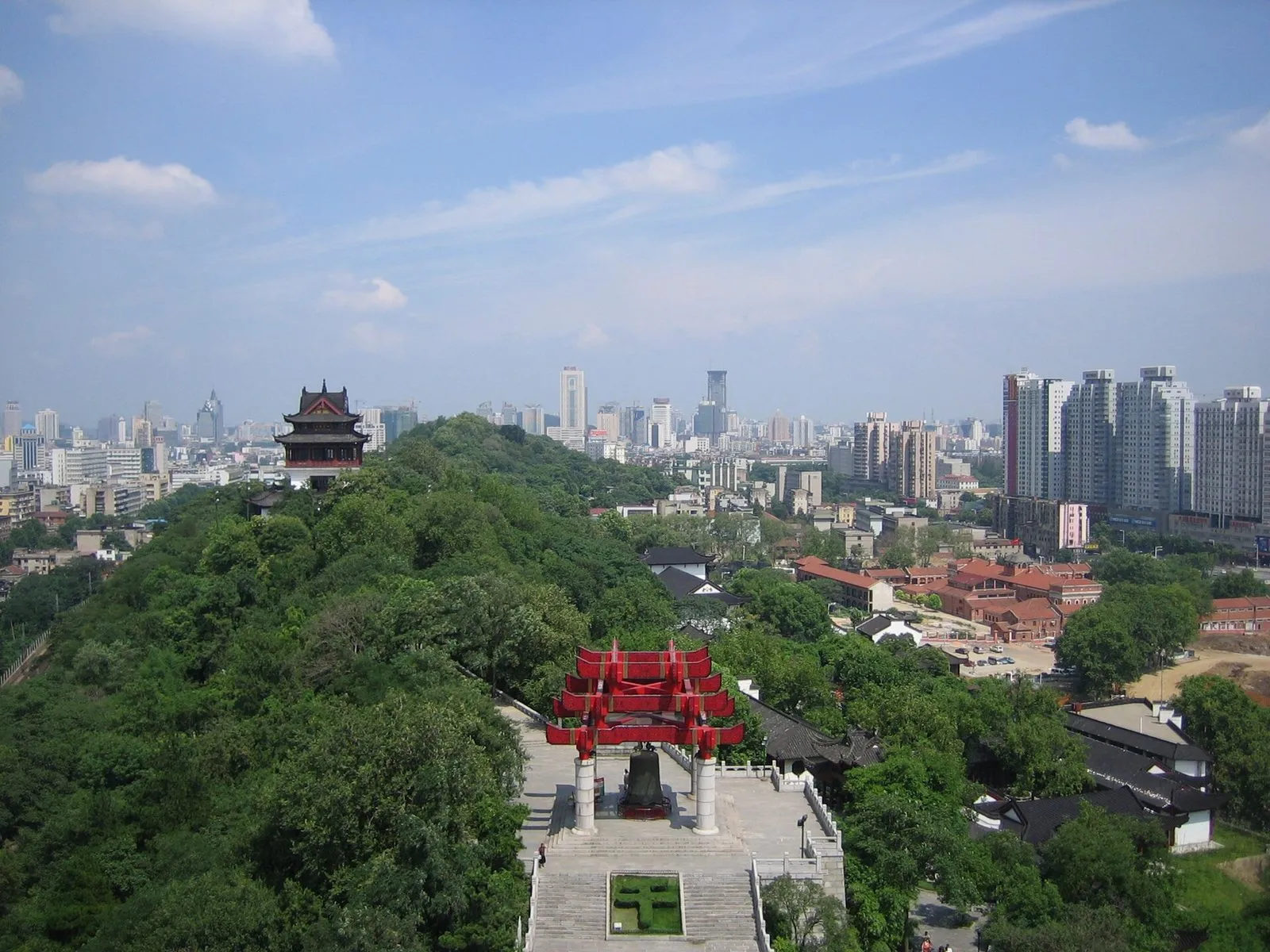
Wuhan is what happens when two great rivers meet in a hurry: a nine-million-person metropolis stitched from three historic towns — Wuchang, Hankou, Hanyang — by the first bridge ever thrown across the Yangtze. The city rewards visitors who move the way locals do. Mornings go to re gan mian, chewy hot-dry noodles eaten standing up with a crowd; days go to the Yellow Crane Tower, the Hubei Provincial Museum's Goujian sword and chime bells, and the lakeside paths of East Lake; evenings go to the river itself, whether on the humble commuter ferry or a night cruise through the light show. Add Hankow's old concession waterfront, cherry-blossom season around East Lake, and easy rail hops to Changsha or the Three Gorges, and Wuhan works as either a destination in its own right or the pivot of a central China loop. This page walks the bridge, the bells, and the breakfast stalls.
Top sights at a glance
No. 1
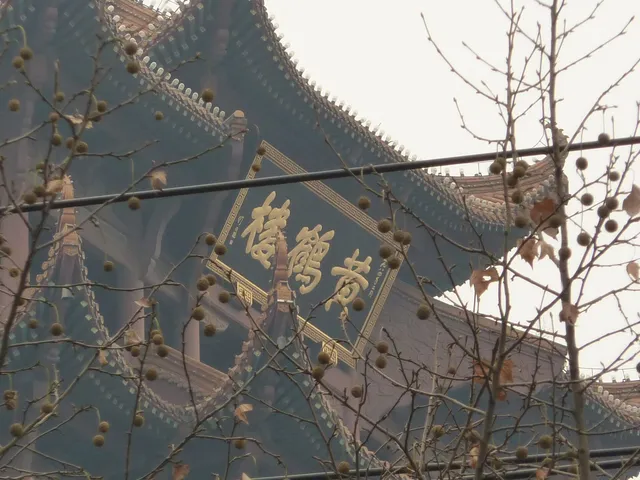
Yellow Crane Tower
China's most famous tower stands on Snake Hill where the old city meets the river — or rather, stands again: the current five-story, 51-meter tower dates to a 1980s rebuild of a structure first raised in 223 AD and rebuilt through the centuries, lastly after an 1884 fire. Nobody minds. The tower is the poetic capital of the Yangtze — Li Bai kept it famous — and its top-floor balcony delivers the classic Wuhan view: the first river bridge below your feet, barges upstream, the city on both banks.
Good to know · Entry runs around ¥70 with a child discount (as of September 2026); hours are 8:00–18:00 April–October and 8:00–17:00 November–March, and an evening sound-and-light show called 'Night Up Yellow Crane Tower' is a separate ticket with its own entry and time slots — book the right one for your plan via the official mini-program or Trip.com with your passport. Buy the daytime ticket for late afternoon, then walk 20 minutes to Hubu Alley for a noodle dinner.
No. 2
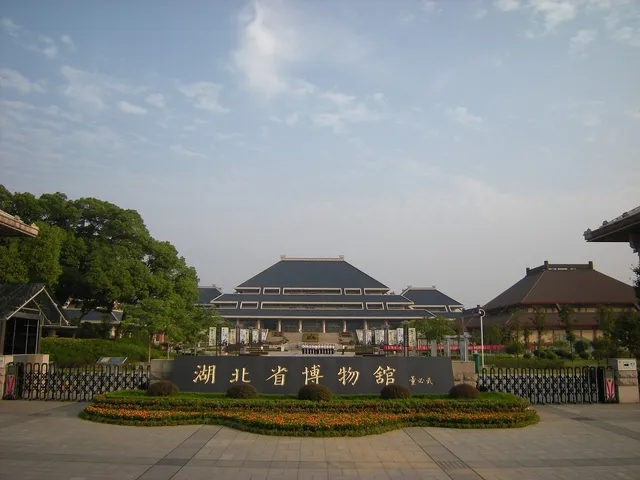
Hubei Provincial Museum
One of China's truly great museums, and the anchor of any Wuhan visit: 2,400-year-old bells from the tomb of the Marquis Yi of Zeng — a full orchestra of sixty-five bronze chime bells that still play — share the halls with the Goujian sword, an untarnished blade from the age of Confucius, plus lacquer, jade, and bronzes from the Chu state that ruled this river valley. The museum's collection runs past 200,000 objects; its galleries are deep enough that you should pick your battles rather than attempt everything.
Good to know · Admission is free with capacity management — reserve ahead on the museum's official WeChat account or through Trip.com, bring your passport, and note it closes Mondays (except holidays) with last entry at 16:00. The daily chime-bell performance costs around ¥30 and sells through its sessions; catch one, even if you think you don't like concerts. Pair the museum with East Lake, which begins just across the street.
No. 3
East Lake
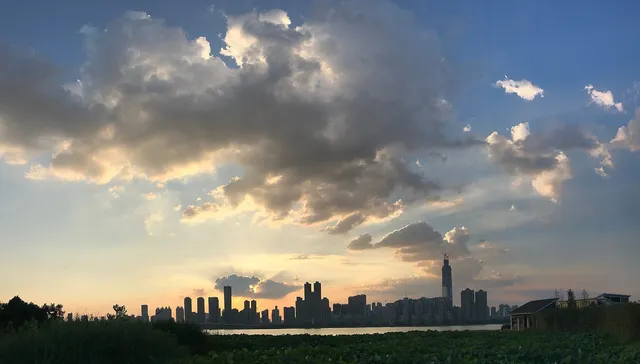
China's largest urban lake — 33 square kilometers of water, five times the size of Hangzhou's West Lake — sits right against the university district, and locals treat it as their collective back garden. The lake breaks into distinct pockets: Tingtao's promenades and pavilions near the museum, Mo Hill's Chu-culture park and flower gardens on the far shore, quiet Luoyan's wild-goose coves. A lakeside greenway threads the shores, and in spring the cherry gardens here draw the crowds that make Wuhan the country's flower-season capital alongside Wuhan University's own blossoms.
Good to know · Tingtao and Mo Hill sections are free; the Luoyan and Chuidi pockets charge small fees (¥13/¥7), and the Mo Hill cherry garden runs a special ticket (around ¥60) during the March–April blossom season, when weekday mornings beat weekend crowds. Rent a bike on the greenway or hop the sightseeing shuttles between gates — the lake is far bigger than it looks on a map, so pick one shore per visit.
No. 4
The First Yangtze River Bridge
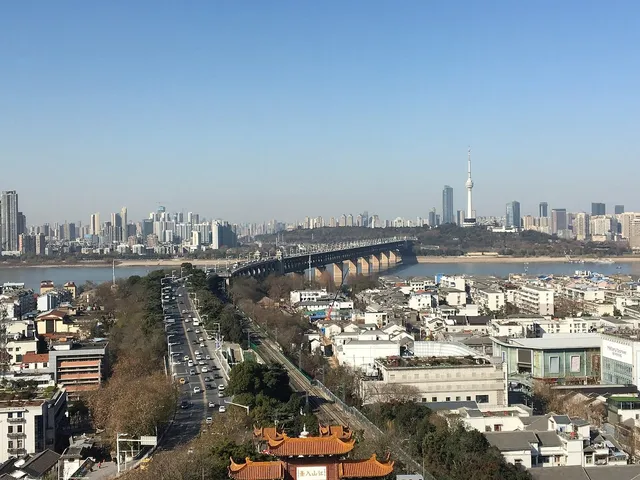
For millennia there was no bridge over the middle Yangtze; the river was simply too wide, too wild, too much. In 1957 the Soviet-era flagship project changed that: a 1.7-kilometer double-decker spanning from Snake Hill in Wuchang to Turtle Hill in Hanyang, trains rumbling below, traffic streaming above. It remains in full service and open on foot — walk the path under the traffic, climb a bridgehead tower, and feel every northbound freight train through the railing. It is the most instructive free thing in the city.
Good to know · Walking the bridge is free; the elevator up the bridgehead towers costs a token ¥2, and stairs work too. The classic route runs from Yellow Crane Tower's gate straight onto the bridge — do both in one late-afternoon loop, then take the metro back from the Hanyang side. In summer, go near sunset; the deck bakes at noon and the river breeze at dusk is the city at its best.
No. 5
The Hankow Bund
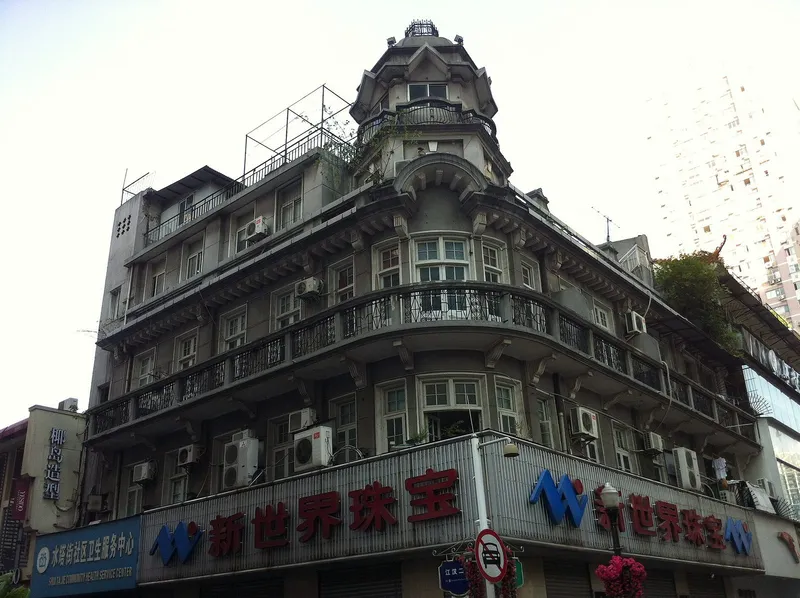
For half a century after 1861, Hankou was a treaty port where British, Russian, French, German, and Japanese concessions lined the Yangtze — exporting tea and bricks, building banks and warehouses in stone. That riverside survives as the city's most atmospheric quarter: a long riverside park along the water, grand facades near Jianghan Road's pedestrian shopping street, the domed Jianghan Customs House clock tower, and the renovated Russian-style Ba Gong Fang mansion. At night the whole riverfront switches on a coordinated light show that makes the bridges and towers shimmer.
Good to know · Everything is free and best on foot: start at Jianghan Road metro station, walk the pedestrian street to the river, then follow the waterfront park toward the ferry piers. The municipal tourism board lists the customs house, the riverside, and the ferry among the city's top photo spots. Come for sunset into the light show, and detour a few blocks inland for the old lanes and the Tanhualin art quarter's cafes.
Wuhan gets underestimated by travelers who meet it only through train windows, and that is exactly backward: this is one of China’s great river cities, built where the Yangtze meets its longest tributary and stitched together from three towns that were rivals before they were suburbs. Wuchang holds the old city, the tower, and the universities; Hankou holds the treaty-port riverfront and the commerce; Hanyang holds the factories and the hill with the temple. The 1957 bridge joined them, the metro now laces them, and the food — China’s most committed breakfast culture — binds the whole thing at street level. Give it two full days and it repays you with a rare balance: one imperial-poetic landmark, one world-class museum, one enormous lake, and a river you will cross several times a day without thinking about it — on trains, buses, and the humble commuter ferry that has outlived every bridge built to replace it.
A Bit of History
Wuhan’s story is the story of its geography. Sitting where the Yangtze meets the Han River, midway between Sichuan’s gorges and the coastal delta, the site was always going to be a chokepoint of Chinese commerce — “thoroughfare of nine provinces,” the proverb calls it. A tower was raised on Snake Hill as early as 223 AD to watch the river for the Kingdom of Wu; the three towns grew rich on salt, rice, tea, and timber; and by the late Qing, Hankou was a treaty port where five foreign concessions built their banks and warehouses along the water.
In 1911 the modern era literally started here: the Wuchang Uprising of October 10, the mutiny that toppled the Qing and founded the Chinese Republic, launched from the city’s barracks — the “First Uprising” is civic religion locally. Half a century later Wuhan drew the new republic’s boldest line: in 1957 the First Yangtze River Bridge opened, the first crossing ever thrown over the middle Yangtze, carrying both the north-south railway and a highway on its double deck. It remains in daily service — a working monument you can walk.
The twentieth century kept testing the city — war, floods, the 2020 pandemic that made its name known worldwide — and the twenty-first keeps rebuilding it. Wuhan today is a metro-laced megacity straddling both banks, home to over a million university students and a riverfront turned, levee by levee, into parks. The layers do not hide: Tang poetry on the tower, treaty-port stonework in Hankow, socialist megastructure over the river, and glass towers rising behind all of it.
Culture & Daily Life
Wuhan organizes life around the morning meal with an intensity nowhere else matches. “Guo zao” — “passing the morning,” the local verb for breakfast out — is a civic institution: tens of thousands of stalls serve a standing, walking crowd between 6 and 9 AM. The icon is re gan mian, hot-dry noodles: alkaline noodles parboiled, tossed in sesame paste with pickled beans and scallions, served in seconds in paper bowls that never survive to a chair. Around it orbit mianwo — fried rice-flour doughnuts with an onion halo — hu tang fen rice noodles in fish broth, soup dumplings, and duck neck glazed red with chili.
The three-town layout still runs the city’s social geography. Wuchang is the scholarly side — the universities including Wuhan University, founded in 1893, whose lakeside campus turns into the country’s most photographed cherry-blossom site every March; visiting the blossoms requires advance reservation, and the East Lake gardens next door absorb the rest of the flower pilgrimage. Hankou is commerce and swagger, its old concession quarter now pedestrianized and its riverside park the evening stage. Hanyang keeps its head down, with the temple to the zither legend and a chess-player calm.
The river is the city’s second main street. Commuters still cross on the public ferry; the municipal tourism board now markets the same ferry, the customs-house clock tower, and the tower’s red wall among the city’s official photo stops. At dusk the levee lights come on in coordinated shows and the whole population spills onto the embankments with badminton rackets and bubble tea — the riverside promenade after dark is Wuhan at its most itself. English is scarcer than in the coastal megacities; a translation app and a screenshot of your hotel’s Chinese name will carry you everywhere.
Nature & Day Trips
For a concrete-heavy megacity, Wuhan keeps an unexpectedly wild backyard. East Lake is the headline — 33 square kilometers of water with 99 bays, a greenway threading its shores, and in spring a cherry garden that pairs with the university’s blossoms to make the city China’s flower-season capital; flight bookings into Wuhan rise measurably every March. The lake’s six pockets each have their own character, from the pavilions of Tingtao to the Chu-themed hill park on the southern shore.
The Yangtze itself is the other great open space. Riverside parks run for kilometers along both banks — the Hankow side’s stretch is the country’s largest urban riverside park, with reed marshes that turn silver-plume spectacular in autumn — and evening light shows play the whole bridge-and-tower skyline like a screen. The ferry decks give you the water-level view the bridges cannot.
Day trips stack up well by rail. Changsha, the loud, fun capital of Hunan with its stinky tofu and museum mummies, is a short high-speed hop south. Yichang, the gateway to the Three Gorges and its dam, connects for overnight cruises — the long-route Yangtze services running between Chongqing and Shanghai call along this stretch. And within the metro area, the Mulan hills northwest of the city stack temples, canyons, and grassland into an easy escape when the lake feels crowded.
Food & Drink
Eat breakfast like it is your job. The canonical Wuhan morning is a walk between stalls: hot-dry noodles first, still warm from the parboil and tossed in sesame paste; a mianwo doughnut for the walk; maybe a cup of sweet rice wine to cut the spice. Hubu Alley near the tower is the famous food street — 150-odd meters and hundreds of years of it — though locals will rightly tell you the surrounding lanes and any market full of uniformed students outrank it for authenticity. Breakfast here costs pocket change and everyone stands; that is not a bug.
Beyond breakfast, Wuhan eats hearty Hubei: river fish in every style, lotus root soup simmered with pork ribs until the starch turns silky — the most comforting bowl in central China — and duck necks braised dark with chili and Sichuan pepper, eaten as street snack and beer food with religious devotion. Wuchang’s historic Tanhualin quarter and the streets around the universities carry the cafe scene, while Hankou’s lanes hide old-school restaurants that have been ladling the same broths for decades.
Night is for the riverfront. Grill stalls and crawfish joints — Wuhan sits in the middle of China’s crayfish belt — line the embankment districts, best in summer with cold beer and the light show running across the water. Budget ¥30–60 per person for a generous sit-down meal, less at breakfast stalls; spice runs moderate to serious, and “bu yao la” (no chili) is the phrase worth learning.
Top Sights
Two days covers the five sights below at an easy pace: tower and bridge on day one, museum and lake on day two, the Bund wherever dusk lands.
Yellow Crane Tower
Begin at the poem. The Yellow Crane Tower has been destroyed and rebuilt so many times since its Three Kingdoms watchtower days that the current structure — a five-story, 51-meter concrete-and-timber tower finished in the 1980s — is best understood as the latest print of an etching: Tang poets made the site immortal, an 1884 fire took the last Qing tower, and the city rebuilt the legend on the same hill above the river. From the top balcony, the view compresses Wuhan into one image: the first Yangtze bridge running away below, freight barges pushing upstream, and the high-rises of three towns dissolving into haze.
Buy the daytime ticket (around ¥70, as of September 2026, with discounts for children) via the official mini-program or Trip.com with your passport, and time it for the last two hours before closing — 18:00 in summer, 17:00 in winter — when the light turns gold and the tour groups have thinned. Note that the evening “Night Up Yellow Crane Tower” show is a separate ticket with its own gate and time slots; it is atmospheric, but it is not the daytime tower. Afterward, walk to Hubu Alley for a hot-dry noodle dinner and call day one well spent.
Hubei Provincial Museum
This is one of the two or three regional museums in China that justify a trip on their own. The core is the tomb of the Marquis Yi of Zeng, a small-state ruler buried around 433 BC with a full bronze orchestra — sixty-five chime bells on three tiers, each bell striking two tones, the set still playable and performed daily on replicas. Around it: the Goujian sword, untarnished after 2,400 years and still sharp enough to paper-cut; the lacquer coffins and painted boxes of the Chu court; and galleries of jade and early bronzes that reward an unhurried loop.
Entry is free but capacity-managed: reserve ahead on the museum’s official WeChat account or Trip.com, bring your passport, and remember the museum closes Mondays (except holidays) with last admission at 16:00. The 25-minute chime-bell concert costs around ¥30 and runs several sessions daily — book it, since the sound of the bells is half the point. The museum sits at East Lake’s edge, so walk straight from the galleries into the lakeside park and let the day breathe from there.
East Lake
The lake is Wuhan’s collective backyard and its scale surprises everyone: 33 square kilometers of water — five West Lakes’ worth — laced with a greenway that runners, cyclists, and strollers share in polite anarchy. The classic first visit is the Tingtao shore near the museum: pavilions and long water views back at the skyline. Mo Hill on the south shore stacks a Chu-culture theme park, plum gardens, and the famous cherry garden that erupts each March–April — Wuhan’s flower season is now a national event, so reserve ahead and go on weekday mornings in bloom weeks.
Practically, do not try to circle it: pick one shore, rent bikes or hop the internal shuttles, and let the greenway do the sightseeing. Most sections are free; a couple of quieter pockets charge token fees (¥13 for Luoyan, ¥7 for Chuidi), and the Mo Hill cherry garden runs its own blossom-season ticket around ¥60. Sunset from the western shore, with the towers of Hankou across the water, is the city’s best free light show after the actual river one — and on weekends arrive early, because half of Wuhan has the same idea.
The First Yangtze River Bridge
For thousands of years, the middle Yangtze had no crossing — too wide, too deep, too violent — and China’s north-south railway bent inland around the problem until 1957, when the first bridge finally stitched the lines together across the river at Wuhan. The bridge is a double-decker: trains thunder along the lower deck, six lanes of traffic stream overhead, and pedestrians get their own walkways with river views down the span from Snake Hill to Turtle Hill. It is a working monument — Socialist-realist gatehouses, steel trusswork, the constant drum of freight — and you can walk its full 1.7-kilometer length for free.
The classic pairing starts at Yellow Crane Tower: exit toward the river, mount the bridge’s west ramp, and walk toward Hanyang as the evening rush and the sunset arrive together. The bridgehead towers can be climbed by elevator for ¥2 (stairs work too) and give the best angle down the span. At night the bridge joins the riverfront light show, and the sight of a blue-lit freight train crossing above the dark river is Wuhan’s single most cinematic frame. Wind on the deck is real in winter; hold your hat accordingly.
The Hankow Bund
Cross to the north bank and the city changes centuries. Hankou was opened as a treaty port in 1861, and five foreign concessions — British, Russian, French, German, Japanese — lined its riverfront with banks, churches, warehouses, and villas that still stand as the largest ensemble of European architecture on the Yangtze. The center of gravity is Jianghan Road, a granite-paved pedestrian street running from the domed Jianghan Customs House — its bell tower still chimes — through a century of stone facades now full of shops and cafes. The renovated Ba Gong Fang mansion and the riverside park complete the circuit.
Save it for the evening: the waterfront park fills at dusk, the coordinated light show turns the bridges and towers across the river into a screen, and the ferry piers keep working at the park’s edge — the same commuter crossing locals have taken for a century, now an official photo stop. Walk the park south from the customs house, watch the show, then dive inland for barbecue and crayfish. Everything here is free; the only cost is the evening you did not plan to spend, happily, at street level.
Getting There & Around
Wuhan is one of the easiest big cities in China to reach by rail: it sits on the north-south high-speed spine, with frequent direct trains from Beijing (about 4–6 hours), Shanghai (about 4–6 hours), Guangzhou (about 4 hours), and Changsha, Xi’an, and beyond. Trains split across three stations — Wuhan station in the east for most high-speed services, Hankou station convenient for the north bank, and Wuchang station near the old city — so match your station to your hotel’s side of the river. Book on 12306 or Trip.com with your passport. Tianhe International Airport (WUH) lies about 20 kilometers north of downtown, a half-hour ride by metro or taxi.
Inside the city, the metro is the workhorse: a growing network crossing the river on multiple lines, cheap, bilingual, with Alipay/WeChat QR codes at every gate. Taxis and DiDi are abundant and inexpensive. The river crossing is half the fun — metro under the water, bridges above it, and the public ferry plugging away in between, the budget choice with the best views; night cruises from the riverside piers sell the light show from the water. As of September 2026, the headline sights (Yellow Crane Tower, Hubei Provincial Museum) require real-name advance reservation on official mini-programs or Trip.com, and cherry season adds reservations around Wuhan University and East Lake’s blossom garden — book those first and build the days around them.
Where to Stay
Two bases split the city, and the choice is really about which evening you want. Staying in Wuchang near the Yellow Crane Tower and Hubu Alley puts you inside the postcard: the old city’s lanes, the bridge on your doorstep, the museum and East Lake a metro ride away, and breakfast stalls at the door from 6 AM. It suits first-timers and anyone building days around the classic sights, with hotel stock from budget chains to business hotels.
Staying in Hankow near Jianghan Road and the riverside park buys you the best evening atmosphere in the city: the concession-quarter streets, the light show from the embankment, ferry piers and barbecue at the door, plus the broadest choice of hotels and the easiest airport connection. It suits food-first travelers and night owls. Hanyang, between the two across the river, offers quieter, cheaper rooms and honest local streets for a third option. Wherever you land, book near a metro line — Wuhan is far bigger than its map suggests, and the river reorganizes everyone’s plans at least once a day.
Sources & verification (12)
- https://www.travelchinaguide.com/attraction/hubei/wuhan/yellowcrane.htm
- https://www.travelchinaguide.com/attraction/hubei/wuhan/bronze_music.htm
- https://www.travelchinaguide.com/attraction/hubei/wuhan/donghu.htm
- https://www.travelchinaguide.com/attraction/hubei/wuhan/bridge.htm
- https://www.travelchinaguide.com/cityguides/hubei/top-10-things-to-do-in-wuhan.htm
- https://www.travelchinaguide.com/cityguides/hubei/wuhan/getting-there.htm
- https://www.chinahighlights.com/china-trains/beijing-wuhan-train.htm
- https://www.chinahighlights.com/china-trains/shanghai-wuhan-train.htm
- http://www.chinanews.com.cn/sh/2026/07-23/10665068.shtml
- https://www.chinadaily.com.cn/a/202603/24/WS69c1c7fea310d6866eb3f6c1.html
- http://www.chinanews.com.cn/cul/2021/03-17/9434376.shtml
- https://www.chinadaily.com.cn/a/202609/20/WS6aaf89f0e4b06d4aa055f0ca.html