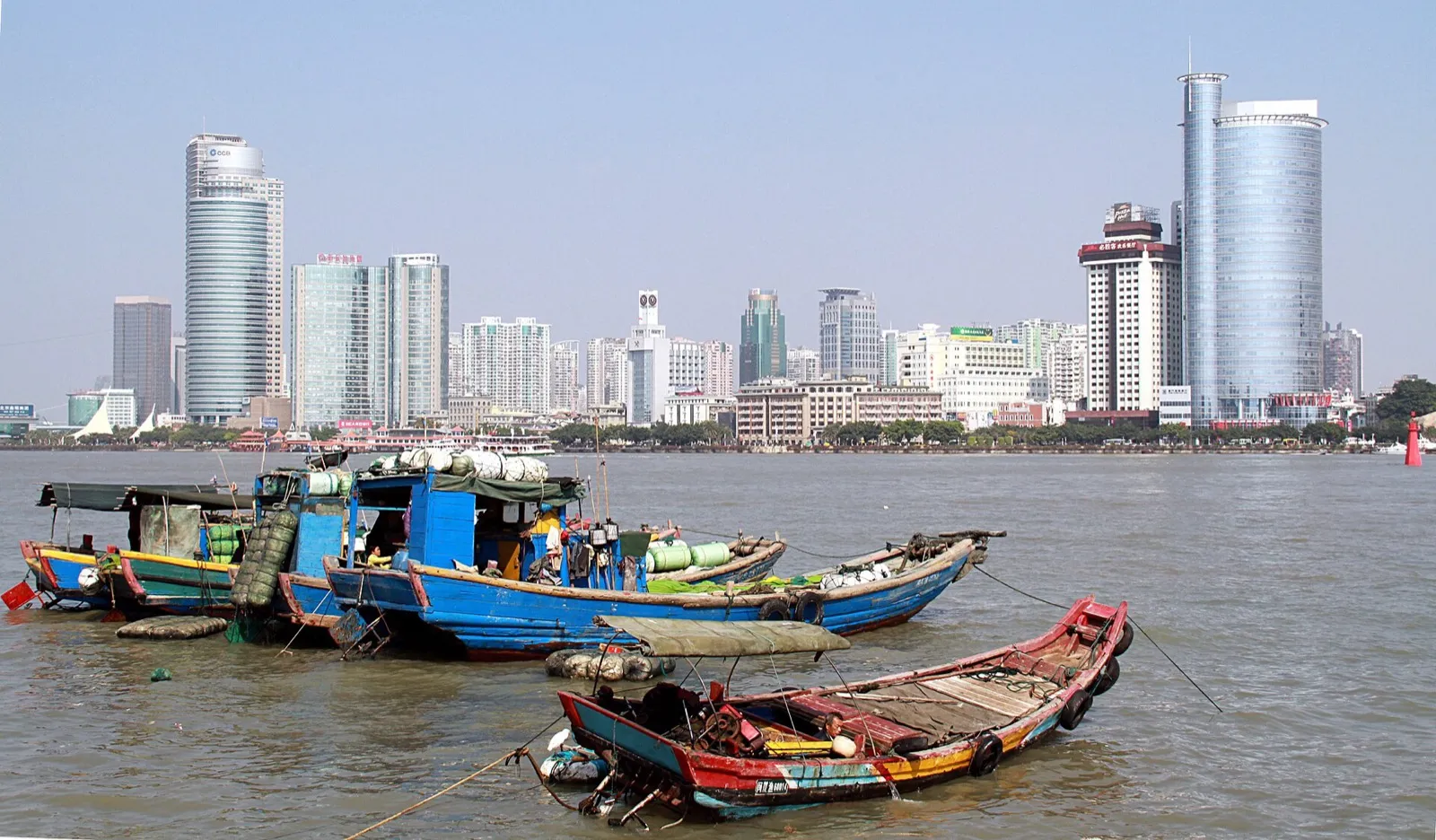
Xiamen is China at its most easygoing: a subtropical island city on the Fujian coast where colonial-era villas, working harbors, and university-district cafe streets sit a short ferry ride and a bike lane away from some of the country's best street food. The core experiences are walking the car-free lanes of Gulangyu's UNESCO-listed settlement before the crowds arrive, cycling the Island Ring Road with the sea on one side, and grazing through satay-noodle and oyster-omelet stalls after dark. Add a day trip inland to the giant earthen tulou buildings of rural Fujian, another UNESCO site, and the city covers heritage, coastline, and food in one relaxed stop. Xiamen rewards slow wandering more than box-ticking, which makes it a favorite of independent travelers — an ideal three-to-four-day coastal interlude between Shanghai, Guangzhou, or Hong Kong on a first visit to China.
Top sights at a glance
No. 1
Gulangyu Island
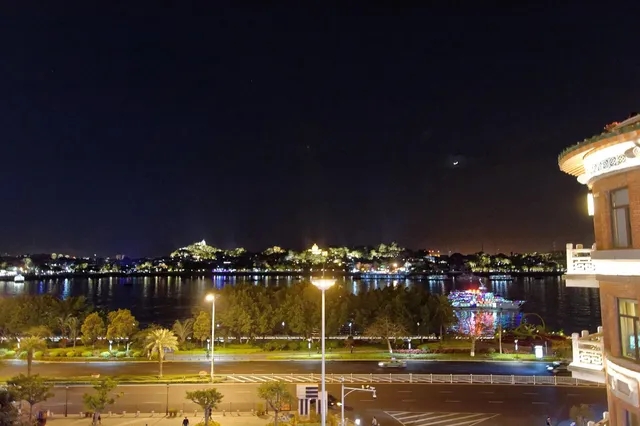
A five-minute ferry ride from downtown, Gulangyu is a car-free islet of colonial banks, consulates and merchant villas that became an international settlement a century ago. Inscribed by UNESCO in 2017 as 'Kulangsu: a Historic International Settlement,' it layers that heritage, a piano museum, seaside gardens and the island's best viewpoint into under two square kilometers of quiet lanes. Timing matters: it is magical at 8 am and overwhelming at noon.
Good to know · Book the tourist ferry in advance (real-name with your passport; roughly RMB 35 round trip as of September 2026) via the official Xiamen Ferry mini-program or Trip.com/Klook. Tourists must depart by day from Dongdu Cruise Center, not the old pier by Zhongshan Road. Go on a weekday at opening; the five-site combo ticket is about RMB 90.
No. 2
Nanputuo Temple
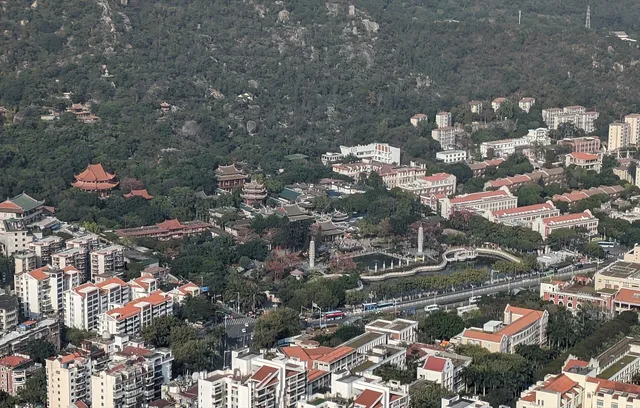
Xiamen's most important Buddhist temple sits against the wooded slopes of Wulao Peak, a stone's throw from Xiamen University's gates. Founded more than a thousand years ago and rebuilt many times, it is an active monastery famous for one radical policy: it dropped entrance fees in 2011 and hands out incense free. Smoke, chanting, koi ponds and a climbing trail behind the halls make it the best free hour in the city.
Good to know · Admission is free (about 8 am–5 pm); a WeChat mini-program reservation is required at busy times — your hotel front desk can book it. Dress past the knee, take the free incense, and try the vegetarian restaurant. Pair it with Xiamen University next door, which requires its own advance reservation.
No. 3
Island Ring Road & Beaches
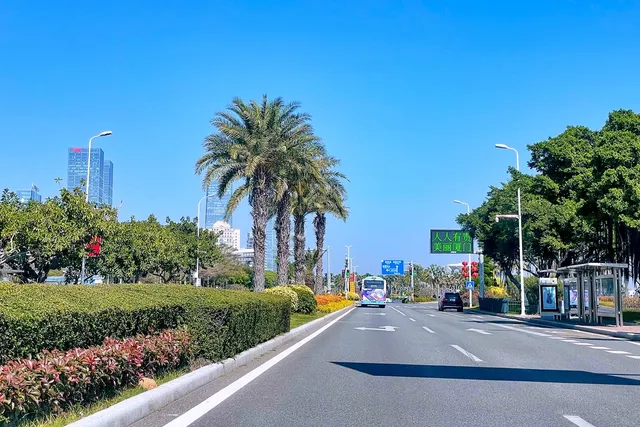
Huandao Road loops the southern coast of Xiamen Island for roughly 43 kilometers, and its seaward side is one long amenity: dedicated bike lanes, palm-and-banyan landscaping, surf beaches, and constant views across the strait. The classic ride runs from Baicheng Beach by Xiamen University eastward past Guanyinshan, flat enough for anyone and rentable by the hour. At sunset, half the city seems to be out here jogging, skating and flying kites.
Good to know · Rent a bike from the many shops near Baicheng Beach (about RMB 20–40 per hour; shared bikes work too) or ride an e-bike if you want the full loop. Mornings are coolest; the light is best an hour before sunset. Combine with Nanputuo Temple and the university district for a full day.
No. 4
Zhongshan Road
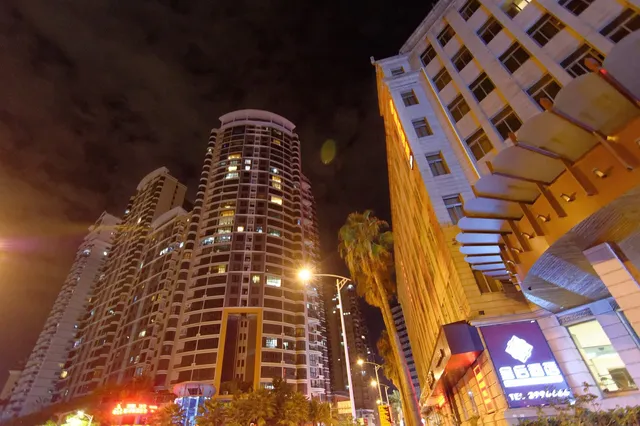
Zhongshan Road is Xiamen's hundred-year-old pedestrian spine: a kilometre of arcaded shophouses (qilou) running from downtown down to the ferry piers facing Gulangyu. By day it is mid-range shopping; by night the upper stories light up and the side lanes fill with snack stalls selling oyster omelets, peanut soup and satay skewers. It is touristy, unapologetically so, and still the most atmospheric evening stroll in the city.
Good to know · Free, open all hours, liveliest 7–10 pm. Eat in the alleys off the main drag rather than the showpiece storefronts, and walk five minutes south to Shapowei, a former fishing harbor turned warehouse-art-district with better cafes. The Lujiang Road ferry pier at the street's west end is where night ferries to Gulangyu leave.
No. 5
Fujian Tulou Day Trip
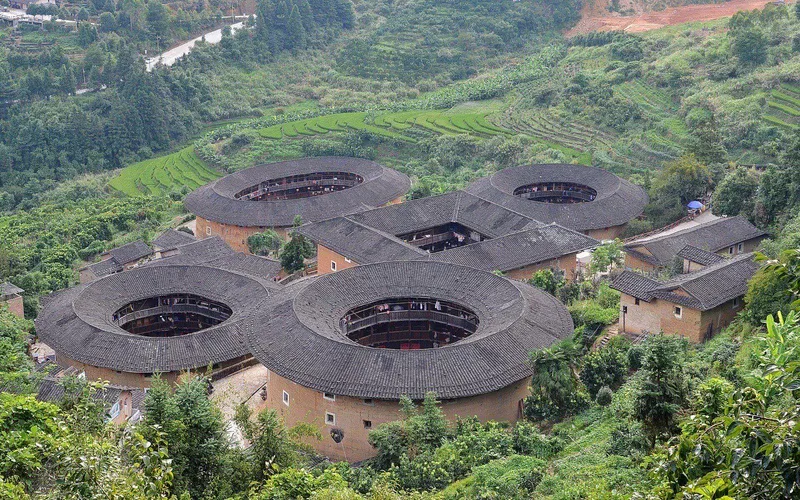
Two to three hours inland, the earthen fortresses of rural Fujian look like something from another planet: colossal circular walls of rammed earth, up to five stories tall, that have housed entire clans for centuries. Forty-six of these tulou were inscribed by UNESCO in 2008, and Xiamen is the standard base for seeing them. Choose one county — Nanjing's photogenic clusters or Yongding's 'Tulou King' — rather than trying to cram both into a day.
Good to know · A small-group day tour from Xiamen is the easiest option; independently, take the train to Nanjing station (about an hour) and transfer by taxi or local bus. Entry fees run roughly RMB 50–130 depending on cluster as of September 2026. Stay overnight in a tulou guesthouse if you can — after the tour buses leave, they are something else.
Some Chinese cities ask you to keep up. Xiamen, on the subtropical coast of Fujian province, asks you to slow down. This is an island city of four million that runs at beach pace: pensioners swim off downtown rocks before breakfast, grandmothers steep gongfu tea in doorways that have smelled of it for a century, and the most famous place in town is an islet where cars are banned outright. A century of treaty-port trade and overseas-Chinese money left Xiamen a rare inheritance — a dense, walkable historic townscape, a car-free UNESCO island, coastal bike lanes, and some of China’s best street food. The formula for independent travelers is simple: Gulangyu early, a beach ride by afternoon, satay noodles after dark, and a day among the tulou earth fortresses inland. Give it three or four days, in shoulder season — Xiamen’s one real enemy is the summer typhoon-and-crowd combination.
A Bit of History
Xiamen spent its first centuries as a fortified Ming-dynasty island garrison — the name is usually explained as “gateway of the great mansion” — protecting the coast from pirates. Its modern story starts with the pirate-fighting admiral Zheng Chenggong, known to history as Koxinga, who used Xiamen as his naval base in the 1650s while resisting the new Qing dynasty and later expelled the Dutch from Taiwan; a huge statue of him still guards Gulangyu’s southern shore.
The city’s second life came involuntarily. Under the 1842 Treaty of Nanjing that ended the First Opium War, Xiamen was one of five ports forced open to foreign trade, alongside Shanghai and Guangzhou. Merchants, missionaries and consuls arrived within a generation, and by 1902 the little island of Gulangyu offshore had been formally designated an international settlement governed by a multinational council — residents from a dozen or more countries built banks, churches, consulates and seaside villas there, some of which still carry the names of their era. Wealthy overseas Chinese, many of them Xiamen-born merchants from Southeast Asia, matched the foreigners villa for villa.
That diaspora shaped the modern city as much as any treaty. In 1921 the rubber-and-pineapple magnate Tan Kah Kee founded Xiamen University on the mainland shore opposite Gulangyu, endowing what is still considered one of China’s most beautiful campuses. In 1980, remembering those commercial ties, Beijing made Xiamen one of the first four Special Economic Zones — alongside Shenzhen — reopening the city to foreign investment and, eventually, to tourism.
The latest chapter is official recognition of the city’s unusual heritage. In 2017, UNESCO inscribed Gulangyu on the World Heritage List as “Kulangsu, a Historic International Settlement,” crediting the island as a living record of China’s early modernization — and capping daily visitors to keep it that way. Two hundred years of treaties, tea trade and remittances left Xiamen with something rare in China: a dense, walkable, genuinely mixed historic townscape, and a population that treats the beach promenade as an extension of the living room.
Culture & Daily Life
Xiamen is the capital of Minnan culture — the language, food and customs of southern Fujian, shared with Quanzhou and Zhangzhou and carried by emigration across Taiwan and Southeast Asia. The local tongue, Hokkien, is as distant from Mandarin as Italian is from English; you will hear it in the markets and on the ferries. Tea anchors everything: proper local households and countless small shops keep a gongfu tea set permanently steeped, pouring tieguanyin from Anxi, the famous oolong country an hour inland.
The rhythm of the city is set by water. Early mornings belong to swimmers and taiji groups on the waterfront; the Yuandang Lake boardwalk fills at dusk with strollers, buskers and roller-skating kids. Xiamen University, the leafy campus founded by Tan Kah Kee, gives the Siming district a permanent population of students and the cafe-and-bookshop economy that follows them. The city is well-off, tidy by Chinese standards, and noticeably relaxed — taxi drivers and shopkeepers are famously less transactional here than in the big eastern megacities.
Religion is part of the streetscape: Nanputuo Temple steams with incense most mornings, neighborhood shrines to the sea goddess Mazu flicker on headlands, and Christian churches from the settlement era still hold congregations. Practical notes: life runs on Alipay and WeChat Pay, so set up payments before arrival; summer runs hot and humid with a real typhoon season from July to September; and winter is mild — locals consider 12°C cold enough for down jackets, which tells you something about the climate.
Nature & Day Trips
Xiamen’s nature is its coastline. The island itself is hilly and green, wrapped by beaches and promenades, with the hikeable Wulao Peak rising straight behind Nanputuo Temple — about an hour up stone steps for a panorama of rooftops, harbor and sea. The Xiamen Botanical Garden, a short ride away, spreads thousands of subtropical species across a valley and includes a rainforest zone that runs artificial mist in the mornings; it costs about RMB 30.
On the water, the harbor ferry system doubles as cheap sightseeing, and egrets fish the wetland edge of Yundang Lagoon in the city center. But the serious natural excursion is inland: the tulou country of Nanjing and Yongding counties, where the mountain roads wind through tea terraces and banana groves to those extraordinary earthen roundhouses (covered in the sights below). A worthwhile alternative by rail is Quanzhou, thirty minutes north — a 2021 UNESCO World Heritage city of Song-dynasty temples, mosques and pagodas that was, in its day, the terminus of the maritime Silk Road. On a clear day you can also see the green hills of Kinmen, Taiwan-administered, from the Island Ring Road — a reminder of how close this coast sits to a complicated frontier.
Food & Drink
Xiamen’s food is Minnan cooking — lighter than Sichuan, brinier than the north, and built on a pantry of peanuts, pork, seafood, rice and the region’s secret weapon: sha cha sauce, a savory-sweet satay paste derived from the Southeast Asian trade routes. The dish everyone comes for is sha cha noodles: fine alkaline noodles under a broth of that satay paste, pork lard and braised bits, dressed with bean sprouts and tofu. It costs about RMB 15–25 a bowl and locals eat it for breakfast without blinking.
The other icon is the oyster omelet — plump local oysters bound in sweet-potato starch, fried crisp at the edges, topped with a dash of pepper. Then work through the supporting cast: peanut soup, served hot and barely sweet; sea-worm jelly, a translucent chilled aspic that is exactly as adventurous as it sounds; wrapped spring rolls (popiah) filled family-style; and ginger duck, a winter stew of braised duck in sesame oil and rice wine. Tea culture runs through it all — a pot of tieguanyin between dishes is the local palate cleanser.
Geographically, Zhongshan Road and its feeder alleys are the tourist-facing food quarter, best after 7 pm; the Shapowei harbor district has the city’s best cafe-and-craft scene; and the university area does the cheapest, most student-honest versions of the classics. Eight Market (Bashi), a working wet market near the ferry piers, is the most atmospheric place to see the raw material. Stick to busy stalls where the turnover is fast, and carry a little cash as backup for the rare stall that will not scan a code.
Top Sights
Gulangyu Island
Gulangyu is the reason most visitors come to Xiamen, and it earns the billing. An islet of less than two square kilometers, 600 meters off downtown, it banned private cars decades ago and moves at footstep pace past several hundred protected villas, consulates and churches left by a century of international settlement — history serious enough that UNESCO inscribed it in 2017 as “Kulangsu, a Historic International Settlement.” Climb Sunlight Rock, the 90-meter summit, for the classic panorama; tour Shuzhuang Garden, a 1913 seaside garden with a bridge that seems to walk on water and the Piano Museum tucked inside; then get lost in the lanes behind touristy Longtou Road, where bougainvillea spills over brick walls.
The logistics are the famous pitfall. Daytime tourists must sail from Dongdu Cruise Center — not the old pier at the foot of Zhongshan Road, which is reserved for Xiamen residents — and tickets are real-name, tied to your passport, about RMB 35 round trip as of September 2026, and genuinely sell out on weekends and holidays. Book through the official Xiamen Ferry mini-program or an OTA like Trip.com up to two weeks ahead. The crossing takes about 20 minutes to Sanqiutian Pier, and a five-site combo ticket covering Sunlight Rock, Shuzhuang Garden and three more monuments runs about RMB 90. Arrive at opening on a weekday; by mid-morning on a holiday, no photograph saves you from the crowd.
Nanputuo Temple
Nanputuo is the working heart of Buddhism in Xiamen, founded in the Tang dynasty and rebuilt through the centuries into a graceful complex of halls terraced up the slopes of Wulao Peak. It belongs to the Chan (Zen) tradition, shares a campus wall with Xiamen University, and made a decision in 2011 that still sets it apart: it abolished entrance fees. Admission is free, incense is handed out free, and the institution runs instead on its superb vegetarian restaurant — where Buddhist versions of Xiamen classics draw lunch lines — and on sutra cakes, the flaky pastry that is the city’s favorite souvenir.
Come early, when the halls fill with chanting. Dress so shoulders and knees are covered, expect a possible mini-program reservation requirement at peak times (your hotel can arrange it), and allow an extra hour for the stone-step trail behind the temple up Wulao Peak, which earns a sweeping view over campus, rooftops and sea. Next door, Xiamen University’s lotus-ponded campus is free but strictly reservation-based — since January 2026, slots are even allocated by lottery — so apply through the official WeChat visitor system a few days ahead.
Island Ring Road & Beaches
Xiamen’s best public amenity costs nothing but a bicycle. The Island Ring Road (Huandao Road) traces roughly 43 kilometers around the island’s southern and eastern shore, and its seaward strip is engineered for pleasure: a dedicated cycle path, lawns, sculpture parks, beach accesses and a horizon of ships and islands. The classic stretch runs from Baicheng Beach, at the foot of Xiamen University, east past Calligraphy Square and the dunes of Guanyinshan — flat, scenic, and doable in an hour of easy pedaling or half a day of stops.
Bike rental shops near Baicheng Beach charge around RMB 20–40 per hour (tandems and e-bikes available), or use dockless shared bikes with Alipay. Come early morning for joggers and fishermen, or an hour before sunset for the light — this is the city’s communal front yard. Swimming is possible at Baicheng in the warm months, roughly June through September; after typhoons the water can stay closed for days.
Zhongshan Road
Zhongshan Road is Xiamen’s front parlor: a roughly 1.2-kilometer pedestrianized street of arcade-fronted shophouses — the qilou style that southern Chinese traders copied from colonial Southeast Asia — running from downtown to the Lujiang Road ferry piers, with Gulangyu’s villas glittering across the water at the far end. Built on the same treaty-port and diaspora money as the island opposite, it has been the city’s commercial spine for a century, and the mix of 1920s merchant facades and flashing neon is genuinely striking after dark.
Treat it as an evening: the shops are mid-range chains, but the side alleys are where Xiamen eats — slip off the main strip for oyster omelets, satay skewers, peanut soup and the sweet rice cakes sold by the slice. Then walk five minutes south to Shapowei, a preserved fishing harbor where the old boatyard now hosts galleries, indie cafes and the city’s young crowd. Everything is free, 7 pm is the peak, and the arcade walk pairs naturally with the night ferry back from Gulangyu — the Lujiang pier handles the after-hours sailings once the main tourist terminal closes.
Fujian Tulou Day Trip
An hour or two west of the coast, the mountains of rural Fujian hide the most surprising architecture in southern China: tulou, fortress-homes of rammed earth, some circular, up to five stories and several hundred rooms apiece, built between the 15th and 20th centuries to house whole clans behind one wall. UNESCO inscribed 46 of them in 2008, praising how they fuse defensive function with communal living — a big tulou could shelter 800 people and their grain, pigs and ancestors alike.
From Xiamen you choose between two counties. Nanjing County holds the photogenic hits: the Tianluokeng cluster, famously shaped like “four dishes and a soup” from the overlook; 700-year-old, slightly leaning Yuchanglou; and Yunshuiyao, a banyan-shaded old town strung along a creek. Yongding County owns the “Tulou King” — Chengqi Lou, a vast ring of some 400 rooms begun in 1709. Trying both counties in one day mostly buys windshield time; pick one and go deep.
The practical route: small-group day tours from Xiamen (van, guide, lunch) are the least hassle; independently, take a high-speed train to Nanjing station, about an hour, then taxi into the hills. Entry runs roughly RMB 90–130 for Nanjing’s clusters and around RMB 50 for Chengqi Lou’s Gaobei area as of September 2026, bookable via the scenic-area mini-programs with Alipay/WeChat. The best upgrade is a night in a tulou guesthouse: when the coaches leave and the courtyard lights come on, you finally see what these buildings were made for.
Getting There & Around
Xiamen Gaoqi International Airport (XMN) is one of China’s most convenient — about ten kilometers from downtown, a 15–25 minute taxi to most hotels. One major change is imminent: the new Xiang’an International Airport, built on reclaimed land across the bay, is scheduled to open around the end of 2026, at which point Gaoqi closes to civil aviation. As of September 2026 all flights still use Gaoqi, but if you are booking for late 2026 or later, double-check which airport your ticket uses — the new one is considerably farther out.
By rail, high-speed trains reach Xiamen North station (linked to downtown by metro) in about an hour from Fuzhou, as fast as 2.5–3 hours from Shenzhen, and around five hours from Shanghai. In town, the metro (three lines), buses and Didi — China’s Uber, which takes international cards via Alipay — cover everything; the island-scale geography keeps most rides under RMB 30. To Gulangyu, remember: tourists sail from Dongdu Cruise Center by day. A shared-bike account and comfortable shoes handle the rest.
Where to Stay
Three areas cover most itineraries. The Siming waterfront along Lujiang Road and Zhongshan Road puts you mid-range-hotel distance from the ferry piers, Zhongshan Road’s snack alleys and harbor views of Gulangyu — the practical first choice on a short stay. The university and Shapowei district, ten minutes south, trades convenience for atmosphere: student cafes, restored warehouses, Baicheng Beach at the end of the street, and the best priced boutique guesthouses — best for travelers who want evenings in neighborhoods rather than sights. The boldest option is sleeping on Gulangyu itself in a guesthouse converted from a heritage villa: you get the island at dusk and dawn, when day-trippers vanish and it becomes what it was, at the cost of dragging luggage over cobbles and booking well ahead. Avoid lodging near the North Station or airport unless you have an early train; the city’s pleasures are all on the island and the southern shore.
Sources & verification (10)
- https://whc.unesco.org/en/list/1541
- https://en.wikipedia.org/wiki/Gulangyu
- https://travel.stackexchange.com/questions/192210/can-i-buy-gulangyu-ferry-tickets-outside-china
- https://en.wikipedia.org/wiki/South_Putuo_Temple
- https://baowei.xmu.edu.cn/info/1003/1005.htm
- https://xm.fjsen.com/wap/2026-01/18/content_32117767.htm
- https://whc.unesco.org/en/list/1113/
- https://en.wikipedia.org/wiki/Fujian_tulou
- https://www.trip.com/trains/china/route/shenzhen-to-xiamen/
- https://www.trip.com/trains/china/route/shanghai-to-xiamen/