China in November: Late Autumn, Low Season and the Visa Clock
November is China's quiet shoulder month. There is no public holiday, Golden Week is well behind you, and the first half of the month still holds late autumn color in the north and at Jiuzhaigou. From mid-November the seasonal switch shows up in prices: the Forbidden City drops to ¥40, and Jiuzhaigou moves to its ¥80 ticket plus ¥80 shuttle on November 16. The catch is the calendar. The 30-day visa-free authorization for most countries expires December 31, 2026, with no extension announced as of October 31. This guide covers regional weather, where the color is still worth chasing, what slows down for winter, and exactly what to book.
Covers November 2026 · Verified October 31, 2026
The short version
- November has no public holiday; after the first week, crowds and hotel prices fall across most of China
- Forbidden City admission drops to ¥40 from November 1; Jiuzhaigou moves to off-season pricing — ¥80 ticket plus ¥80 shuttle — from November 16
- Autumn color is an early-month pursuit: Beijing peaks in the first days of November, and Jiuzhaigou's window closes by mid-month
- The 30-day visa-free authorization for 48 countries expires December 31, 2026; no extension had been announced as of October 31
- Trains release 15 days out; selected Beijing–Shanghai trains take reservations 30 to 17 days ahead
November is the month China’s travel calendar goes quiet. There is no public holiday, the October crowds have gone home, and the weather is still good enough to walk all day in the south while the north sharpens into winter. The trade-off is that some of the year’s best color is on a clock: Beijing’s foliage peaks in the first days of the month, Jiuzhaigou’s autumn window closes by mid-November, and mountain facilities trim their winter hours. Plan the first half for landscapes and the second half for cities and lower prices.
Weather by Region
North China — Beijing, Xi’an, Datong, Pingyao — turns cold and clear. Expect highs around 8–12°C (46–54°F) and lows near 0°C (32°F), with the first snow possible late in the month. Early November still has enough warmth for a light coat and the last of the foliage; by the final week you need a real winter layer, especially at dawn on the Great Wall.
East China — Shanghai, Hangzhou, Suzhou, Nanjing — is the most comfortable region this month: highs around 16–19°C, lows around 8–10°C, lower humidity and plenty of dry, sunny days. This is good museum, garden, and canal weather, with far smaller queues than October.
Southwest China is mixed. Chengdu runs about 16°C (61°F) by day and 9°C (48°F) at night, often gray and damp; Chongqing is a degree or two warmer. Guilin and Yangshuo are mild and dry at around 20°C (68°F) by day, 11°C (52°F) at night. Yunnan has mild days and cold nights. Jiuzhaigou at altitude is near freezing at night and only a few degrees above it by day, with snow possible.
Northwest China — Dunhuang, Zhangye, Xining — is cold, dry and bright: roughly 5–12°C days and below-freezing nights. Some services wind down, but the light is excellent and the crowds are gone.
South China — Guangzhou, Shenzhen, Hong Kong, Xiamen — stays mild at 24–28°C by day and around 18–20°C at night. Sanya is warm at 27–30°C, and its high season is underway, so prices climb even as the rest of the country discounts.
These are typical ranges, not a forecast. Check a 10-day forecast for your cities, and keep a flexible day if you are heading into the mountains.
What’s Happening
There is no statutory holiday in November. That alone makes it one of the easiest months to move around. The only date with national attention is November 11, Singles’ Day, China’s largest online shopping festival. It is a retail event, not a travel one: trains, flights and sights run normally. The main Tmall sale actually began on October 20, so by November 11 it is in its final stretch. The practical effect for visitors is heavier parcel traffic and occasionally slower deliveries, not fuller attractions.
The seasonal price switch is the real event. The Forbidden City drops from ¥60 to ¥40 from November 1 and stays there through March 31. Jiuzhaigou moves to its off-season regime on November 16: ¥80 for the park ticket plus ¥80 for the mandatory shuttle, with the daily cap falling to about 23,000 and entry running 8:30–14:00. Both are meaningful savings, and both come with shorter hours or reduced services.
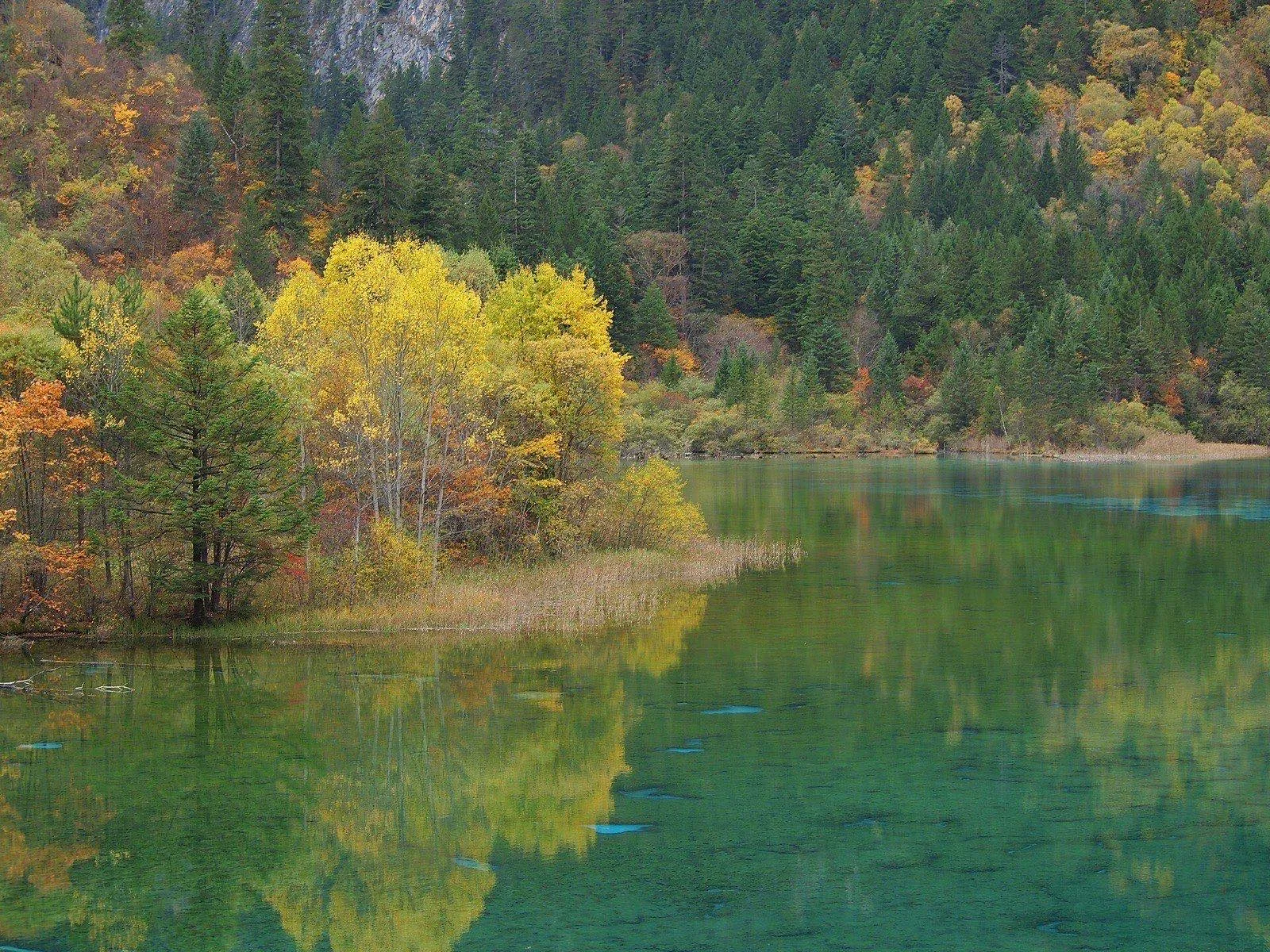
The color is early-month. Beijing’s foliage usually peaks in the first days of November, then fades. Jiuzhaigou’s autumn color lasts into early-to-mid November before the valley turns wintry. Longji’s rice terraces were scheduled for harvest from November 1, so check whether the terraces are cut before you build a trip around them. Huangshan’s sea-of-clouds odds stay good through late autumn, but ice and snow can close high paths.
The visa clock is running. The 30-day unilateral visa-free authorization for 48 countries, including the UK, Canada and most of the EU, expires at 24:00 Beijing time on December 31, 2026. No extension had been announced as of October 31. Russia runs through December 31, 2027, and Brunei has no expiry date.
Crowds and Prices
The first week of November still carries residual autumn visitors, especially at Jiuzhaigou and Beijing’s headline sights. From mid-month, domestic demand falls sharply: hotels outside Sanya and Harbin are at some of their cheapest rates of the year, flights soften, and popular sights become walk-up-friendly again. Rail fares do not change with the season, but availability improves.
Two exceptions. Sanya enters its winter high season as northerners arrive, so book early and expect resort rates to climb. Harbin gets cold and cheaper before its winter peak, but the ice city itself is a later-season draw.
Where to Go
Beijing and Xi’an reward the first half of the month: the last foliage, crisp air, and the Great Wall without October’s crowds. Start with our Beijing guide and Xi’an guide.
East China is at its most walkable. Shanghai, Hangzhou, Suzhou and Nanjing work well as a high-speed-rail loop; see Shanghai and Hangzhou.
Jiuzhaigou is the landscape pick for early November, before the off-season switch and while color remains. Book timed entry and expect cold nights. See Jiuzhaigou.
Guilin and Yangshuo are mild, dry and photogenic, with the rice harvest just finished. See Guilin.
Sanya is the warm-water escape, at a price. See Sanya.
Dunhuang and Zhangye are cold but clear and uncrowded, with low-season rates. See Dunhuang.
What to Book
- Trains, 15 days out. Standard tickets go on sale 15 days before departure. A pilot on selected Beijing–Shanghai trains takes reservations 30 to 17 days ahead, but everywhere else plan on the 15-day window. Be online when sales open and use 12306’s waitlist. See our trains guide.
- Forbidden City, 7 days ahead at 20:00 Beijing time. Tickets are passport-linked and released through the official site or WeChat mini-program. It closes Mondays except public holidays, and admission is ¥40 from November 1.
- Jiuzhaigou, before the switch. Entry is timed and online-only, the daily cap is lower in the off season, and the park stops admitting at 14:00. From November 16 expect ¥80 for the ticket plus ¥80 for the shuttle; book through the official channel or a reputable international platform.
- Huangshan, 1–7 days ahead. The mountain uses timed, gate-specific, passport-linked reservations. Check winter closures and cable-car maintenance before committing, and book summit hotels weeks ahead if you want sunrise.
- Mogao Grottoes, 1–30 days ahead. The regular ¥238 ticket includes films, shuttle and eight caves, and it is date-specific. Winter is quieter and the light is clear.
- Tibet, before you book flights. Foreign visitors need a permit arranged through a licensed agency, and Potala Palace tickets are passport-tied and normally handled by the operator. See our Tibet permit guide.
- The basics. Confirm your visa-free eligibility before booking 2027 travel, run your dates through the visa-free stay calculator, set up Alipay or WeChat Pay, and carry your passport daily.
Sources & verification (21)
- https://ticket.dpm.org.cn/
- https://www.dpm.org.cn/Home.html
- https://en.jiuzhai.com/about/visitor-information
- https://us.trip.com/travel-guide/attraction/jiuzhaigou/jiuzhaigou-national-park-89895
- https://www.nia.gov.cn/n741440/n741577/c1731154/content.html
- https://bio.visaforchina.cn/OSL4_ZH/tongzhigonggao/552381701888806956.html
- https://www.mfa.gov.cn/wjbzwfwpt/kzx/tzgg/202605/t20260520_11914502.html
- https://www.12306.cn/
- https://cdn.shanghai.gov.cn/nw17239/20260927/c28d149dd5d54393980dbe1850dffd22.html
- https://www.gov.cn/zhengce/content/202511/content_7047090.htm
- https://www.alibabagroup.com/en-US/document-2047546975867371520
- https://www.beijing.gov.cn/gate/big5/www.beijing.gov.cn/fuwu/bmfw/sy/jrts/202610/t20261019_4909554.html
- http://wp.longjitour.com/index.php/2026/09/10/%e8%af%b7%e6%94%b6%e8%97%8f%ef%bc%812026%e5%b9%b4%e9%be%99%e8%84%8a%e6%a2%af%e7%94%b0%e6%99%af%e5%8c%ba%e7%a8%bb%e8%b0%b7%e6%94%b6%e5%89%b2%e6%97%b6%e9%97%b4%e8%a1%a8%e6%9d%a5%e4%ba%86%ef%bc%81/
- https://weatherspark.com/y/131055/Average-Weather-in-Beijing-China-Year-Round
- https://www.travelchinaguide.com/cityguides/shanghai/weather-november.htm
- https://www.travelchinaguide.com/cityguides/guangxi/guilin/weather-november.htm
- https://www.travelchinaguide.com/cityguides/sichuan/chengdu/weather-november.htm
- https://www.travelchinaguide.com/climate/sanya.htm
- https://wap.huangshan.com.cn/detail/strategy/fjqlyzx
- https://www.dha.ac.cn/info/1020/7498.htm
- https://www.tibettour.travel/blog/2026/08/19/tibet-travel-permit-guide-2027